
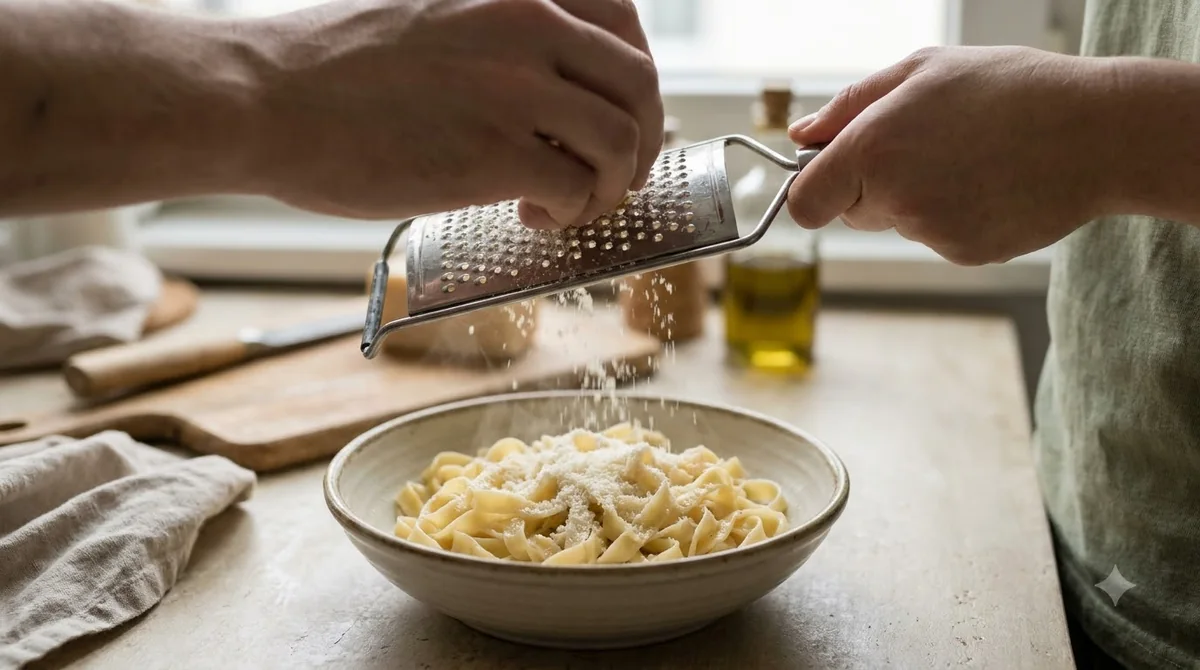

The best pecorino romano is a hard, sheep’s milk cheese from Italy with a DOP label, a sharp and salty flavor, and a crumbly texture. For most cooks, the best buy is a whole wedge with the rind on, grated fresh at home. For the basics, read what pecorino romano is.
Look for the DOP label, skip pre-grated tubs, and choose an age that fits your dish. Younger cheese suits the table, while older cheese tastes stronger and suits grating.
| Pick | Best for | Key fact |
|---|---|---|
| Vacuum-sealed DOP wedge | Pasta, carbonara and cacio e pepe | Keeps fresher than pre-grated cheese |
| Younger wedge (about 5 months) | Eating in pieces or on a cheese board | Milder, the table-use age in the guide |
| Older wedge (8 months or more) | Finely grated over pasta | Stronger, the grating age in the guide |
| Wedge with rind and origin stamp | Checking origin before you buy | Rind often shows a geographical logo and province |

Locatelli Pecorino Romano Cheese

Alma Gourmet Pecorino Romano del Lazio DOP Cheese

Cheese Pecorino Romano (Approx 4 Lbs)
How to Judge the Best Pecorino Romano
The best pecorino romano comes from sheep’s milk, carries a DOP label, and is sold as a wedge rather than a tub. This guide uses facts from Italian and cheese reference sources, and it does not name brands or prices, because those change often.
Start with the cheese itself rather than the name on the shelf. A tub and a wedge can carry the same label, but the wedge shows you more: you can see the rind, check its color, and decide how much to grate. The best pecorino romano for you is the one that matches your dish and how you store cheese at home.

What Makes Pecorino Romano Genuine
Genuine Pecorino Romano is made only from sheep’s milk in Lazio, Sardinia and the province of Grosseto, and Wikipedia’s Pecorino Romano entry lists an aging time of five months or more. The Pecorino Romano consortium says the cheese is made only with sheep’s milk from protected areas, with the sheep grazing in Lazio and Sardinia.
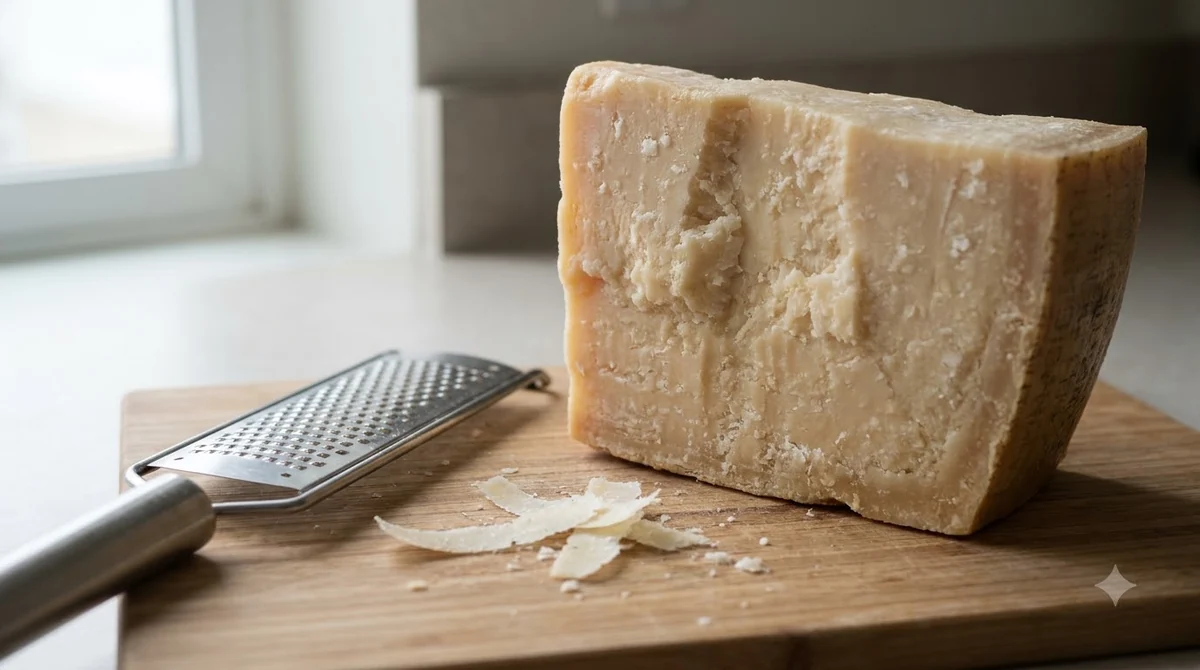
The wheel itself is large, at 25 to 40 cm tall, 25 to 35 cm across, and 20 to 35 kg. The rind is thin and ivory-colored, and it is often stamped with a geographical logo and the province of origin. The cheese is hard and very crumbly, which is why it grates so easily.
Wikipedia also notes that the standard version is not pasteurized, while pasteurized versions are exported to the United States. Read the label, because the two styles can differ in how you handle them.
Latin authors Varro and Pliny the Elder described how the cheese was made about 2,000 years ago, according to the same Wikipedia entry. Today nearly all production has moved to Sardinia, and about 40 percent of output stays in Italy. More than half of exports go to the United States, which is why American shoppers see so much of it.
Wedge or Pre-Grated: Which to Buy
Buy a vacuum-sealed wedge instead of pre-grated cheese, because a wedge keeps fresher and gives you control over the grate. Reluctant Gourmet’s pecorino guide recommends vacuum-sealed wedges for this reason.
That guide does not compare pre-grated tubs directly, so the case for a wedge rests on freshness and on the texture you control at home. Fine grating suits pasta and sauces, and coarser grating suits baked dishes.
When you shop for the best pecorino romano, ask the counter to cut a piece of the size you need. A small piece left out in the open has more surface exposed to air, so it is best to buy a fresh cut and keep it sealed. Many cooks also save the rind to flavor soups or sauces, which is only possible when you buy a whole piece. A rotary cheese grater gives a fine, even grate from a wedge.
How Aging Changes the Best Pecorino Romano Flavor
A Pecorino Romano aged about five months tastes milder and suits eating in pieces, while one aged eight months or more tastes stronger and suits grating. Wikipedia’s infobox lists an aging time of five months or more, but it gives no citation for that figure, so rely on the age printed on your wedge.
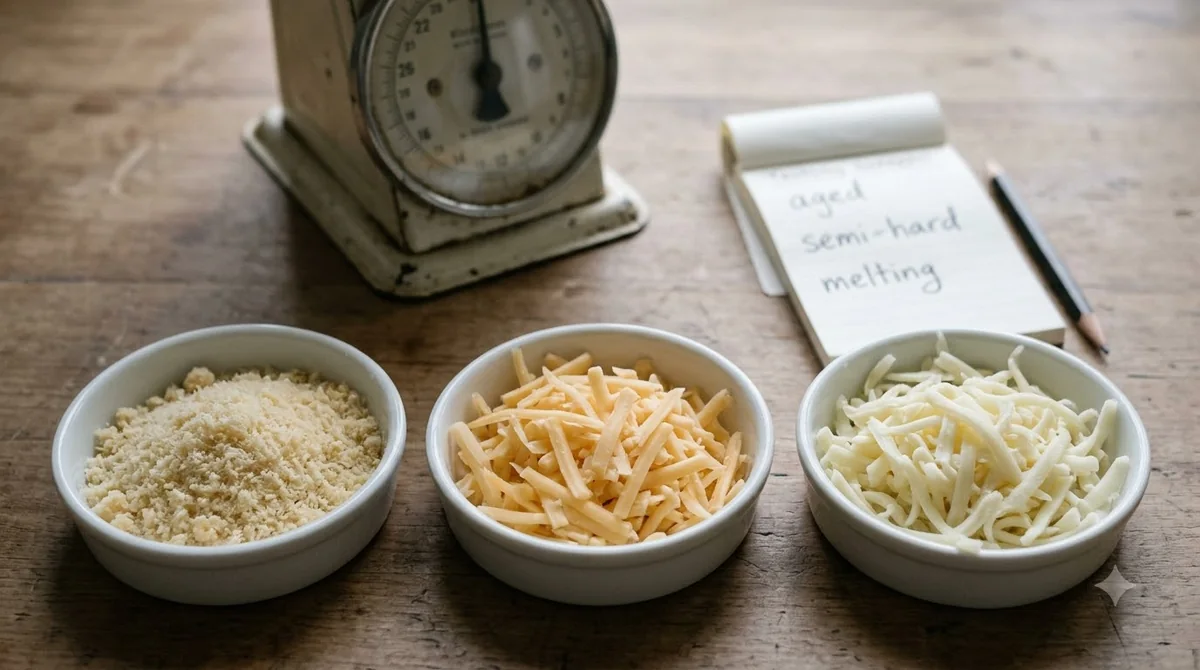
Choose the best pecorino romano by dish. A younger wedge works on a board with fruit and bread. An older wedge gives more punch to a bowl of cacio e pepe or amatriciana.
Expect a sharp, salty, tangy flavor from the best pecorino romano at any age. Because it is saltier than many cheeses, taste the dish before you add extra salt. Compared with Parmesan, the reference guide describes Pecorino Romano as saltier and sharper, while Parmesan is milder, nutty and drier. Our Parmigiano Reggiano vs Pecorino Romano guide goes deeper on the difference.
If the label gives no age, taste will tell you more about the best pecorino romano you are holding. A milder, softer bite points to a younger cheese, while a sharper, saltier and more crumbly bite points to an older one. If you cook for guests who dislike strong cheese, start with a younger wedge and grate a little at a time.
Common Mistakes When Buying Pecorino Romano
Three mistakes to avoid when buying the best pecorino romano are buying pre-grated tubs, skipping the DOP wording, and choosing a wedge with mold or a very dry rind.
- Buying pre-grated. A wedge keeps fresher, and you control the texture when you grate it yourself.
- Ignoring the DOP label. Look for the DOP label. Reluctant Gourmet describes it as “PDO (Protected Designation of Origin)” wording on the package, and the consortium itself uses DOP.
- Overlooking the rind. A natural color with few cracks is a good sign, while mold or a very dry rind is a warning.
Do not assume a cheese is the best pecorino romano just because the front says pecorino. The protected name is tied to specific areas and sheep’s milk, so check the origin on the label before you pay.
How to Store the Best Pecorino Romano
Store a wedge wrapped in wax or parchment paper, loosely in plastic or an airtight container, in the fridge. Use it within three to four weeks after opening, and it can last up to 12 months when stored properly.
Keep it in the fridge drawer, such as the vegetable drawer, where humidity stays steadier. Bring it to room temperature before serving.
The same guide mentions a traditional method of wrapping the cheese in cloth with olive oil, which it says works for about one to three weeks. For longer storage, cheese paper inside loose plastic wrap or an airtight container is the more reliable choice.
Storing the best pecorino romano well keeps the flavor you paid for, so check the wedge once a week. Do not freeze it. Freezing can change the texture and flavor. If mold forms, cut off at least one inch around it, because the interior should still be good. The same wrapping habits apply to parmesan cheese.
Frequently Asked Questions
Is Pecorino Romano the same as Parmesan?
No. Pecorino Romano is made from sheep’s milk, while the Parmesan the guide compares it with is made from cow’s milk. Pecorino is sharper, saltier and tangier, and Parmesan is milder and nuttier.
Does the best pecorino romano need refrigeration?
Yes. Keep it wrapped in wax or parchment paper in the fridge drawer. Use it within three to four weeks after opening.
Can you freeze pecorino romano?
The storage guide advises against it, because freezing can change the texture and flavor. Buy only as much as you expect to use within a few weeks.
What does the rind tell you?
A natural rind with few cracks is a good sign. Mold or a very dry rind is a warning. The rind is often stamped with a geographical logo and the province of origin, which helps you check where the cheese was made.
Where is pecorino romano made?
Wikipedia says it is made in Lazio, Sardinia and the province of Grosseto in Tuscany. Nearly all production has moved to Sardinia, so a wedge from a Sardinian producer is still a genuine pecorino romano if it carries the DOP label.
Can you eat the rind?
The natural rind is edible, but many people find it too hard and salty to eat. Many cooks use it to flavor soups or sauces instead.
For most cooks, the best pecorino romano is a DOP wedge aged to suit the dish. Buy a wedge, grate it fresh, and keep the rest wrapped in wax paper in the fridge. A little checking at the counter goes a long way toward getting the best pecorino romano for your kitchen.
 8 min readGear & PantryBest Balsamic Glaze: How to Choose One That Tastes RightUpdated Nov 13, 2026
 9 min readGear & PantryBest Jarred Pizza Sauce: How to Choose One That Tastes FreshUpdated Nov 10, 2026
 8 min readGear & PantryMutti Passata Review: Ingredients, Taste and ValueUpdated Nov 8, 2026
 10 min readGear & PantryIs De Cecco Pasta Good? A Review of Taste, Texture and QualityUpdated Nov 10, 2026
 8 min readGear & PantryDe Cecco vs Barilla: Which Pasta Wins the Taste Test?Updated Nov 15, 2026
 8 min readGear & PantryBest Pepperoni for Pizza: Picks That Cup and CrispUpdated Nov 12, 2026