
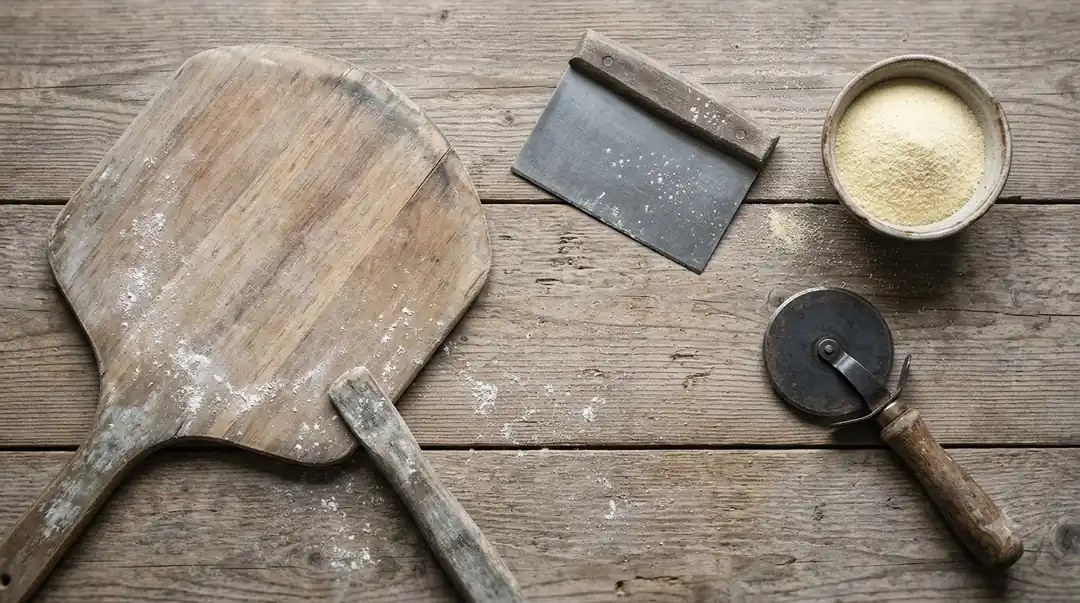

A pizza serving board is a flat, food-safe board that carries a pizza from the oven to the table, and the right size depends on the pizza you bake most often. Size, material and handle matter most when you compare options. The care rules are the same as for any board used with food, so check the maker’s guidance before you buy.
| Board type | Best for | Key fact |
|---|---|---|
| Round wood board with a handle | A 12-inch pizza at home | One UK seller lists a 35 cm (just under 14 in) board with a 13 cm handle |
| Board sold for serving and prep | Cheese, bread and pizza on one surface | Care depends on the material, so read the maker’s label |

BILL.F Pizza Peel,14" L x 14" W Acacia Wood
Pros & ConsViewHide
Reasons to buy
- 82% of 3.1K Amazon ratings are 5-star
- 14 x 14 inch acacia board with a handle, listed for pizzas about 10 to 16 inches
- Reversible, with a hook for hanging to dry
Reasons to avoid
- Wood needs hand washing and air drying
- Listing says heavy cutting such as bones is not recommended

Pizza Cutting Board for 14inch Pizza Bamboo Wood
Pros & ConsViewHide
Reasons to buy
- Bamboo board sized for 14-inch pizza
- Groove lines on one side guide even slices
- 75% of about 170 ratings are 5-star
Reasons to avoid
- Thin at 0.47 inches
- Bamboo shows natural knots and color variation, per the listing

16 Inch Wooden Pizza Board with Rocker Cutter Set
Pros & ConsViewHide
Reasons to buy
- 16-inch acacia board with size guides for 10 to 16 inch pizzas
- Includes a stainless steel rocker cutter
- Handle and hanging holes for storage
Reasons to avoid
- Only about 27 ratings, 49% of them 5-star
- Listing suggests seasoning the wood before use

20" × 16" Round Pizza Board with Handle
Pros & ConsViewHide
Reasons to buy
- 20 x 16 inch wood fiber board with a handle
- Listing says it is dishwasher safe
- 96% of ratings are 5-star
Reasons to avoid
- Only about 16 ratings so far
- Large size needs counter and storage space
Matching a pizza serving board to your pizza
A board about 35 cm wide, just under 14 inches, suits a 12-inch pizza according to one UK seller’s listing. Measure the pizza you bake, not the pan or the stone, before you choose a size.
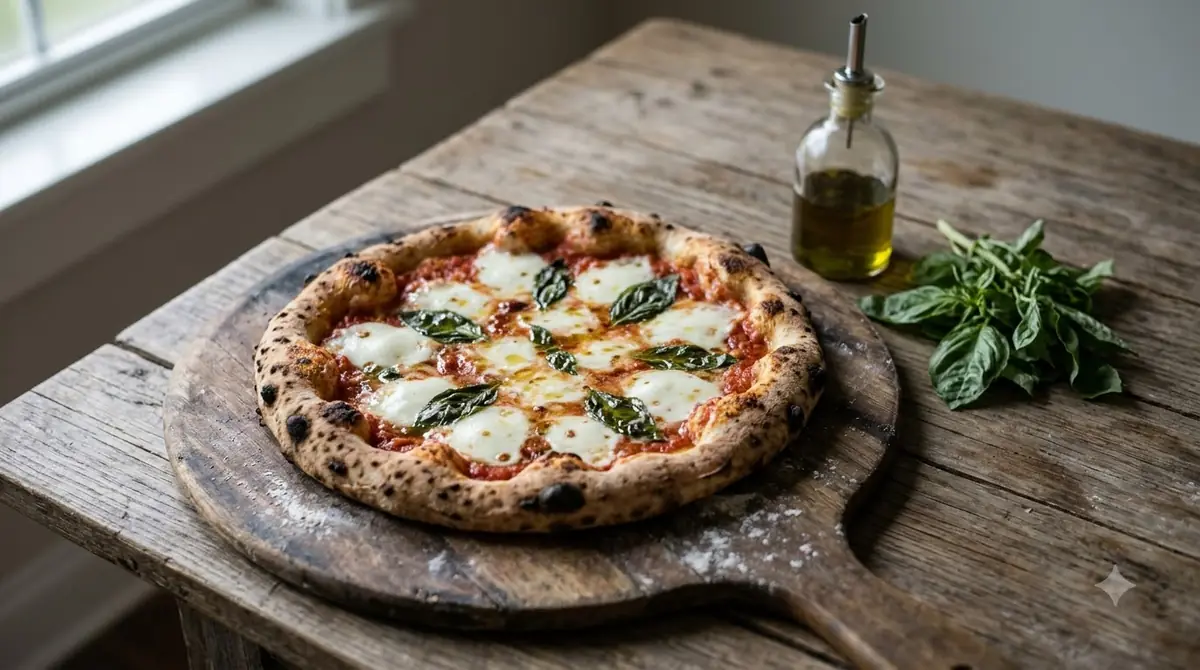
A board only a little wider than the pizza leaves little room to slide the pizza on and off or to hold the crust while you slice. The same listing describes its board as perfect for a 12-inch pizza or smaller. That is a seller claim, so compare it with the diameter of your own peel or stone. Amazon US listings use inches instead: one 14 x 14 inch acacia board with a handle is listed for pizzas of about 10 to 16 inches, and one bamboo board is listed for a 14-inch pizza. Both are seller claims, so check the size of any pizza serving board against your own pizza.
If you bake larger pizzas, look for a pizza serving board that is clearly bigger than the pizza, not one that matches it exactly. A little extra space around the edge gives you room to grip the board and move it without touching the hot pizza.
Sizes are often printed in centimetres in one place and inches in another. A 12-inch pizza is about 30.5 cm across, so a 35 cm board leaves roughly 4.5 cm of extra width in total, or about 2.25 cm on each side. That margin is small, so a pizza that spreads past the 12-inch mark may need a larger board.
Before you buy, measure the diameter of your pizza peel or stone and write it down. Then compare it with the size of the pizza serving board on the listing, using the same unit for both numbers, to avoid a board that looks right on the page but does not suit your oven.

Materials and what they mean
Pizza serving boards are sold in several materials, and wood is the traditional choice for presenting pizza at the table. Each material changes how the board looks, how it cleans and how it handles heat, so choose with the use in mind.
- Wood: a warm look and a good cutting surface, but the surface is porous and needs careful cleaning.
- Nonporous materials such as plastic, marble, glass or pyroceramic give bacteria less room to settle, according to University of Maine Extension.
- Bamboo and composite boards are sold for serving too, but the care rules depend on the maker, so read the label before you buy.
The trade-off with wood is appearance against cleaning. A wood board looks good on the table, but it needs more attention after every use than a nonporous board.
Wood has a long history in pizza tools. According to Wikipedia’s entry on the pizza peel, wood is preferred for peels because it does not become hot enough to burn the user’s hands. A serving board is not a peel, but the same reasoning helps explain why wood feels comfortable to carry. For a tool that goes into the oven rather than onto the table, see our guide to the wooden pizza peel.
If you want to avoid the porosity question entirely, a nonporous board is the simpler choice for food that touches raw ingredients. Wood remains a practical option for serving cooked pizza, provided you commit to the cleaning routine described below. Dishwasher and hand-wash rules also differ between materials, so the care label is the final guide for any pizza serving board you own.
Handles and oven use
A handle lets you carry the board from the counter to the table, and one seller says its 35 cm wood board can be slid into the oven after you assemble the pizza on it.
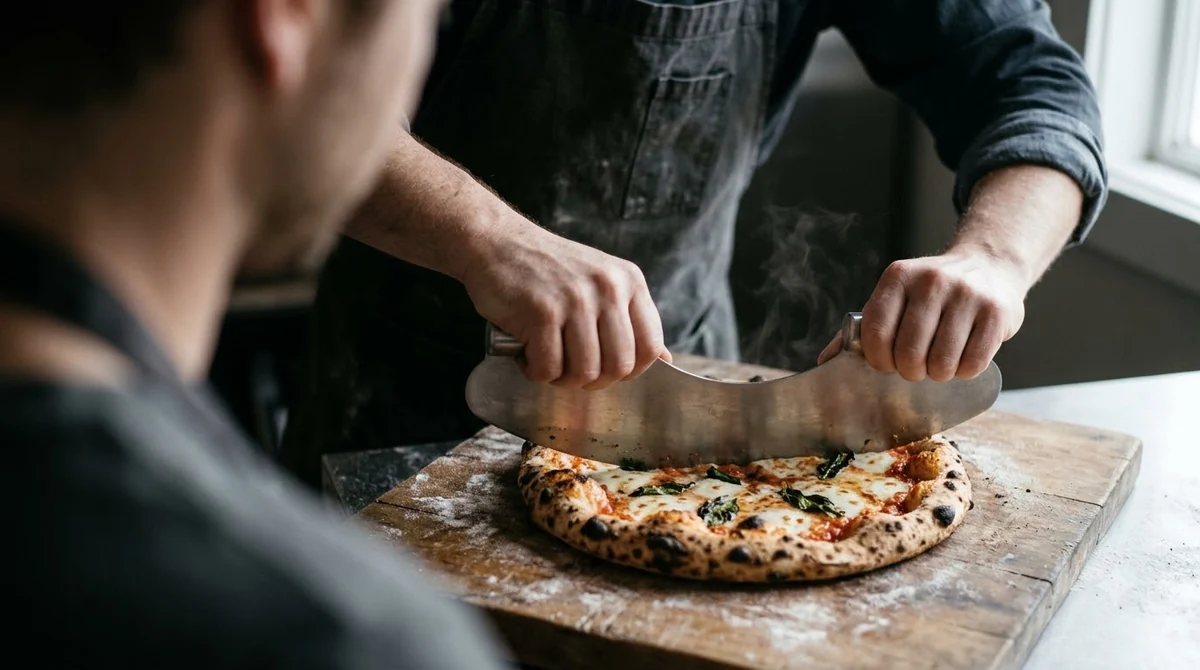
The same listing gives a handle length of 13 cm and a full length of 48 cm including the handle. The seller also says the handle lets the board act as a serving paddle, which helps when you move a pizza from the board to a plate.
Handle design matters because it decides how you grip a hot board. A short handle may not give enough room for your hand clear of the rim, while a long handle takes more space in a small oven. Measure the depth of your oven and the space you have on the counter before you choose a pizza serving board. Deep grooves from knife cuts are hard to clean, so see our guides to the pizza cutter and the pizza rocker cutter before you pick a slicing tool.
Heat is the limit to check first. The seller lists a heat resistance of 176 °C for this board. Do not exceed the limit printed by the maker of your own board, and keep the board away from direct flame unless the label allows it.
Caring for a pizza serving board safely
Wash a wood pizza serving board by hand with hot, soapy water and let it air dry after every use, according to the University of Maine Extension guidance on cutting boards.
- Wash the board with hot, soapy water after each use.
- Let it air dry completely before you store it.
- Keep one board for raw meat, poultry or seafood and a different board for fresh produce.
- Replace the board once deep grooves form, because they are hard to clean.
The same extension guidance says solid wood boards can go in the dishwasher. One seller also calls its board dishwasher safe, but many wood boards are better washed by hand, so check the care label on your own board first.
Store the pizza serving board upright or flat in a place where air can reach both sides, so it dries fully before you put it away. Trapped moisture is the situation you want to avoid with any wood surface, and it is easy to prevent with a short drying step after each wash.
Common mistakes when buying a pizza serving board
A frequent mistake is choosing a pizza serving board that is too small for the pizza, which leaves no room to hold the crust. Check the diameter first, then compare the other features.
- Buying by brand before checking the diameter against your pizza.
- Using a board that has handled raw meat as a serving board for pizza.
- Keeping a board with deep grooves, which are hard to clean.
- Assuming a board is dishwasher safe without checking the maker’s label.
Before you buy a pizza serving board
Use this short checklist to compare listings on the same terms.
- Write down the diameter of your pizza and compare it with the board size.
- Check the material and read the care label for washing and heat limits.
- Decide whether you need a handle for carrying or a paddle-style use.
- Confirm the maker’s heat limit before you plan any oven use.
Scope note: these points describe home use with a standard domestic oven. If you cook for a business, follow your local food rules and the equipment maker’s instructions instead.
Frequently Asked Questions
What size pizza serving board do I need for a 12-inch pizza?
A board about 35 cm wide fits a 12-inch pizza, according to one UK seller’s listing. Measure your pizza and leave some extra space around the edge so you can grip the board without touching the hot pizza. Compare the listed diameter with the pizza you actually bake.
Can a wooden pizza serving board go in the oven?
Only within the heat limit set by the maker. One seller lists 176 °C for its board, but your own board may differ. Check the label before you place any board in the oven.
Is a wooden pizza serving board safe for food?
Wood is porous and can absorb juices and hold bacteria, according to University of Maine Extension. Wash it with hot, soapy water after each use, let it dry, and keep it separate from raw meat.
Can I put a pizza serving board in the dishwasher?
Only if the maker says so. One seller describes its board as dishwasher safe, but many wood boards hold up better to hand washing. Check the care label on your board before you use a dishwasher.
Some listing details, such as other board sizes and material names, were not confirmed from the maker’s own pages during this check. Treat those details as unverified and confirm them on the product page or in the printed care label before you buy.
When should I replace a pizza serving board?
Replace the board once deep grooves form, because grooves are hard to clean. University of Maine Extension states that worn boards should be thrown away and replaced.
Choose the size of your pizza serving board first, since it decides whether the pizza fits on the board. Then pick a material and handle you can clean well, and check the care label before you buy, especially if you plan to use the board in the oven or the dishwasher.
 8 min readGear & PantryBest Garganelli Boards for Homemade PastaUpdated Nov 10, 2026
 8 min readGear & PantryGnocchi Board: How to Choose and Use OneUpdated Nov 16, 2026
 8 min readGear & PantryHow to Use a Gnocchi Board: Step-by-Step GuideUpdated Nov 10, 2026
 7 min readGear & PantryPasta Board: How to Choose, Use and Care for OneUpdated Nov 15, 2026
 8 min readGear & PantrySpiral Mixer for Pizza Dough: Best Types and Picks for 2026Updated Nov 10, 2026
 8 min readGear & PantryOoni Koda 16 Pizza Stone: Replacement Options and What to CheckUpdated Nov 17, 2026