

The best garganelli board is a beech wood board with a ridged surface and a wooden roller, sized for the pasta you make most often. Garganelli is an egg pasta from Emilia-Romagna, and a garganelli board is the tool that gives each tube its ridges. Some boards are sold on their own, while others pair a garganelli surface with a gnocchi board.
Read the summary table below to see which type fits your kitchen. The rest of this guide explains how the board works, what to check before buying, and how to care for it.
| Board type | Best for | Key fact |
|---|---|---|
| Garganelli-only beech board | Cooks who want one job done well | Ridged surface with a wooden roller |
| Gnocchi and garganelli combo | Cooks who also make gnocchi | One board, two shapes |
| Board with rolling pin set | Beginners who roll their own sheets | Pin included for the dough sheet |

Eppicotispai Garganelli and Gnocchi Stripper
Pros & ConsViewHide
Reasons to buy
- Natural beechwood board made in Italy
- Ridged surface shapes garganelli and also works as a gnocchi board
- 80% of about 4.8K Amazon ratings are 5-star
Reasons to avoid
- Listing recommends hand washing, so keep it out of the dishwasher
- Compact board (about 8 x 3.5 in) means shaping one piece at a time

Eppicotispai Garganelli and Gnocchi Stripper
Pros & ConsViewHide
Reasons to buy
- Beechwood board with a wooden paddle for curling garganelli
- Ridges suit both gnocchi and garganelli
- 81% of about 1.7K Amazon ratings are 5-star
Reasons to avoid
- Small footprint (about 8 x 4 in) limits batch speed
- Check the photos to see exactly which pieces are included before you order

Fantes Cousin Allora’s Garganelli Maker
Pros & ConsViewHide
Reasons to buy
- Natural beechwood board made in Italy
- Easy-grip handle keeps the board at a steady angle
- Listing says to wipe it with a dry cloth or brush, which matches the usual care advice for wood
Reasons to avoid
- Only about 150 Amazon ratings, a smaller sample than the other boards
- 6% of ratings are 1-star

Tredoni Wood Garganelli/Gnocchi Board Slanted
Pros & ConsViewHide
Reasons to buy
- Includes a 6.9 in wooden stick for rolling garganelli tubes
- Slanted paddle edge helps it sit steady on the counter
- Ridges also shape gnocchi and cavatelli
Reasons to avoid
- Lower rating than the other boards, with 12% 1-star
- Small board (about 3.6 x 5 in) holds one piece at a time
What a garganelli board does
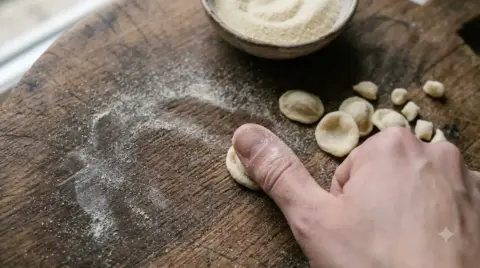
A garganelli board shapes flat egg dough squares into hollow, ridged tubes that hold sauce in their grooves. Garganelli is made in Emilia-Romagna, and according to Wikipedia’s garganelli entry, it is an egg-based pasta whose flat square is rolled into a cylinder over a ridged wooden board.
The ridges are the main reason cooks use a board instead of a knife. Garganelli has a visible seam where the square closes around the rod. That seam and the grooved surface give ragu and cream more to cling to than a smooth tube does.
The traditional tool is a pettine, a wooden comb with a ridged centre. Many home cooks now use a gnocchi board for the same motion. The old tool and the modern board do the same job, so a well-made board is a practical substitute.
The origin of the shape is uncertain. The Pasta Project lists two legends, one about a cardinal’s kitchen in 1725 and one about a countess’s cook in Forlì, and notes that the story is not confirmed.
Types of garganelli board
Most garganelli boards are beech wood and come in three styles: a single-purpose garganelli board, a gnocchi and garganelli combo, and a set that also includes a rolling pin. The style you pick decides how much other pasta work the board can handle.
| Feature | Single garganelli board | Gnocchi and garganelli combo |
|---|---|---|
| Main shapes | Garganelli only | Gnocchi and garganelli |
| Wooden roller | Usually included | Usually included |
| Storage footprint | Smaller | Slightly larger |
| Best for | Regular garganelli makers | Cooks who make several shapes |
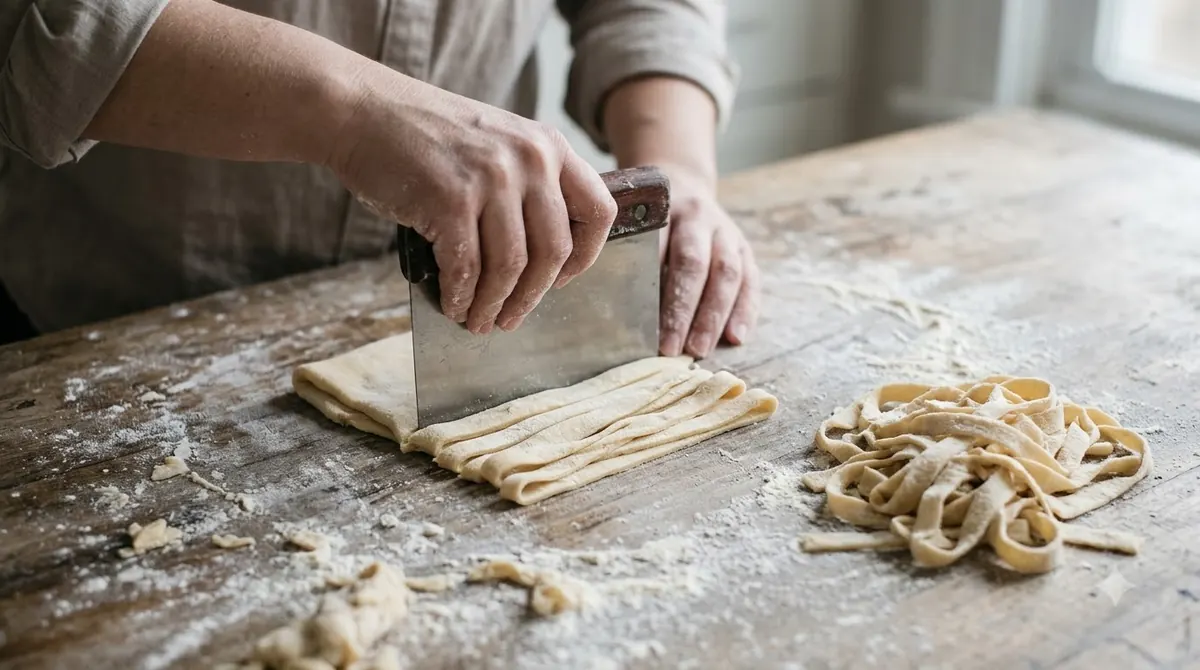
A rolling pin set is useful if you do not own a pasta machine, because the dough must be rolled thin before it is cut, and pasta rolling pins are sold separately if you prefer to pick your own. Check that the pin is wood and that the board comes with the roller, since a missing roller makes the tube hard to form.
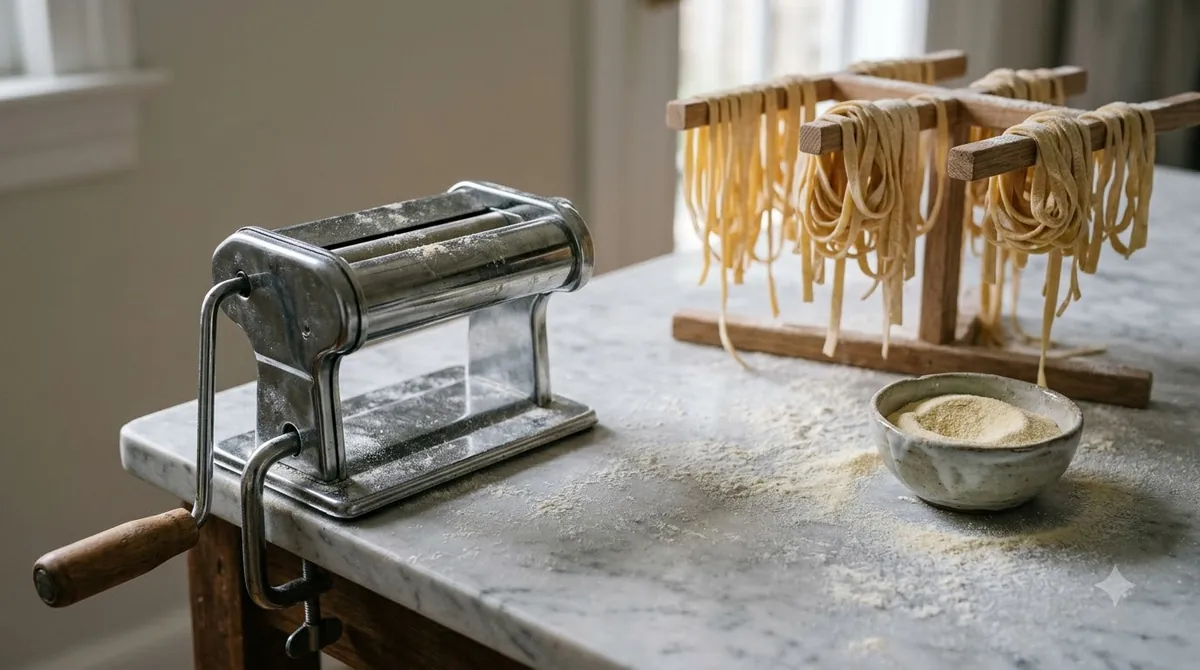
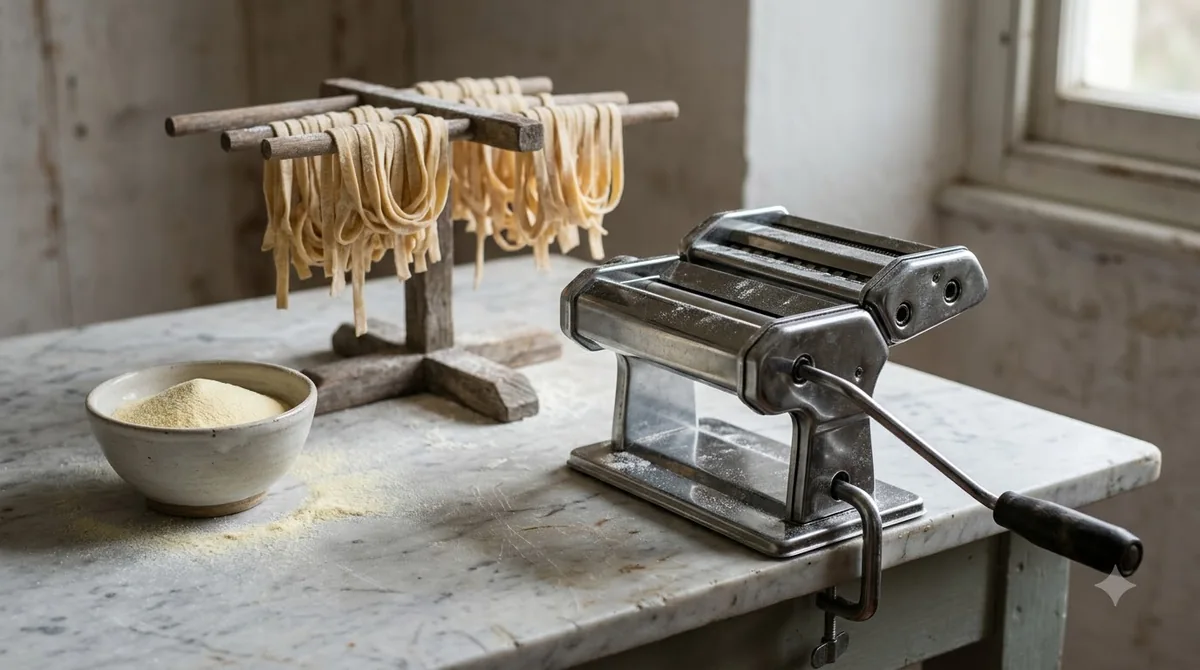
If you already own a pasta machine with a cutter, you can roll the sheet with it, cut the squares with a knife or one of the pasta cutters, and buy only the board and rod. A single garganelli board suits a cook who makes this shape every week, while a combo board suits a household that rotates through gnocchi, garganelli, and other short shapes.
How to use a garganelli board
To shape garganelli, cut the rolled dough into squares about 3 to 5 centimetres across, set each square on the board, and wrap it around the thin rod before rolling it over the ridges. The steps below follow the method described by The Pasta Project’s garganelli guide.
Steps for shaping
- Roll the dough thin and cut it into squares of about 3 to 5 centimetres.
- Place one square on the board with one corner pointing toward you.
- Lay the thin wooden rod diagonally across the square, near the corner closest to you.
- Roll the square around the rod so the corner wraps tightly.
- Press the rod gently over the ridges of the board to imprint the pattern while you roll.
- Slide the tube off the rod and place it on a floured tray.
A common reader example uses 180 grams of 00 flour, 20 grams of durum semolina, and two eggs. That is a flour blend of about 9 to 1 by weight, quoted from a reader reply on The Pasta Project and not a formal recipe, so check your own dough before you cut. Our guide to flour for fresh pasta covers which flours suit egg pasta.
Traditional sauces are rich and cling well to the ridges. Recipes from Emilia-Romagna often use a meat ragu, sausage, or pork loin, while spring menus use peas, mushrooms, or zucchini. Choose a sauce with enough body to sit inside the tubes.
Common mistakes are easy to avoid. Squares that are too large form loose tubes that open in the sauce, and dough that is too wet sticks to the ridges and tears. Dust the board and the rod lightly with flour, and let the cut squares rest on a floured tray while you shape the rest. Shaped tubes can then dry on the tray or on pasta drying racks until you cook them.
What to look for in a garganelli board
The right garganelli board has a beech wood surface, a clear ridge pattern, and a roller that is the same length as the board’s working area. Those three features decide how easy the tube is to form.
- Material: beech wood is the most common choice in product listings, and King Arthur’s gnocchi board listing describes its board as authentic beech wood.
- Roller: look for a wooden garganelli roller included with the board.
- Ridge depth: deeper ridges grip the dough better, but shallow ridges are easier to clean.
- Size: check the length and width before buying, because many listings do not show dimensions.
- Base: a flat or angled base that does not slide on the counter makes shaping easier.
Many listings do not state board dimensions, so ask the seller or read the spec sheet before you buy. A board that is too small for your dough sheet slows you down, and one that is too large can be awkward to store.
A practical test before buying is to measure the counter space you can spare and the drawer or shelf where the board will live. Keep the board flat when you store it, and keep it away from heat sources, since wood does not like sudden drying.
Care and storage
Wipe a wooden garganelli board with a dry cloth or a soft brush after each use, and avoid soaking it. Product listings disagree on washing, so a dry cleaning routine is the safer default for wood.
If the ridges look worn after months of heavy use, a reader report suggests light sanding with fine-grit sandpaper and then food-safe mineral oil. Check the care section on the product page first, since the board maker’s own guidance comes before any home fix. Dry the board fully before storing it.
A dry board keeps its ridges sharp for longer, which matters more than any cleaning product. Store it in a cupboard away from the stove and sink, where humidity changes less.
Frequently Asked Questions
What is a garganelli board used for?
A garganelli board is used to shape garganelli, the ridged egg pasta from Emilia-Romagna. You wrap each dough square around a thin rod and roll it over the ridged surface to form a hollow tube with a seam.
Can a gnocchi board make garganelli?
Yes, many gnocchi boards are used for garganelli, and some combo sets include a garganelli rod for this purpose. The grooves and the rod do the same work, so check that the board includes a rod or roller before you start.
How do you clean a garganelli board?
Brush off dried dough while it is dry and wipe the board with a damp cloth only if needed. Dry it thoroughly before storage, because soaking can warp beech wood.
Which sauce goes best with garganelli?
Meat ragu is the classic match, and sources describe Bolognese, sausage, and pork loin versions. Lighter sauces with peas, mushrooms, or zucchini also work because the ridges hold small pieces well.
A garganelli board is a small investment for anyone who makes egg pasta often. Choose a combo board if you also make gnocchi, and a single garganelli board if you want the simplest setup.
Before you buy, decide how often you will make fresh pasta. If the answer is once a month, a simple board with a roller is enough. If you make pasta weekly, a combo set and a good rolling pin will save time on every batch.
 8 min readGear & PantryHow to Use a Pasta Drying Rack for Homemade PastaUpdated Nov 10, 2026
 7 min readGear & PantryPasta Board: How to Choose, Use and Care for OneUpdated Nov 15, 2026
 9 min readGear & PantryThe Best Marinated Artichoke Hearts: Jarred, Canned, and HomemadeUpdated Nov 13, 2026
 9 min readGear & PantryThe Best Pizza Serving Boards for Home Cooks in 2026Updated Nov 17, 2026
 8 min readGear & PantryGnocchi Board: How to Choose and Use OneUpdated Nov 16, 2026
 8 min readGear & PantryHow to Use a Gnocchi Board: Step-by-Step GuideUpdated Nov 10, 2026