
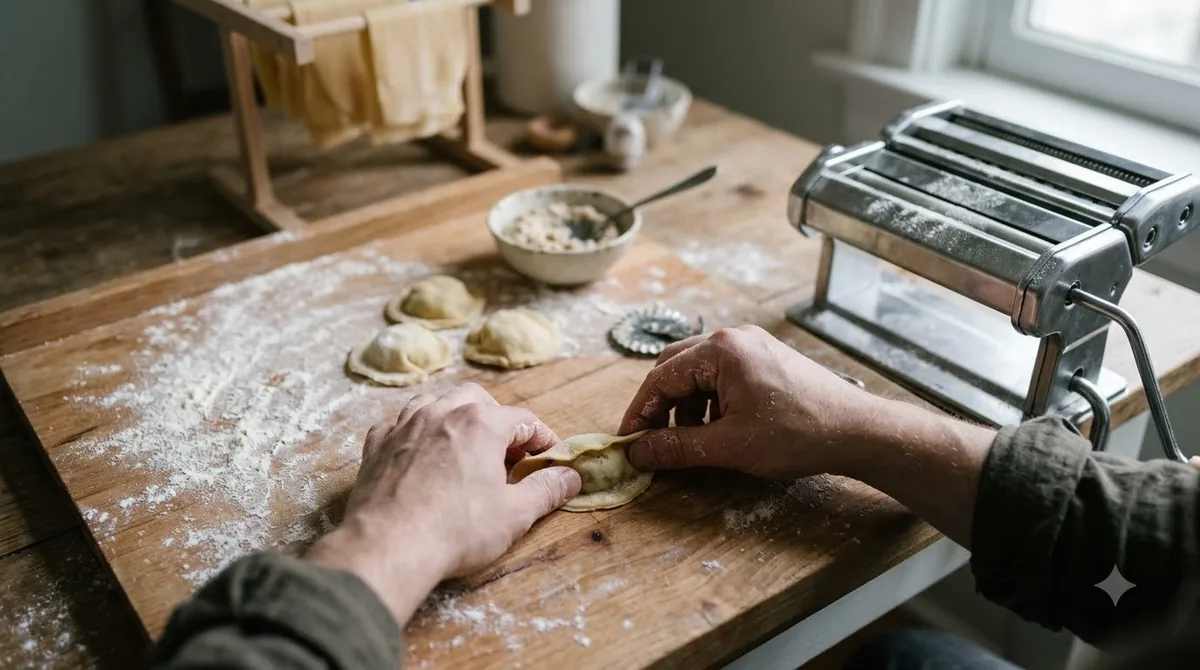

A butternut squash ravioli recipe pairs a simple egg pasta dough with a roasted squash and Parmesan filling, finished in brown butter and sage. The dough takes about an hour to rest, and the filling needs roasting until it is dry enough to hold its shape. Every quantity below comes from one published butternut squash ravioli recipe, with notes where the sources disagree.
What Is a Butternut Squash Ravioli Recipe?
Butternut squash ravioli is stuffed pasta with a sweet, roasted squash filling sealed inside thin egg dough.
According to Wikipedia’s ravioli entry, ravioli are stuffed pasta with a filling enveloped in thin dough, and they are usually square, though circular and half-moon shapes also exist. The same article traces the word to 14th-century letters from Francesco Datini, a merchant in Prato, and to a cookbook called The Forme of Cury.
The squash version replaces the traditional ricotta or meat filling with butternut squash, which turns sweet when roasted. A brown butter and sage sauce is a common partner, because the nutty butter balances the squash. This butternut squash ravioli recipe follows that pattern from start to finish.

Ingredients and Equipment for the Dough and Filling
One published butternut squash ravioli recipe for four servings uses 2 cups of flour, 4 egg yolks and 2 whole eggs for the dough, and about 1 3/4 pounds of butternut squash for the filling.
- Dough: 2 cups all-purpose flour, 4 egg yolks and 2 whole eggs, 2 tablespoons olive oil, 1/4 teaspoon kosher salt.
- Filling: 1 3/4 pounds butternut squash, 2 tablespoons butter, 2 tablespoons olive oil, 1 tablespoon maple syrup, 3/4 teaspoon kosher salt, 1/4 teaspoon dried sage, 1/4 teaspoon garam masala, 1/4 teaspoon black pepper, 2 tablespoons grated Parmesan.
- Sauce: 4 tablespoons butter, 3 garlic cloves, 10 fresh sage leaves, 1/4 cup chopped walnuts, and 1 tablespoon kosher salt for the cooking water.
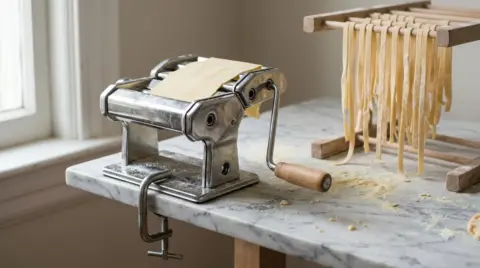
You need a food processor or a large bowl for this butternut squash ravioli recipe, a rimmed baking sheet, a pasta machine or a rolling pin, and a ravioli cutter or a sharp knife. For a butternut squash ravioli recipe, a pasta machine gives the most even sheets, but a rolling pin works if you roll slowly and check the thickness often.
How to Make the Egg Dough
Process the flour, eggs, oil and salt for 45 to 60 seconds until a barely sticky dough forms, then rest it for at least one hour.
- Separate the eggs, then combine the flour, egg yolks, whole eggs, olive oil and salt in a food processor.
- Process 45 to 60 seconds until the dough is barely sticky.
- If the dough is too sticky, add flour 1 tablespoon at a time. If it will not come together, add water 1 teaspoon at a time.
- Knead on a floured surface for about 2 minutes, wrap in plastic, and rest at room temperature for at least 1 hour, up to 4 hours.
The rest is easy to skip, but a butternut squash ravioli recipe depends on it, because fresh pasta dough is much easier to roll after it has rested. Keep the dough wrapped while you work so it does not dry out at the edges. Adding flour too early is the most common way to end up with a dry, cracked sheet.
Roasting and Puréeing the Squash Filling
Roast 1-inch squash chunks at 425°F for 40 to 60 minutes, turning them every 20 minutes, until they are tender and caramelized. The Tasting Table butternut squash ravioli recipe uses this roasting method with maple syrup and sage for seasoning.
- Preheat the oven to 425°F. Melt 2 tablespoons butter, then whisk in the maple syrup and the remaining 2 tablespoons olive oil.
- Halve the squash lengthwise, scoop out the seeds, and cut the flesh into 1-inch chunks.
- Spread the chunks on a rimmed baking sheet, drizzle with the butter mixture, and season with the sage, garam masala, black pepper and 3/4 teaspoon salt.
- Roast 40 to 60 minutes, turning every 20 minutes, until tender and caramelized.
- Process the roasted squash with 2 tablespoons Parmesan until smooth.
Wikipedia’s butternut squash entry notes that the skin softens when roasted, so you can leave it on, though many cooks peel it first. Peeling makes a smoother purée and is the safer choice for a first batch.
A loose purée is the usual reason a filling leaks during sealing. If the purée still looks wet, spread it on a tray for a few minutes so the steam escapes before you fill the pasta. Loose filling can push through the dough and tear it at the seam.
The Tasting Table article is inconsistent on portion size. Its text suggests a heaping tablespoon of filling per ravioli, while its recipe card says a heaping teaspoon. Start with a teaspoon, which makes the seal easier to close.
Rolling, Filling and Sealing the Ravioli
Roll each piece of dough into a rectangle about 6 by 18 inches and 1/16 inch thick, which is the thickness this butternut squash ravioli recipe gives.
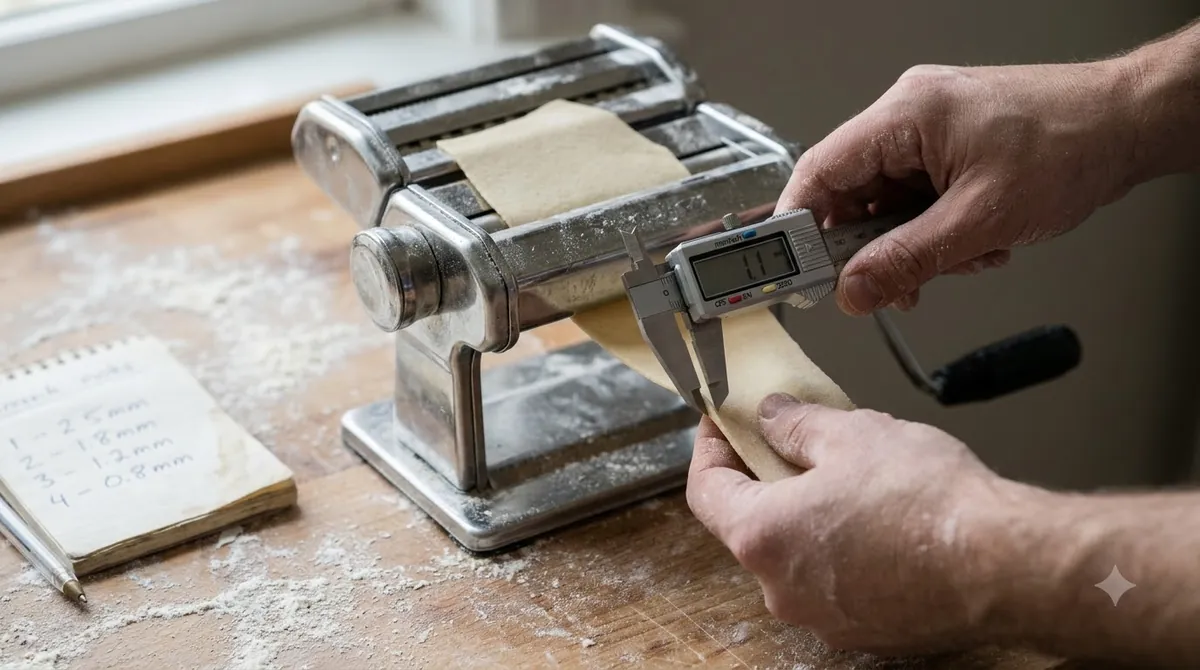
Cut the rested dough into a log, cut the log in half, and cut each half into three pieces. Roll each piece into a rectangle, flipping and rotating as you go, and keep unused pieces covered so they do not dry out.
- Mark a 3-inch grid on one sheet.
- Place a teaspoon of filling in the center of each square.
- Cover with a second sheet, press out the air around each mound, and seal the edges firmly.
- Cut between the squares with your cutter of choice and set the ravioli on a floured tray.
Thin sheets are delicate and cook quickly, while thicker sheets hold a heavier filling but need more care when sealing. Check the thickness with a caliper or against the setting on your pasta machine rather than judging by eye.
Cooking Time and Doneness
Fresh butternut squash ravioli cook in boiling salted water, but published times range from about 2 to 10 minutes, so judge the texture rather than the clock.
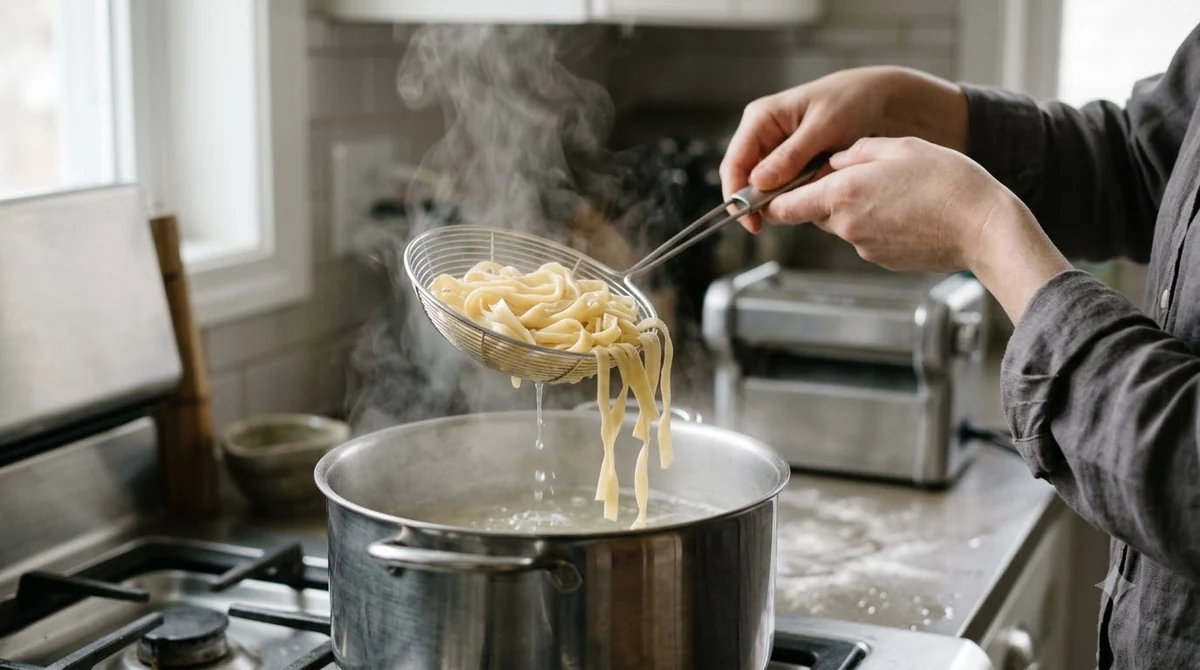
- Bring a large pot of water to a boil and add 1 tablespoon kosher salt.
- Cook 8 to 10 ravioli at a time, so the water keeps boiling.
- Lift them out with a slotted spoon once they float and move them straight into the sauce.
The Tasting Table butternut squash ravioli recipe gives only the float cue and no time. The Pauper’d Chef’s homemade ravioli article reports that the author’s pieces floated at two minutes but were still hard, and that the filled parts were tender by six to eight minutes. That is one writer’s test, not a rule, so cut one ravioli open to check when you cook this butternut squash ravioli recipe for the first time.
Brown Butter Sage Sauce and Serving
Brown 4 tablespoons of butter with sage, garlic and walnuts over medium heat, then toss the cooked butternut squash ravioli in the sauce.
- Thinly slice 10 sage leaves and smash 3 garlic cloves.
- Melt 4 tablespoons butter in a large skillet over medium heat.
- Add the sage, garlic and 1/4 cup chopped walnuts, and cook until the butter browns. Turn off the heat.
- Lift the ravioli into the butter with a slotted spoon, toss gently, and finish with Parmesan, black pepper and a few whole sage leaves.
Brown butter moves from golden to burnt within seconds, so take the pan off the heat as soon as it smells nutty. Serve this butternut squash ravioli recipe right away, because the sauce thickens as it cools.
Storing Squash and Leftover Ravioli
Whole butternut squash keeps best at 10 °C (50 °F) and 50 percent humidity, with an optimal eating period of 3 to 6 months after harvest, and cooked leftover ravioli keep up to five days in the refrigerator.
| Item | Storage guidance |
|---|---|
| Whole butternut squash | 10 °C (50 °F) and 50 percent humidity; optimal eating period 3 to 6 months after harvest (Wikipedia) |
| Roasted squash filling | Cover and refrigerate; check a current food safety guide for how long cooked vegetables keep |
| Cooked leftover ravioli | Refrigerate up to five days and reheat in the microwave (Tasting Table recipe note) |
Frequently Asked Questions
Can I make the filling ahead of time?
Yes, you can roast and purée the squash for this butternut squash ravioli recipe a day ahead, which splits the work into two sessions. Keep the purée covered in the refrigerator until you fill the pasta, and check a current food safety guide for how long cooked vegetables keep.
Can I freeze uncooked butternut squash ravioli?
The recipe source used for this guide does not give a freezing method, so this article does not state one. Look for a tested freezing method from a trusted recipe before you freeze a full batch.
Why is my filling watery?
In a butternut squash ravioli recipe, a loose purée is the most likely cause, because squash releases moisture as it cooks. Roast until the edges are caramelized, then let the purée cool and spread it on a tray for a few minutes before filling.
What sauce goes best with butternut squash ravioli?
Brown butter with sage is the sauce this butternut squash ravioli recipe uses. Its nutty flavor balances the sweet squash, and the walnuts add a little crunch. For a simpler finish, melted butter with Parmesan keeps the squash flavor in front.
Can I use store-bought wrappers instead of homemade dough?
You can use store-bought wrappers with this butternut squash ravioli recipe, but wrappers have their own size and thickness, so the amount of filling and the cooking time may change. Test one ravioli before you cook a full batch, and check the seal in the water.
Once the dough is rested and the filling is dry, a butternut squash ravioli recipe is forgiving. Focus on those two steps, and cut one ravioli open on the first batch to check the seal and the texture before you cook the rest.
 8 min readLearnRicotta Ravioli Recipe: Egg Dough, Filling and Cooking StepsUpdated Nov 11, 2026
 6 min readLearnHow to Seal Ravioli: Press Out Air and Keep Filling InsideUpdated Nov 13, 2026
 5 min readLearnHow to Make Ravioli Filling With Ricotta and CheeseUpdated Nov 13, 2026
 8 min readLearnTortellini vs Ravioli: Shape, Filling and Cooking ComparedUpdated Nov 12, 2026
 6 min readLearnHow to Make Sacchetti: Dough, Fillings and Sauces at HomeUpdated Nov 13, 2026
 8 min readLearnHomemade Ravioli: Easy 3-Egg Dough Recipe and TipsUpdated Nov 10, 2026