
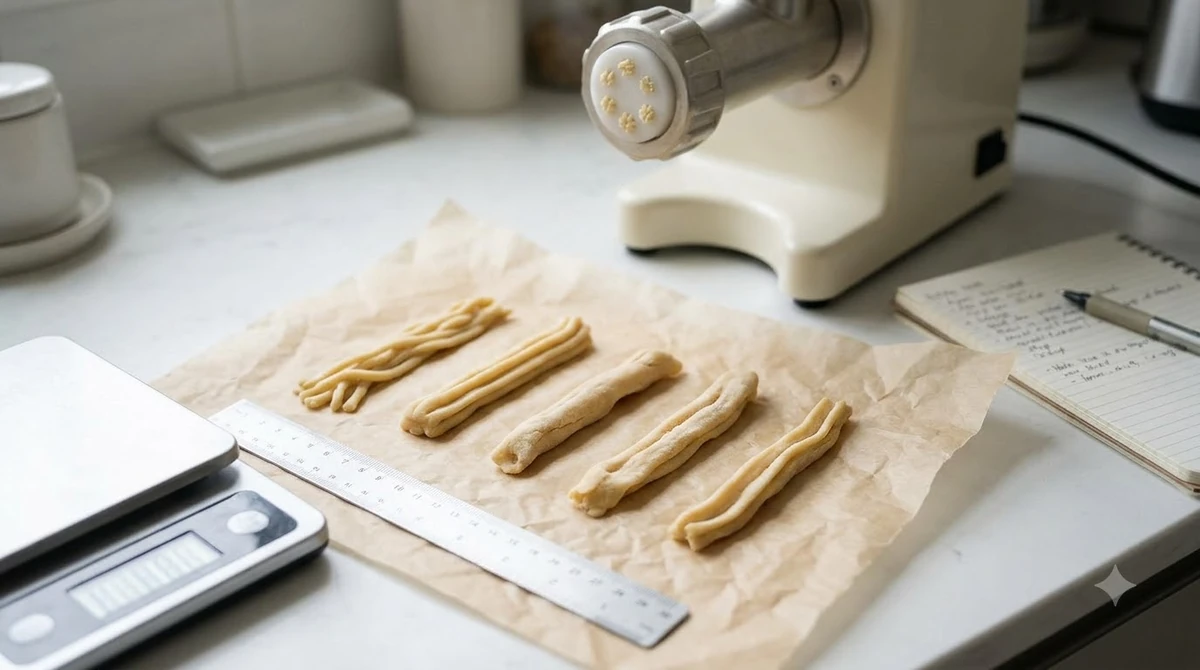

Cencioni pasta is a short, oval, petal-shaped Italian pasta with one rough side that helps sauce cling. Its name is usually translated as “little rag,” and sources place it in Italy without agreeing on one home region.
Think of cencioni as a larger, flatter shape than orecchiette. A separate fava-flour version from the Marche region is also described online, so the name can refer to two different doughs.
What Is Cencioni Pasta?
Cencioni pasta is a short shape with an oval, petal-like outline and a slight curve.
The Wikipedia entry on cencioni pasta, which draws on the Encyclopedia of Pasta by Oretta Zanini De Vita, describes the shape as larger and flatter than orecchiette, with a more irregular outline. That shape description has no inline citation on the page, so treat it as a general description rather than a measured one.
The most useful physical detail is the surface. One side of cencioni is rough, and that texture gives sauce more to grip than a smooth shell or tube would.
When you shop for cencioni pasta, look for a short, flat, curved piece rather than a tube or a long strand. For a different hand-shaped pasta, see our guide to foglie d ulivo pasta. Shape names differ between brands, so read the package picture and the product description before you buy.
What Does the Name Mean?
Cencioni is usually translated as “little rag,” according to the Wikipedia entry, which cites Oretta Zanini De Vita’s Encyclopedia of Pasta published in 2019.
The translation points to a small, flat, irregular piece of dough, which fits the shape the sources describe. It is a loose translation rather than a documented history of the word.
The same entry notes that it relies on a single source and may not meet notability guidelines. Expect less detail about cencioni than about better-documented shapes such as orecchiette or fusilli.
Cencioni and Its Fava Version
Two versions of cencioni pasta appear online: a plain version made from semolina and water, and a fava version from the Marche with fava bean flour and eggs.
| Feature | Plain cencioni | Cencioni di fava |
|---|---|---|
| Main flour | Semolina, according to one recipe site | Fava bean flour mixed with wheat flour |
| Eggs | Not listed in the sources read | Listed in a recipe blog |
| Home region claimed | Basilicata, per one recipe site (not confirmed) | Marche, per a recipe blog |
| Serving suggestion | Not stated in the sources read | Sausage or guanciale sauce, per a recipe blog |
The fava version of cencioni pasta has more detail online, but that detail comes from blogs rather than a formal source. One blog suggests an equal mix of fava flour and wheat flour makes a reliable dough. Treat that ratio as one source’s suggestion and check any recipe you follow against its own ingredient list.
Where Cencioni Comes From
Cencioni pasta is listed as Italian, but its home region is disputed. Basilicata appears in one recipe site’s account of the plain pasta, and the Marche appears in accounts of the fava version.
The Wikipedia infobox names only Italy as the place of origin. The Basilicata claim is not backed by a formal source in the material read for this article. The Marche link is more specific, but the claim that the fava version dates to the Middle Ages also comes from a blog and could not be confirmed elsewhere.
For a shopper, the label on the package is a more reliable guide than an origin story. For background, the Wikipedia entry on cencioni gives the most complete published description available in the sources read.
How to Cook Cencioni Pasta
Cook cencioni pasta in salted boiling water and follow the cooking time on the package, because none of the sources read gives a time for this shape.
- Bring a large pot of water to a rolling boil and add enough salt that the water tastes seasoned.
- Add the pasta and stir during the first minute so the pieces do not stick together.
- Check the printed cooking time, then taste a piece a minute or so before it is due.
- Reserve a little of the starchy cooking water before you drain the pasta.
- Toss the pasta in the pan with the sauce so the rough side picks up the sauce.
If the package gives no time, check the brand’s website before you rely on a guess. Taste is the final check: the pasta should be tender with a slight firmness at the centre, as in our guide to cooking pasta al dente.
Sauces That Suit Cencioni Pasta
Cencioni pasta works best with chunky sauces that can settle into the rough side, and one blog says the fava version is traditionally served with a sausage or guanciale sauce.
This pairing follows from the shape rather than from a documented tradition. A thin, watery sauce tends to pool at the bottom of the bowl, while a sauce with small pieces of meat, vegetable or herb can stay in the ridges and surface texture.
A simple tomato sauce with a little olive oil and a few chopped herbs is a reasonable starting point for the plain version. Adjust the sauce to the texture of the pasta you bought rather than to a fixed rule.
What Is Not Verified Yet
The sources read give no measured size, no cooking time and no confirmed home region for cencioni. Any millimetre figure you find for this shape should be checked against a published measurement.
To check a specific cencioni pasta product, read the ingredient list and the cooking time on the box, and compare the shape with the producer’s own photo. For the fava version, compare the flour list with the blog ratio above, because recipes differ on how much fava flour they use.
Frequently Asked Questions
Is cencioni pasta the same as orecchiette?
No, cencioni is a different shape. The Wikipedia entry describes it as larger and flatter than orecchiette, with one rough side that helps sauce cling, so the two are not a direct swap in every recipe.
What does cencioni mean?
Cencioni is usually translated as “little rag” in Italian, according to a Wikipedia entry that cites the Encyclopedia of Pasta. The entry relies on that single source, so treat the translation as one reading rather than settled history.
Where is cencioni pasta from?
Sources name Italy as the country of origin. One recipe site links the plain pasta to Basilicata, and a recipe blog links the fava version to the Marche, but neither regional claim was confirmed by a formal source.
Is cencioni di fava made with fava beans?
Yes, the fava version uses fava bean flour, mixed with wheat flour and eggs according to a recipe blog. The exact flour ratio is not confirmed, so check the ingredient list on the package or in your recipe.
What sauce goes with cencioni?
A chunky sauce is the safest choice, because the rough side holds small pieces better than a thin sauce. One blog says the fava version is traditionally served with a sausage or guanciale sauce.
How long do you cook cencioni?
Follow the cooking time on the package, because none of the sources read gives one for cencioni. Start tasting a minute before the printed time and stop when the pasta is tender with a slight bite.
If you find cencioni pasta in a shop, choose it for chunky sauces and read the package for the version and cooking time. Treat the origin stories as open questions, and let the label and ingredient list guide the purchase.
 7 min readLearnScarpinocc Pasta: The Shoe-Shaped Filled Pasta From ParreUpdated Nov 11, 2026
 8 min readLearnGigli Pasta: The Ruffled Lily-Shaped Pasta ExplainedUpdated Nov 10, 2026
 8 min readLearnCorzetti Pasta: What It Is, How It Is Shaped and How to Serve ItUpdated Nov 6, 2026
 8 min readLearnCappellacci Pasta: The Hat-Shaped Stuffed Pasta From FerraraUpdated Nov 6, 2026
 8 min readLearnLumache Pasta: The Shell-Shaped Pasta ExplainedUpdated Nov 10, 2026
 8 min readLearnPasta con i Broccoli Recipe: A Simple Italian Broccoli PastaUpdated Nov 11, 2026