
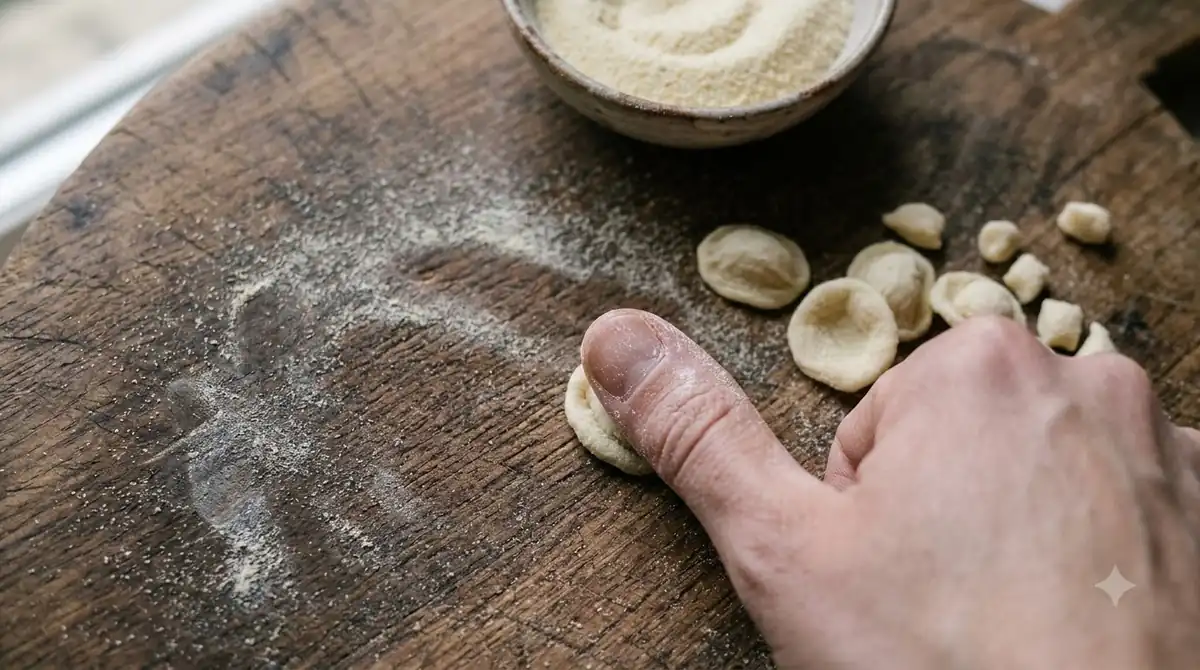

Foglie d ulivo pasta is a handmade Italian pasta cut into the shape of olive leaves, traditionally made from durum wheat semolina and water in Apulia and Liguria. The leaves are small, flat and tapered at both ends, so they hold a sauce well and cook in only a few minutes. Making them at home takes patience, but the steps are simple once you know the dough texture and the shaping cut.
What is foglie d ulivo pasta?
Foglie d ulivo pasta is a handmade shape whose name means “olive leaves” in Italian. Each piece is flat, elongated and pointed at both ends, which is why the shape is described as a leaf rather than a tube or a twist.
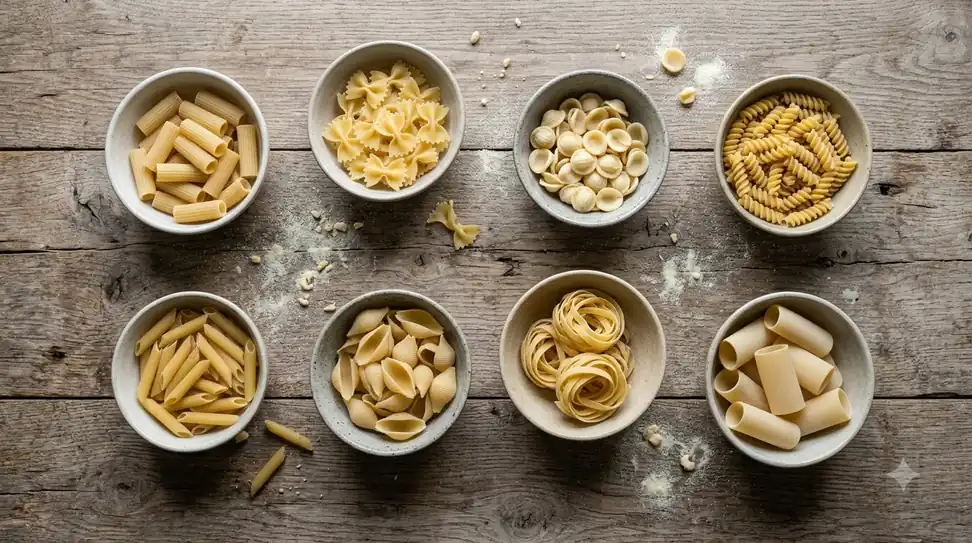
The shape belongs to the strascinati family, a group of hand-shaped pastas made by rolling flour and water dough into thin “snakes,” cutting them into small pieces and then dragging each piece across a surface or shaping it with the fingers, a thumb, a knife or other tools. That hand method is why no two batches look exactly alike, and why the leaves are often a little irregular. For a general overview of the shape, the Wikipedia entry on foglie d’ulivo is a good starting point.
Some accounts link foglie d ulivo pasta to orecchiette, another small hand-shaped pasta, because both start from small pieces of dough shaped by hand. The finished forms differ: foglie are leaves cut with a knife, so they are easy to tell apart once you see them side by side.
Where foglie d ulivo pasta comes from
Foglie d ulivo pasta comes from Apulia (Puglia) and Liguria, the two Italian regions named in most sources, and it is most typical in the Monti Dauni area of Puglia. The Pasta Project also reports that the shape can be found in Calabria and Sicily. For other hand-shaped pastas from the south, see capunti from Puglia and fileja from Calabria.
The base dough is durum wheat semolina and water. The spinach version is one common variation, and The Pasta Project notes that a white version also exists, so colour alone does not tell you which style you are buying.
One origin story is often repeated: that the shape began as orecchiette that were stretched so less dough was wasted. The author of one specialist source said they could not find reliable historical evidence for that account, so treat it as a story rather than a documented fact.
Ingredients and the green spinach version
The base dough for foglie d ulivo pasta is durum wheat semolina and water, with no egg in the versions reviewed. The green version adds steamed, puréed spinach (see how to make spinach pasta dough), and the amount of water changes depending on how much spinach you use.
| Version | Ingredients given | Source |
|---|---|---|
| Plain semolina | Durum wheat semolina and water, no egg | The Pasta Project |
| Green, version A | 500 g durum semolina, 150 ml water added gradually, 100 g steamed and puréed fresh spinach | Pasta Evangelists recipe |
| Green, version B | 10 oz (283 g) fresh baby spinach, steamed, puréed and squeezed dry, blended with ⅓ cup (79 ml) water | Bigger Bolder Baking recipe by Gemma Stafford |
Semolina for this pasta is milled from hard durum wheat. The Bigger Bolder Baking recipe describes it as about 13% protein, which is a useful number when you compare bags. If the dough feels too wet after adding spinach, the same recipe says to add more semolina rather than more water.
Because the two green recipes use different spinach and water ratios, start with the smaller amount of water and add the rest slowly. The dough should be firm enough to roll into a rope without sticking to your hands.
How to shape foglie d ulivo pasta by hand
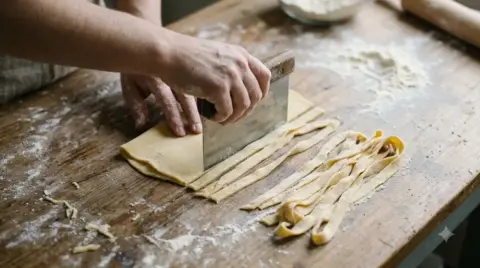
To shape foglie d ulivo pasta, roll the dough into a rope, cut it into small pieces, taper each piece and press a knife down the middle so the piece opens into a leaf. The exact sizes differ slightly between recipes, but the method is the same.
- Divide the dough into quarters and keep the pieces you are not using covered, so they do not dry out.
- Roll one portion into a rope about ¼ inch (16 mm) thick on an unfloured surface.
- Cut the rope into 1½ inch (4 cm) pieces. The Pasta Evangelists recipe uses a thicker rope of about 2 cm and cuts pieces between 1 and 2 cm, so use whichever size you prefer and keep the pieces even.
- Roll each piece between your palms so both ends taper into a thin point.
- Hold one end down, press a table knife at a slight angle into the centre, lengthwise, and drag the knife down and away from you. This spreads the piece and creates the leaf’s central crease.
- Pinch the ends to finish the leaf, then place it on a semolina-dusted tray.
Uneven thickness is the most common problem. A leaf that is thick in the middle will take longer to cook than a thin one, so keep your pieces similar in size. The recipes also say to keep unused dough covered so it does not dry out while you work.
How to dry and store foglie d ulivo pasta
Dry foglie d ulivo pasta in a single layer for 12 to 24 hours if you have time, or in an oven or dehydrator at about 135°F for around 4 hours, checking after 2 hours. The card of the Bigger Bolder Baking recipe says “several hours” and its body text says 12 to 24 hours, so plan for the longer window if you are not in a hurry.
| Method | Time given | What to check |
|---|---|---|
| Air-dry on a tray | 12 to 24 hours | Single layer, semolina-dusted tray, no touching |
| Oven or dehydrator | About 4 hours at 135°F | Check at 2 hours; follow your appliance manual for low-heat settings |
The sources reviewed do not give storage instructions for dried leaves. Keep them in an airtight container away from heat and moisture, which is standard advice for dried pasta, and check the package or your own notes for the drying date. For a general walkthrough, see how to dry fresh pasta.
How long to cook foglie d ulivo pasta
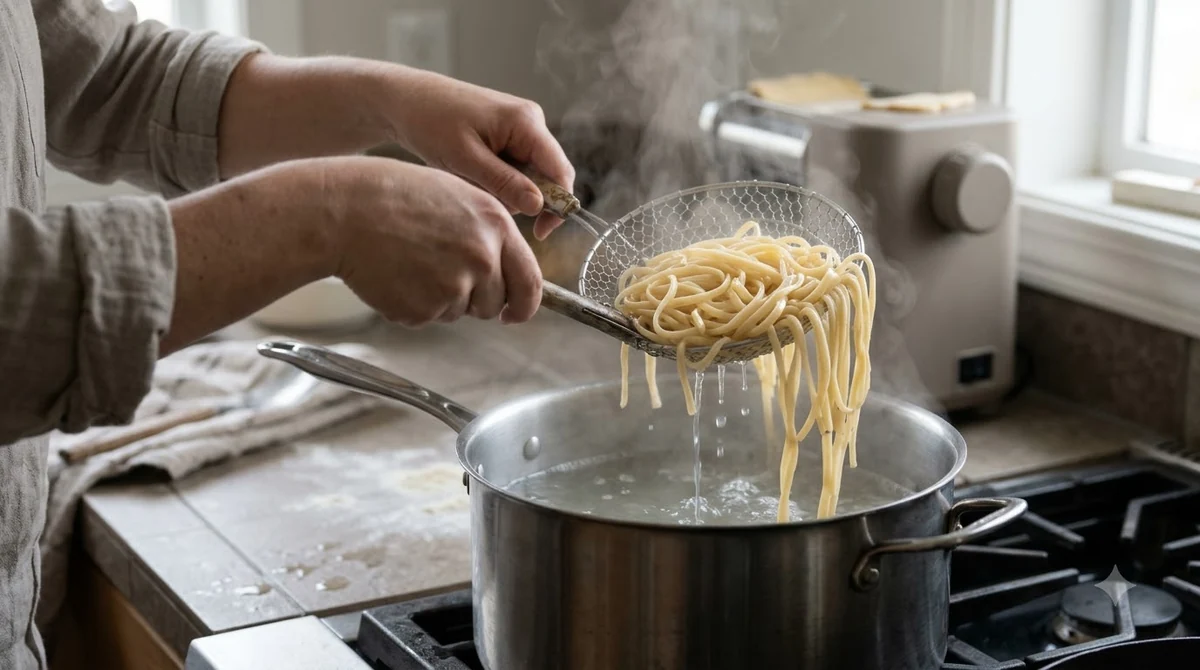
Fresh foglie d ulivo pasta cooks in salted boiling water in roughly 3 to 10 minutes, depending on the recipe and the thickness of the leaves. The two recipes compared here give different times, so taste as you go.
| Recipe | Cooking time given | Doneness cue |
|---|---|---|
| Bigger Bolder Baking (fresh) | 6 to 10 minutes | Plump, with no chalky or raw centre |
| Pasta Evangelists (fresh) | About 3 minutes | Just al dente |
Use well-salted water and a large pot so the leaves can move freely. Start tasting at the lower end of the range, because thin, small leaves finish first. Lift one out, bite through the thickest part and check that the centre is no longer chalky before draining.
- Taste one leaf at 3 minutes, then every minute after that.
- Drain once the centre is no longer chalky, and keep a splash of cooking water for the sauce.
Sauces that suit foglie d ulivo pasta
Foglie d ulivo pasta pairs with hearty sauces in Puglia and with fish and mushroom sauces in Liguria, and the leaves suit both simple oil-based finishes and chunky ragù.
- Puglia: meaty ragù, seafood, foraged cardoncelli mushrooms, or fresh tomatoes with burrata and a pinch of red chilli.
- Liguria: tomatoes with porcini mushrooms, or mackerel with taggiasca olives and lemon.
- Simple finish: chopped thyme, basil, oregano and garlic in olive oil, or leaves tossed in warm olive oil with Parmesan.
- Pasta salad: cooked leaves can also be used in a summer salad, as one source suggests.
Most of the sauces named by these sources are chunky or oil-based, which suits a small, leaf-shaped pasta better than thin, watery sauces.
Common mistakes when making foglie d ulivo pasta
Most problems with foglie d ulivo pasta come from dough that is too wet or too dry, pieces left uncovered, and leaves of uneven thickness. Each of these is easy to avoid once you know what to watch for.
- Too much water: the dough sticks to the bench and tears. Add more semolina in small amounts, as the spinach recipe suggests.
- Uncovered dough: pieces left out can dry out. Keep unused portions covered while you shape.
- Uneven thickness: thick leaves can stay chalky in the centre while thin ones are already done, so match the size of your pieces and taste to check.
Frequently Asked Questions
Is foglie d ulivo pasta the same as orecchiette?
No. Some accounts link the two, since both start from small pieces of dough shaped by hand, but foglie d ulivo are leaves cut and dragged with a knife, so the finished shapes are different.
Is foglie d ulivo pasta always green?
No. The green version uses spinach in the dough, but a white version also exists, so colour alone does not tell you the recipe.
Does foglie d ulivo pasta contain egg?
The versions reviewed use only durum wheat semolina and water, with spinach added for the green style. Check the ingredient list on any packaged product, because recipes can vary.
How long does dried foglie d ulivo pasta keep?
The sources reviewed do not give a shelf life for homemade dried leaves. Store them airtight in a cool, dry place and check the packaging or your own notes for the date you dried them.
Can I make foglie d ulivo pasta without a special tool?
Yes. The shaping steps in the recipes use a surface, your hands and a table knife. The Pasta Evangelists recipe also mentions a blunt knife for pressing the middle, so use whichever knife you have that is not too sharp.
Start with the plain semolina dough, practise the knife drag on a few pieces, and then try the spinach version once the shape feels familiar. Foglie d ulivo pasta rewards patience, and the result looks impressive on the plate.
 8 min readLearnReginette Pasta: Shape, Origin and 5 Best SaucesUpdated Nov 11, 2026
 8 min readLearnTrottole Pasta: The Spiral Shape, Its Origin and How to Cook ItUpdated Nov 11, 2026
 9 min readLearnCiriole Pasta: Origin, Dough and How to Shape ItUpdated Nov 10, 2026
 7 min readLearnCapunti Pasta: Shape, Origin, Recipe and Best SaucesUpdated Nov 11, 2026
 7 min readLearnSedani Pasta: Shape, Origin and How to Cook ItUpdated Nov 10, 2026
 9 min readLearnLagane Pasta: Origins, Shape and a Homemade RecipeUpdated Nov 6, 2026