

Reginette pasta is a dried ribbon from Naples with ruffled edges, and its shape holds creamy and chunky sauces well. The name is often translated as “little queens,” and the pasta is also sold under names such as mafalde and mafaldine. Its origin story is less settled than many pages suggest.
What Reginette Pasta Is and Where It Comes From
Reginette is a long, flat ribbon with scalloped or ruffled sides, originally from Naples in the Campania region. It is closely related to the long ribbon sold as mafalde, and sources list reginette as one of its synonyms.
The Wikipedia list of pasta lists mafalde as a long rectangular ribbon with ruffled sides, named in honor of Princess Mafalda of Savoy. According to The Pasta Project’s mafaldine guide, the shape was earlier called “manfredine” before its name was changed in her honor. The princess was born in 1902, so the name is tied to the 20th century rather than a medieval queen. Many shops now carry the same shape as reginette, mafalde or mafaldine on the label.
Mafaldine is the short version. Sources describe it as short ribbons with ruffled sides, and the name translates roughly as “little mafalde.” A short cut is sometimes sold as mafalda corta. If a package says mafaldine, expect a shorter piece than the long ribbon, so check the package for the shape you want.
The origin is easier to pin down than the name. Sources agree that reginette comes from Naples and Campania, and the shape is also linked to dishes in Sicily and Puglia. Treat any claim about a specific royal event or exact year of invention as unconfirmed unless the source names its own evidence.
A simple way to remember the shape is to think of reginette pasta as a ruffled cousin of a flat ribbon. It stays long and wide like a ribbon, but the edges do the work that a smooth strand cannot.
Why the Ruffled Edges Matter for Sauce
The ruffled edges are the main reason cooks pick reginette over a smooth ribbon. The pasta brand Sfoglini’s pairing guide describes its reginetti as ruffled ribbons that suit creamy sauces and lighter ragùs, and says the edges increase surface area so the sauce clings.
That claim comes from a brand describing its own product, so read it as a practical guide rather than a lab result. Still, the logic holds for any ruffled ribbon: a thin, runny sauce runs off the flat middle, while a thick sauce settles into the folds. Pappardelle is the closest smooth-edged relative and tends to pair with the same heavy sauces.
The same logic applies when a sauce has small pieces in it, such as peas, chopped onion or flaked fish, because the folds catch those bits as well as the liquid. That is one reason reginette pasta works well with a chunky sauce.
The edges also affect texture on the fork. Each ruffle holds a bit of sauce, so a bite of reginette carries more flavor than the same amount of a plain flat strand. For this reason, the sources pair reginette with sauces that have body, such as those built on onion, ricotta or a ragù.
Best Sauces for Reginette Pasta
Reginette pairs best with creamy, light or chunky sauces that cling to the edges. Italian and brand sources name a few classic matches, mostly from Naples and Sicily, plus a general rule for choosing a sauce.
| Sauce style | Why it works | Where it appears |
|---|---|---|
| Ricotta in bianco | Soft, creamy base that clings to the ruffles | Neapolitan style, made with sheep’s milk ricotta, lardo and pecorino |
| Chickpea (ceci) | Thick and earthy, holds in the folds | Neapolitan pasta and legume dishes |
| Tropea onion | Sweet, slow-cooked base with body | Neapolitan style, using the red onion of Tropea |
| Swordfish or anchovy with tomato | Strong flavor balanced by the ribbon’s surface | Sicilian style, sometimes with pine nuts and raisins |
| Light tomato or vegetable sauce | Lighter than a heavy ragù, still clings | Named by Sfoglini as a good match for reginetti |
A simple rule helps when a recipe does not name a sauce. Choose a sauce that is thick enough to coat a ribbon without pooling at the bottom of the bowl. Thin tomato sauce with little body tends to slide off the ruffles, so either simmer it longer or add a spoonful of starchy pasta water to loosen a thick one.
For a simple weeknight meal, a light tomato or vegetable sauce is the easiest reginette pasta option, since it asks for fewer ingredients than a ragù. Seafood is a traditional choice too. One Italian recipe source pairs reginette with langoustines, and another pairs it with fresh tuna and sundried tomatoes. These are recipe choices rather than rules, so match the sauce to the fish you have.

How to Cook Reginette Pasta
Cook reginette in a large pot of salted boiling water until it is al dente, and use the time printed on the package as your guide. None of the sources checked gave a fixed cooking time, so do not rely on a number from a blog post.
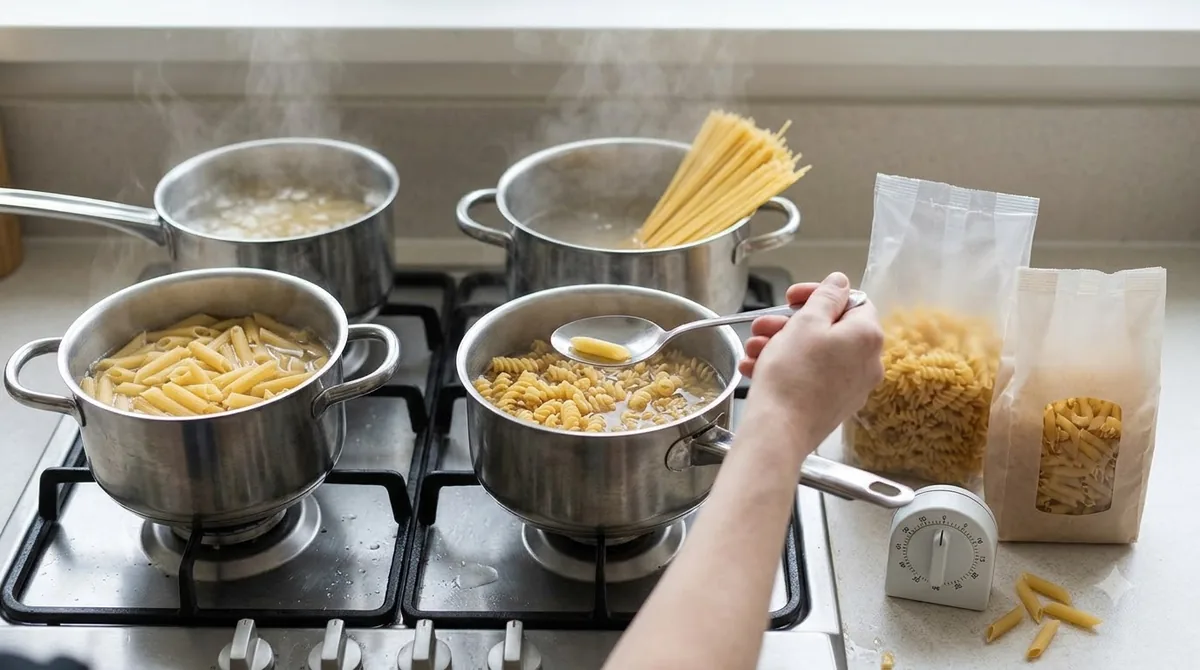
Reginette pasta cooks like other dried ribbon shapes, so the pot, the salt and the timing matter more than any special method. Use plenty of water so the ribbons can move freely and do not clump in the pot.
- Bring a large pot of water to a rolling boil and salt it generously.
- Add the reginette and stir in the first minute so the ribbons do not stick together.
- Start testing a minute before the time on the package and taste for a firm center.
- Reserve a cup of pasta water before draining, since it helps the sauce cling.
- Toss the pasta with the sauce in the pan over low heat before serving, adding pasta water as needed.
For baked dishes, one reader reply from the blog author of the Pasta Project suggests blanching the pasta first in water with a little olive oil, then making the sauce quite liquid so the pasta does not dry out in the oven. Check the package for the blanching time, since the source does not give one.
Reginette Compared With Similar Ribbons
Reginette is closest to pappardelle, but its scalloped edges set it apart from a smooth ribbon. Choosing between them depends on how the sauce should sit on the pasta.
| Shape | Edges | Typical sauce |
|---|---|---|
| Reginette | Ruffled or scalloped | Creamy, light ragù, seafood |
| Pappardelle | Wide flat ribbon, described as similar to reginette | Ragù and meat sauces |
| Fettuccine | Smooth and flat | Sauces that coat a smooth surface |
| Mafaldine | Ruffled, short cut | Check the package for the intended use |
When you shop for reginette pasta, read the package for the shape name and look at the photo of the ribbon. Brands use different names for similar cuts, so the photo often tells you more than the name alone.
The table is a general guide. Shape names vary between brands and regions, so compare the package photo and the listed name before you buy. If a recipe calls for a specific ribbon, the closest substitute is the one with the same edge and length, not the one with the same name.
Common Mistakes With Reginette Pasta
Most problems with reginette pasta come from the sauce or the timing rather than the shape itself. Avoid these common errors when you cook reginette pasta at home, since each one is easy to prevent once you know it.
- Serving it with a thin sauce that runs off the ruffled edges.
- Cooking it past al dente, which makes the edges soft and the ribbons break.
- Draining all the water and leaving no starch to bind the sauce.
- Baking it in a dish with too little liquid, so the pasta dries out.
Frequently Asked Questions
Is reginette pasta the same as mafalde?
Sources list reginette as a synonym of mafalde, a long ribbon with ruffled sides from Naples. Names and cuts vary by region and brand, so check the package for the exact shape.
What does reginette mean?
The name is often translated as “little queens.” The Pasta Project ties the shape’s common name to Princess Mafalda of Savoy, and says it was earlier known as “manfredine.”
What sauce goes best with reginette pasta?
Creamy sauces, lighter ragù and chunky seafood or onion sauces are the most common matches in the sources. Choose a sauce thick enough to cling to the ruffled edges.
Can you use reginette pasta in lasagna?
A reader reply from the Pasta Project’s author suggests blanching the pasta first with a little olive oil and making the sauce quite liquid. Check the package for the blanching time, since no source gave one.
Is reginette made in Naples?
Sources name Naples and Campania as its origin, and the shape is also used in Sicilian and Puglian dishes. The exact early history of the name is not fully documented.
Reginette pasta is a good choice when you want a ribbon with more grip than a flat strand. Start with a creamy or chunky sauce, cook to a firm bite, and check the package for timing before you rely on any number from a blog.
 7 min readLearnCapunti Pasta: Shape, Origin, Recipe and Best SaucesUpdated Nov 11, 2026
 6 min readLearnPenne Substitute: 5 Pasta Shapes That Work WellUpdated Nov 13, 2026
 9 min readLearnFoglie d Ulivo Pasta: Olive-Leaf Shape, Origin and How to Make ItUpdated Nov 11, 2026
 8 min readLearnTrottole Pasta: The Spiral Shape, Its Origin and How to Cook ItUpdated Nov 11, 2026
 9 min readLearnCiriole Pasta: Origin, Dough and How to Shape ItUpdated Nov 10, 2026
 7 min readLearnSedani Pasta: Shape, Origin and How to Cook ItUpdated Nov 10, 2026