
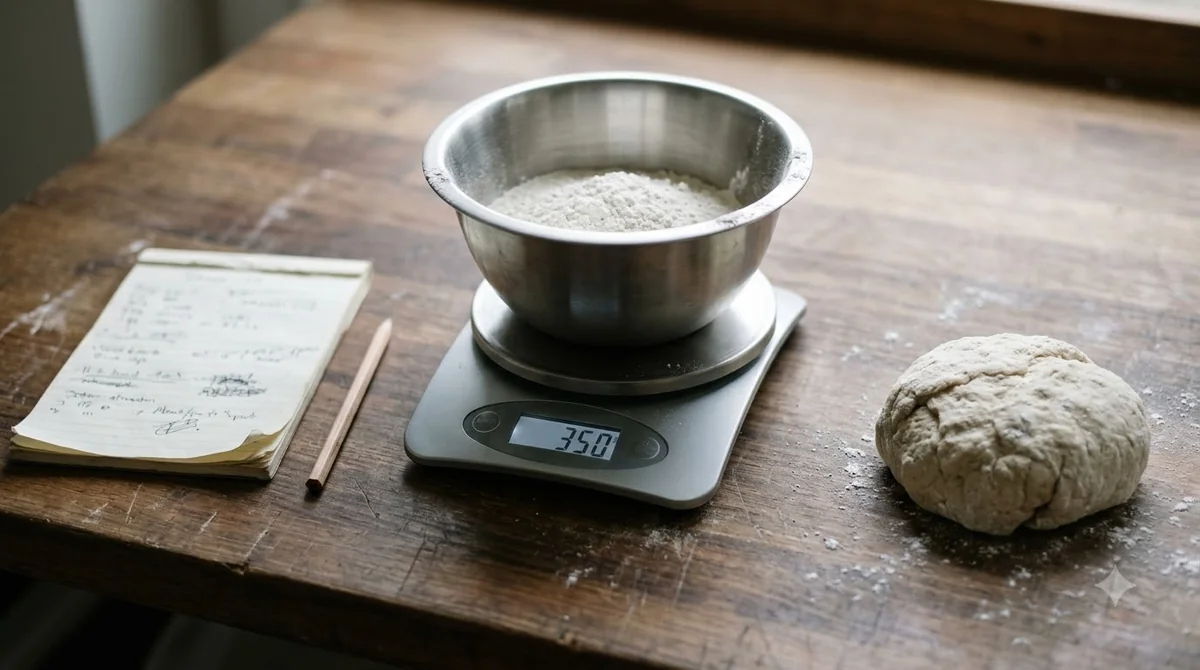

How much salt in pizza dough depends on the style, but most recipes use 2% to 3% of the flour weight. That means 2 to 3 grams of salt for every 100 grams of flour. Pizza Lab’s formula guide places most styles inside this range.
When you work out how much salt in pizza dough you need, weigh it against the flour, not the finished dough. A digital kitchen scale in grams gives a more reliable result than a measuring spoon.
How Much Salt in Pizza Dough by Style
Most styles use between 2% and 2.5% salt, while Neapolitan and pala doughs usually go to 2.5% to 3%. Pizza Lab lists these ranges for each style in its pizza dough formulas.
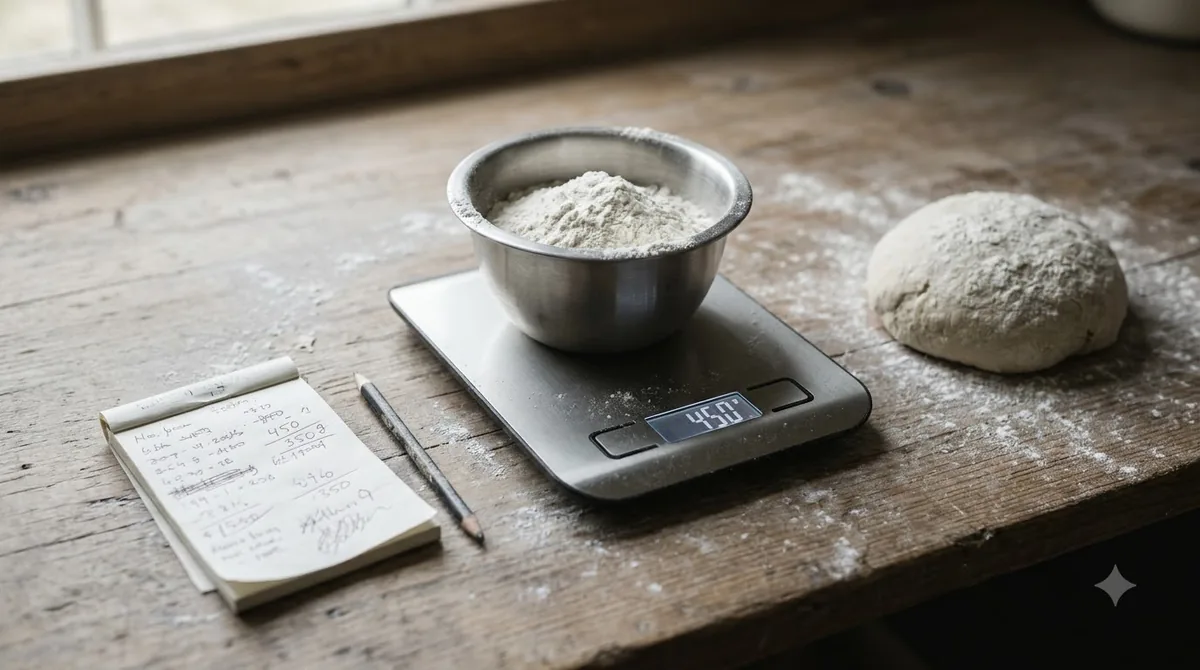
The table below shows how much salt in pizza dough each style needs, using those percentages. Every value is a share of the flour weight, so the grams of salt change with the amount of flour you use.
| Pizza style | Salt (% of flour weight) | Salt per 1,000 g flour |
|---|---|---|
| Neapolitan, classic and modern | 2.5% to 3% | 25 g to 30 g |
| Pizza al taglio and pala | 2.5% to 3% | 25 g to 30 g |
| Tonda Romana | 2% to 3% | 20 g to 30 g |
| New York and New Haven | 2% to 2.5% | 20 g to 25 g |
| Detroit, Sicilian and Midwest bar pie | 2% to 2.5% | 20 g to 25 g |
| Chicago deep dish, pinsa and cracker style | 1.5% to 2% | 15 g to 20 g |
Pizza Lab also advises staying at or above 1.5% when you choose how much salt in pizza dough to use, because lower amounts can weaken the gluten structure. Its general guidance is 2% to 3% for all pizza types, with flavor as the final guide.
How Baker’s Percentage Works for Salt
For how much salt in pizza dough to add, salt is measured against flour weight, so 1,000 g of flour with 2.5% salt needs 25 g. This is the baker’s percentage system, where flour is always the 100% base. Water follows the same rule, as explained in what is pizza hydration.
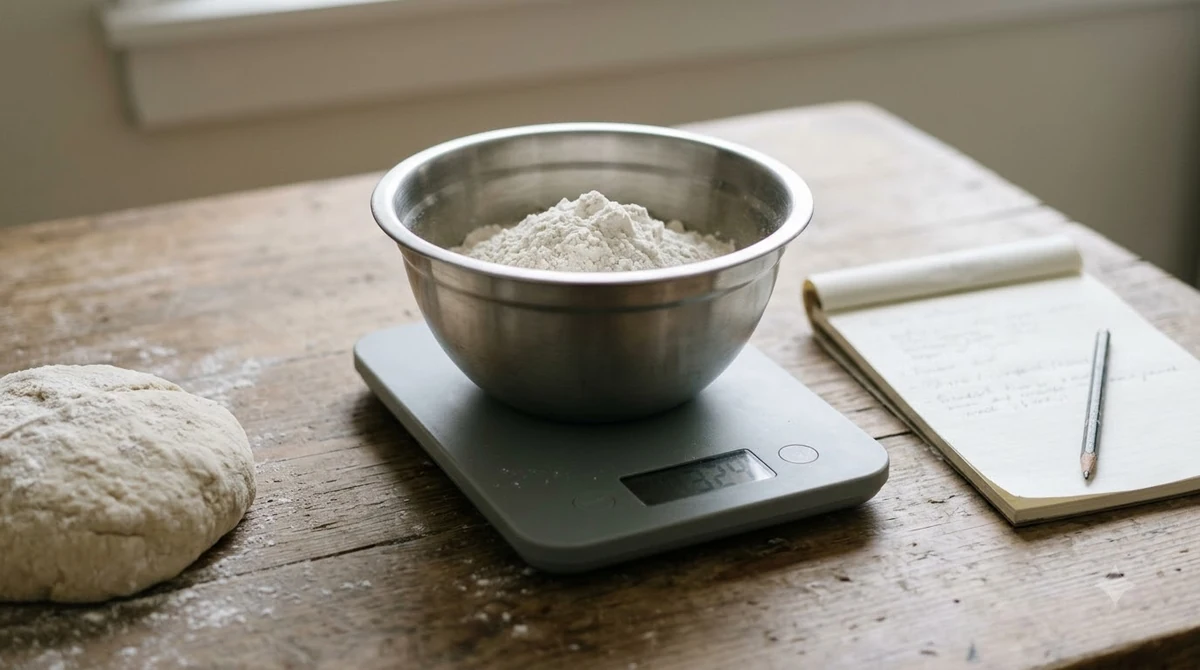
The Wikipedia entry on baker percentage defines each ingredient as a ratio to the total flour weight. Its worked example uses 1.8% salt with 10 kg of flour, which equals 0.18 kg of salt. Water, yeast and salt are all scaled to that same flour figure, and a pizza dough calculator can do the scaling for you.
Using the same method for a home batch, how much salt in pizza dough changes like this:
- 1,000 g flour at 2% salt: 20 g
- 1,000 g flour at 2.5% salt: 25 g
- 1,000 g flour at 3% salt: 30 g
The same Wikipedia example shows why the base matters. Salt comes out to roughly 1% of the total dough mass in that formula, because the finished dough weighs much more than its flour alone. A figure that small looks like a mistake if you expect the number to match the flour, so keep the calculation anchored to flour.
What Salt Does in Pizza Dough
Salt does three jobs in dough: it seasons the crust, it slows the yeast, and it strengthens the gluten. Each job affects the final crust, so salt is more than a flavor note.
The Wikipedia article on bread says salt is added to enhance flavor and restrict yeast activity. It also stabilizes and strengthens gluten, which affects the crumb and texture of the baked crust.
- Flavor: salt is the seasoning built into the dough itself.
- Yeast: salt restricts yeast activity, which sets the pace of the rise.
- Gluten: salt strengthens the gluten network, which helps the dough hold gas and stretch.
Because salt slows the yeast, how much salt in pizza dough you add also changes how fast it rises. If your timing shifts after a salt change, the salt weight is the first thing to check.
What Happens With Too Little or Too Much Salt
Going below about 1.5% of flour weight risks a weaker dough structure, and the crust tastes flat. Pizza Lab’s guide warns against that range for this reason, and it suggests adjusting within the style range to your taste.
Too much salt is harder to judge from a single source. Since salt restricts yeast activity, a dough with a high salt weight can rise more slowly than expected. Before you change the yeast or the proofing time, confirm the salt was weighed against the flour and not the total dough.

How to Weigh and Add Salt Correctly
To find how much salt in pizza dough your batch needs, weigh the flour in grams, multiply by your chosen salt percentage, and mix the salt in evenly at the step your recipe names.
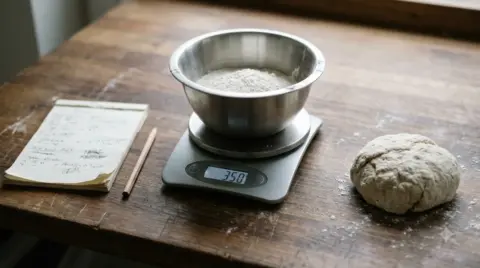
- Weigh the flour in grams on a digital kitchen scale.
- Choose a percentage from the style table, such as 2.5% for a Neapolitan-style dough.
- Multiply the flour weight by the percentage. For 500 g of flour at 2.5%, the salt is 12.5 g.
- Mix the salt in evenly, in the order your recipe gives, so it spreads through the dough.
- Write down the gram amount so you can repeat the batch exactly next time.
A worked batch makes the steps concrete. Suppose a recipe calls for 750 g of flour at 2.5%. The salt is 18.75 g, which you can round to 19 g on a scale that reads whole grams.
How to Choose a Salt Amount Within the Range
When you decide how much salt in pizza dough to use, pick the low end of the range for styles that already sit at 2% to 2.5%, such as New York style pizza, and the high end for Neapolitan-style doughs at 2.5% to 3%, like the Neapolitan pizza dough recipe. The range is wide enough that either choice falls within the sources’ guidance.
Each step up in salt trades one thing for another. More salt adds seasoning and strengthens the gluten, but it also restrains the yeast, so the rise takes longer. A lower amount gives the yeast more freedom, but the crust can taste plainer and the dough can lose some structure below 1.5%.
If you bake a style that is not in the table, compare it with the closest style in the table and stay in that band. The style list is a starting point, not a complete catalog of every regional dough.
Common Mistakes With Salt in Pizza Dough
The most common mistake with how much salt in pizza dough goes in is calculating salt from the total dough weight instead of the flour weight, which gives a much smaller amount than the formula calls for.
Wikipedia’s baker percentage entry notes that salt is measured against flour, not against the whole dough, which is the key to getting how much salt in pizza dough right. Water and yeast add mass to the dough, so a percentage based on the finished dough weight comes out far lower.
- Using total dough weight instead of flour weight.
- Measuring salt by spoon, which makes each batch inconsistent.
- Changing the salt and the yeast in the same batch, which makes the result hard to read.
- Skipping the style range before you start.
A quick habit prevents most of these errors. Write the flour weight on your recipe card, calculate the salt grams right beside it, and keep that number fixed for the whole batch.
Frequently Asked Questions
Can I make pizza dough without salt?
You can mix a dough without salt, but it will lack the seasoning and the gluten strength that salt provides. The sources in this guide treat salt as a standard dough ingredient, so the ranges above assume it is included when you ask how much salt in pizza dough a recipe should contain.
Does salt change for cold fermentation?
The sources used for this guide do not give a confirmed rule for cold fermentation, so no separate figure for how much salt in pizza dough to use is given here. Keep the salt within the style range, and check your recipe’s source for any timing-based adjustment.
Does salt slow yeast?
Yes. The Wikipedia article on bread says salt restricts yeast activity, which is why a salty dough can rise more slowly than an unsalted one. Keep that in mind when you decide how much salt in pizza dough to add, especially if your rise times are already long.
Should I use table salt or sea salt?
Weigh the salt in grams rather than measuring by spoon, because grain size changes how much fits in a teaspoon. Use the gram amount from your percentage calculation, whichever salt you have.
What if I added too much salt?
Too much salt can slow the yeast and change how the dough rises. Check how much salt in pizza dough went in against the flour weight and the style range before you adjust anything else in the recipe.
Is 2% salt too little for pizza dough?
Not necessarily. Pizza Lab lists 2% as the lower end for New York, Detroit and Sicilian styles, so it is inside the recommended band. The warning line in that guide is 1.5%, below which the gluten structure can weaken.
How much salt for 500 g of flour?
At 2% the amount is 10 g, at 2.5% it is 12.5 g, and at 3% it is 15 g. Each figure is a share of the 500 g flour weight, not of the finished dough.
Start with 2.5% salt by flour weight for a standard pizza dough, then adjust within the style range. For most home batches, that answers how much salt in pizza dough to use. Weighing in grams keeps each batch comparable, and it removes most of the guesswork from the salt step.
 9 min readLearnShould You Salt Pasta Water? Yes, Here Is How MuchUpdated Nov 10, 2026
 10 min readLearnHow Much Yeast for Pizza Dough: A Simple GuideUpdated Nov 10, 2026
 7 min readLearnDoes Pizza Dough Need Sugar? What It Does and How Much to UseUpdated Nov 11, 2026
 7 min readLearnDiastatic Malt Powder in Pizza Dough: What It Does and How Much to UseUpdated Nov 11, 2026
 8 min readLearnHow Much Dough for a 12 Inch Pizza by Crust StyleUpdated Nov 10, 2026
 5 min readLearnFresh Pasta for 4 People: How Much Dough to MakeUpdated Nov 13, 2026