

The answer to how much yeast for pizza dough you need is the amount your recipe lists for your yeast type. Weigh it in grams when the recipe gives grams, and convert only when you swap instant yeast for active dry or the other way around.
Instant and active dry yeast behave differently in dough, so a swap changes the amount and the method. The sections below show how much yeast for pizza dough a batch needs, how to weigh it, and how to adjust when you switch types.
How Much Yeast for Pizza Dough Does Your Recipe Need?
The yeast type named in the recipe sets both the amount you add and how you add it. According to the baker’s yeast article on Wikipedia, active dry yeast must be dissolved and rehydrated in warm liquid, while instant yeast can be mixed directly into the dry ingredients.
Most home bakers meet three types in the store. Each has a different label, a different way of being added, and a different swap rule, so match the type on your package to the type in the recipe before you measure anything. If you are choosing a brand, see the best yeast for pizza dough.
| Yeast type | Common label | How it is added |
|---|---|---|
| Instant yeast | “Instant” or “rapid rise” | Mixed straight into the flour, without proofing |
| Active dry yeast | “Active dry” | Dissolved in warm liquid first, if the recipe asks for it |
| Fresh (cake) yeast | Soft, crumbly block | Crumbled into warm water with a little sugar |
When you ask how much yeast for pizza dough a batch needs, start with the flour weight in the recipe. A yeast amount only makes sense next to that weight, so a recipe written for 500 g of flour cannot be read the same way as one written for 1 kg. Keep the yeast type and the rise plan the same as the recipe, and change only the quantity that the recipe’s own flour weight supports.
For how much yeast for pizza dough, fresh yeast is the least common choice at home because it is perishable. America’s Test Kitchen gives a ratio of roughly 2 to 1 when swapping fresh for active dry, using one small 0.6 ounce cake in place of one 0.25 ounce packet of active dry. Check that ratio against the recipe before you substitute, since the cake is sold in a different form.
Weigh the Yeast Instead of Using a Spoon
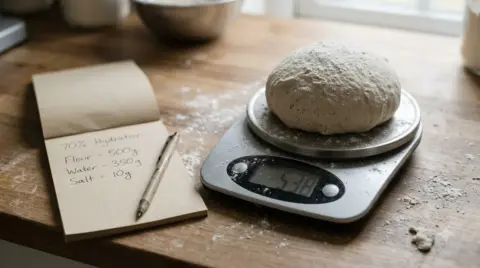
Weighing the yeast gives you the exact gram amount your recipe lists, which is more consistent than guessing with a heaped spoon. That matters when you want to know how much yeast for pizza dough needs for each batch. King Arthur Baking describes a standard packet as 7 g, which it calls a slightly heaped 2 teaspoons, so a packet is a useful check when a recipe calls for one.
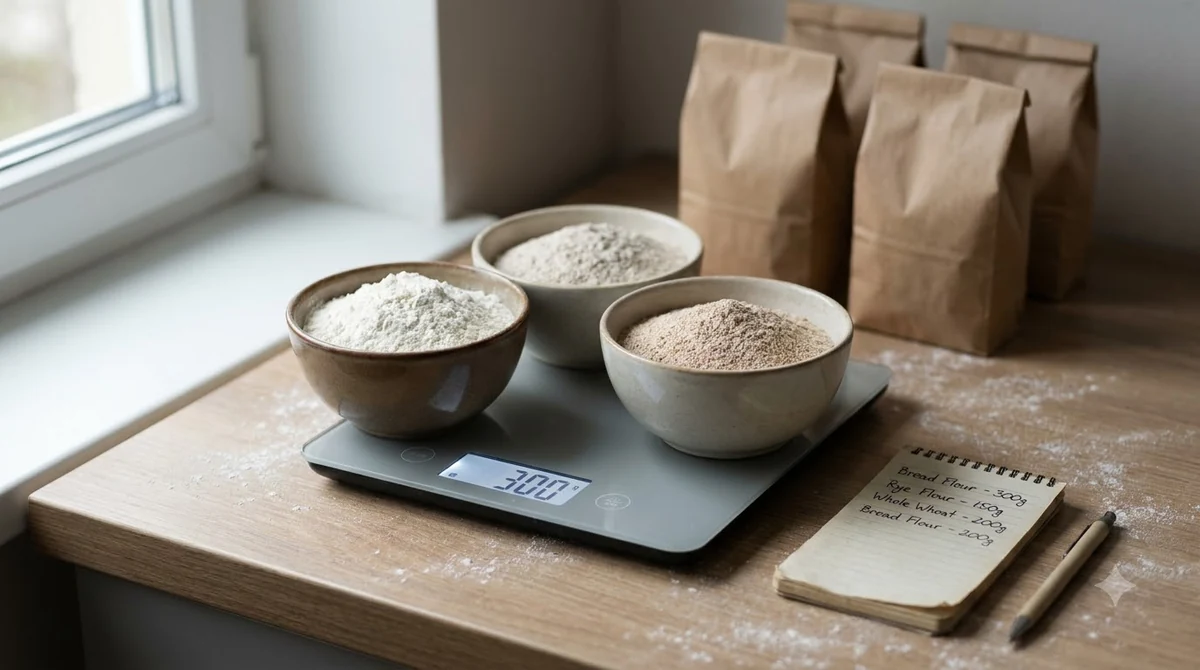
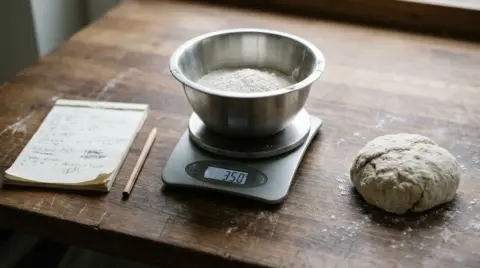
A digital kitchen scale that reads single grams is enough for this job. Use the steps below each time you work out how much yeast for pizza dough a batch needs and weigh it.
- Set an empty bowl on the scale and press tare so the display reads zero.
- Add yeast slowly until the display matches the gram amount in your recipe.
- For instant yeast, add it to the flour with the other dry ingredients.
- For active dry yeast, follow the recipe’s method. If it says to dissolve the yeast in warm water, use only the water the recipe assigns to that step.
If your recipe gives only spoons, check the package for its suggested dough amounts and compare them with the recipe before you measure. Keep a note of the weight you used, so the next batch is easier to repeat.
How to Swap Instant and Active Dry Yeast
Sources disagree on the swap ratio for how much yeast for pizza dough to use, so there is no single number to memorize. King Arthur Baking says to substitute instant for active dry 1 to 1 by weight or volume, while America’s Test Kitchen and Bob’s Red Mill say instant needs about 25 percent less than the active dry amount in the recipe.
| Swap | Ratio given by the source |
|---|---|
| Active dry to instant | About 25 percent less instant (America’s Test Kitchen); multiply by 0.75 (Bob’s Red Mill) |
| Instant to active dry | About 25 percent more active dry (America’s Test Kitchen); multiply by 1.25 (Bob’s Red Mill) |
| Active dry to instant, King Arthur version | 1 to 1 by weight or volume, as stated in King Arthur’s 2022 article |
Because the ratios differ, how much yeast for pizza dough you add after a swap is worth weighing rather than trusting a spoon conversion, and then compare the result with the recipe’s rise time. King Arthur’s article also suggests adding about 15 to 20 minutes to a rise when you use active dry yeast in a recipe written for instant, so plan extra time for the dough to reach the same size. Read the full comparison in King Arthur Baking’s active dry versus instant yeast article. Our guide to instant yeast vs active dry yeast for pizza covers the swap for pizza dough specifically.
Why Rise Time Changes the Right Amount
How much yeast for pizza dough you need and how long it rises are written as a pair in most recipes, so changing one means checking the other. Wikipedia notes that instant yeast has finer granules and needs less rise time than active dry, which is one reason the same dough can finish at different times.
Pizza Lab’s dough formulas make the same point: yeast quantity depends on dough amount and fermentation conditions, meaning duration and temperature, not on pizza type. So the question of how much yeast for pizza dough has no single answer for every style.
Two King Arthur Baking recipes show how the amount follows the plan. The Neapolitan-style pizza crust recipe uses 1/8 teaspoon of instant or active dry yeast with 2 cups (232 g) of 00 pizza flour and a room-temperature rise of at least 12 hours and up to 24 hours. Its shorter variant uses 1/2 teaspoon of yeast and a rise of at least 8 hours. The Now or Later pizza crust recipe uses 1 teaspoon of instant yeast with 416 g of flour, then refrigerates the dough for 4 hours or up to 36 hours.
- Long room-temperature rise (12 to 24 hours): 1/8 teaspoon for 232 g of flour
- Shorter room-temperature rise (at least 8 hours): 1/2 teaspoon in the same recipe
- Refrigerated rise (4 to 36 hours): 1 teaspoon for 416 g of flour in the other recipe
The flour weights and flours differ between the two recipes, so treat the figures as examples of how recipes are written, not as a rule for how much yeast for pizza dough any batch needs.
Bakers describe yeast as a percentage of flour weight, called bakers’ percent, and a pizza dough calculator does the math for you. You find it by dividing the yeast weight by the flour weight and multiplying by 100. Wikipedia reports that yeast flavor is generally not noticeable when the bakers’ percent of added yeast is below 2.5 percent, which is a useful ceiling when you compare recipes. Dough with a higher share of yeast ferments faster, so a recipe that gives a short rise is likely to use more yeast than one that gives a long rise.
Cold fermentation in the fridge is slow, so its timing and the yeast amount need to match the recipe’s plan, as the Now or Later example above shows. If you change the fridge time, adjust the yeast amount only after you check the recipe’s own guidance, because the two settings work together. Wikipedia’s entry on baker’s yeast is a useful starting point for the science behind this, and the recipe you follow remains the final reference.
Common Mistakes With Yeast Amounts
Most problems with how much yeast for pizza dough to use start with an amount that does not match the yeast type or the rise time in the recipe. Watch for these errors before you mix the dough.
- Measuring how much yeast for pizza dough with a heaped spoon, which makes the amount hard to repeat.
- Swapping yeast types without changing the amount or the rise time.
- Dissolving instant yeast in water when the recipe says to mix it into the flour.
- Using old yeast without checking it. King Arthur advises proofing yeast first if it is old or past its expiration date.
- Using water that is too hot for live yeast. Follow the water temperature in the recipe.
The fix for most of these is simple: before you decide how much yeast for pizza dough to add, read the yeast type first, weigh the amount, and match the rise time to the recipe. A short check before mixing saves a dough that rises too slowly or too fast.
Frequently Asked Questions
How much yeast for pizza dough should I use for one batch?
Use the gram amount your recipe gives for the flour weight it lists, since how much yeast for pizza dough you need depends on that flour weight. If your recipe gives only a flour weight and no yeast amount, check the package instructions for the yeast you own before you measure, and do not guess from a different recipe.
Can I use instant yeast in place of active dry yeast?
Yes, most sources allow the swap, but they do not agree on the amount. King Arthur says 1 to 1 by weight, while America’s Test Kitchen and Bob’s Red Mill say instant needs about 25 percent less than the active dry amount in the recipe. Weigh the yeast and watch the dough’s rise when you try a new ratio.
Does pizza dough yeast need to be dissolved first?
It depends on the yeast type and the recipe’s method. Wikipedia and America’s Test Kitchen say active dry yeast should be dissolved or proofed first, while King Arthur’s 2022 article says that step is no longer necessary. Instant yeast can be mixed straight into the flour, so follow the recipe’s instructions for the type you have.
How much is one packet of yeast?
King Arthur describes a standard packet as 7 g, which it calls a slightly heaped 2 teaspoons, so a packet is one way to picture how much yeast for pizza dough a recipe might call for. Check the weight printed on your own package, because packaging can differ by brand and region.
Is weighing yeast better than measuring with a spoon?
Weighing gives the most repeatable result for how much yeast for pizza dough to add, because it matches the gram amount in a recipe. A spoon measure depends on how full the spoon is, so two bakers can add different amounts from the same recipe.
What should I do if my yeast is old?
Proof the yeast before you use it, as King Arthur advises for yeast that is past its expiration date. If it does not foam or bubble in warm water with a little sugar, replace it before you measure how much yeast for pizza dough the batch needs. Old yeast can make the rise slow, so the recipe’s timing may not work, and the guide to pizza dough not rising lists other causes.
Should I change the yeast amount to speed up or slow down a dough?
Changing how much yeast for pizza dough you use should come only after you check the recipe’s rise time and temperature, since the two are written as a pair. A large change in yeast can alter both the rise and the flavor of the crust, so make small adjustments and record the result for the next batch.
For how much yeast for pizza dough to use, start from the gram amount your recipe gives for your yeast type, weigh it on a scale, and convert only when you swap types. Keep a note of what you used and how the dough rose, so the next batch is easier to repeat.
 9 min readLearnPizza Dough Without Yeast: A Baking Powder Recipe for One 12-Inch CrustUpdated Nov 10, 2026
 8 min readLearnHow Much Salt in Pizza Dough? A Simple GuideUpdated Nov 10, 2026
 7 min readLearnDoes Pizza Dough Need Sugar? What It Does and How Much to UseUpdated Nov 11, 2026
 7 min readLearnDiastatic Malt Powder in Pizza Dough: What It Does and How Much to UseUpdated Nov 11, 2026
 8 min readLearnHow Much Dough for a 12 Inch Pizza by Crust StyleUpdated Nov 10, 2026
 9 min readLearnInstant Yeast vs Active Dry Yeast for Pizza: Which to UseUpdated Nov 10, 2026