
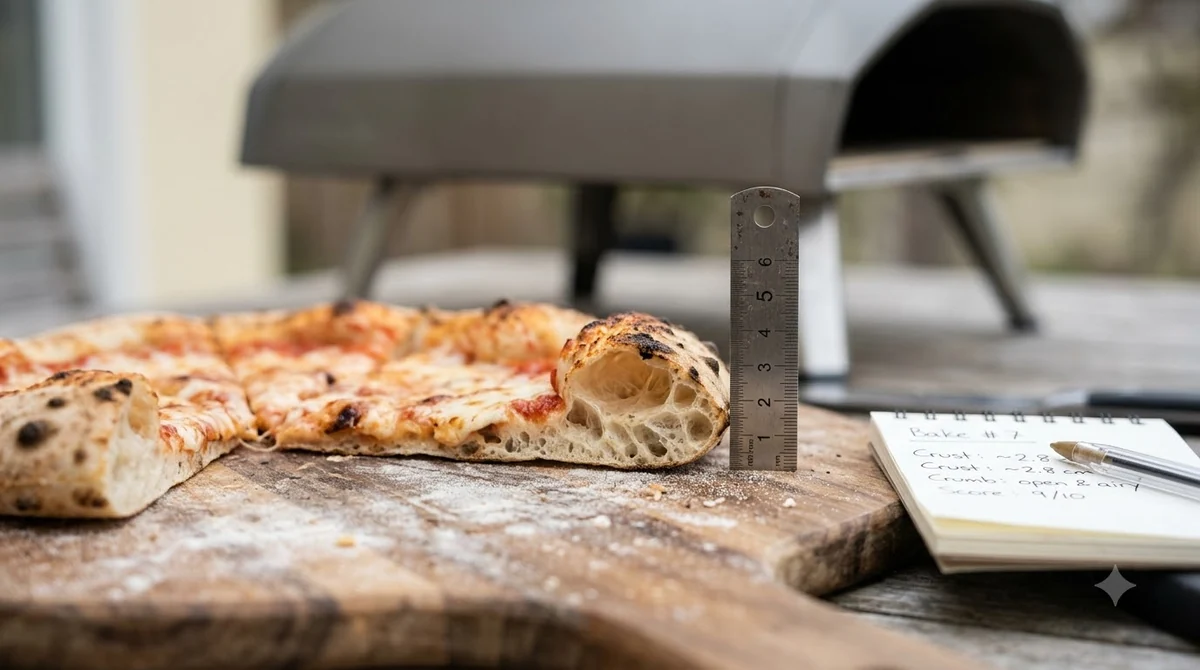

The right answer to how much cheese on pizza depends on three things: the cheese type, the pizza size and how much water the cheese holds. Fresh mozzarella and low-moisture mozzarella behave differently in a hot oven, so the same weight of each will not give the same result.
No universal number fits every crust. Start from the weight in your recipe, then adjust for the cheese you use and the size of your pie.
How Much Cheese on Pizza Depends on the Cheese Type
Fresh mozzarella has more water than low-moisture mozzarella, so it needs a lighter hand on the same crust. Wikipedia’s mozzarella article describes fresh mozzarella as high in moisture, which is why it is traditionally served the day it is made. Low-moisture mozzarella contains somewhat less water and can be kept refrigerated for up to a month.
Because of that difference in water, a weight that works for low-moisture cheese can leave fresh cheese pooling on the dough. Our low-moisture vs fresh mozzarella for pizza comparison goes deeper. Low-moisture cheese is easier to portion evenly, so it is a sensible starting point for a first homemade pie. For a first try, that is the simplest answer to how much cheese on pizza to start with.
Mozzarella is the cheese most people think of first. According to Wikipedia’s pizza article, mozzarella is commonly used on pizza, and buffalo mozzarella from the area around Naples is a well-known version. Other cheeses such as burrata, Gorgonzola, provolone, pecorino romano, ricotta and scamorza also appear on pizzas, and each one has its own moisture and melt behavior.
Treat any weight as a starting point for the cheese in front of you. If you switch from low-moisture to fresh mozzarella, weigh a smaller portion for the first bake, check the middle of the pie, and adjust next time rather than changing everything at once.
Asking how much cheese on pizza works best for your oven is really asking about your own results. Two pies with the same weight can behave differently on a cool stone and a fully heated one, so keep the oven setup the same while you test.
How to Scale Cheese Weight to Your Pizza Size
Scale cheese by area, because the top of a round pizza grows with the square of its diameter, not in a straight line. A 14-inch pizza has about 1.36 times the area of a 12-inch pizza, so if coverage stays the same it needs roughly 36 percent more cheese.
The same arithmetic works in both directions. A 10-inch pizza has about 0.69 of the area of a 12-inch pizza, so it needs about 31 percent less cheese than the 12-inch amount. A 16-inch pizza has about 1.78 times the area, so it needs roughly 78 percent more.
The base weight still has to come from somewhere. Use the weight your own recipe gives for a known size. The sources checked for this article do not state a verified standard weight for a 12-inch pie, so this page does not supply one. Once you have a base number, the area ratios above let you scale it to any size.
That is also why the question of how much cheese on pizza fits a 16-inch pie should be answered with the same two steps: start from your base weight, then multiply by the area ratio. Do not guess a new number from the look of the pizza.
Shredded, Sliced or Grated: How Form Changes the Amount
Shredded cheese covers more of the surface than thick slices of the same weight, so it spreads thinner and melts faster. Thin, even coverage is easier to judge with shredded cheese, and it browns sooner as it spreads across the dough. For most home ovens, that makes shredded cheese the easiest form for finding how much cheese on pizza gives an even layer.
Thick slices hold their shape longer but leave gaps. The middle of the pie can end up with less cheese than the edge, so spread slices evenly and leave a small border clear of cheese. Layering order matters too, as covered in pizza toppings order.
Form changes how much cheese on pizza looks on the dough, even when the weight stays the same. A spread of shredded cheese reads as a full layer, while three large slices look sparse. Judge the amount by coverage and melt, not by the number of pieces.
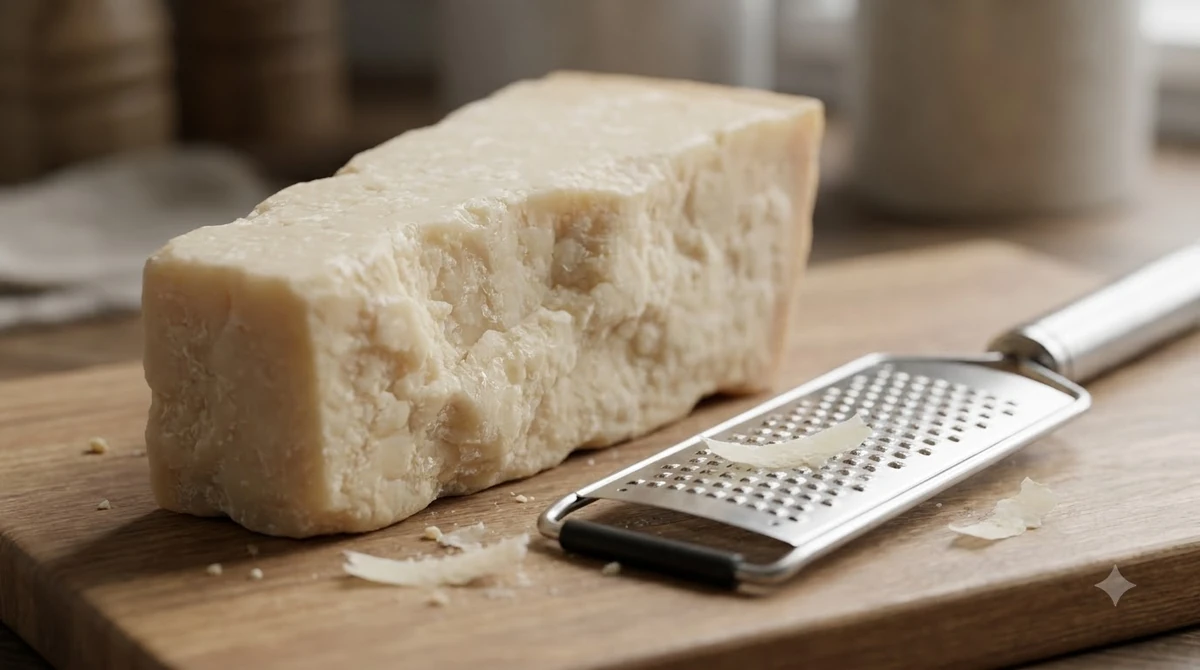
Aged hard cheeses such as Parmigiano-Reggiano are usually grated fine and used for flavor rather than as the main melting layer. Add them in a smaller amount than you would a melting cheese, and weigh them separately if your recipe gives a number for them.
How to Weigh Cheese for Your Own Pizza
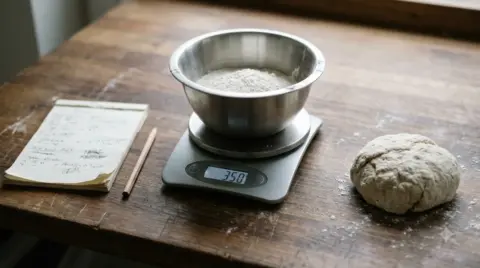
Weigh the cheese on a digital kitchen scale, not by the cup, because a cup of shredded cheese changes with how tightly it is packed. Weight gives you a number you can repeat from one bake to the next. Knowing how much cheese on pizza you want before you start also keeps every bake consistent.
- Place an empty bowl on the scale and press tare so the scale reads zero.
- Add the cheese you plan to use for one pizza and write the weight down.
- Measure the diameter of the dough across the middle, not the length of the peel.
- Work out the new target with the area ratios from the section above.
- Bake once, check the middle and the edges, and change the amount in small steps next time.
Too Much Cheese Shows Up as Water and Oil
Too much cheese shows up as pooled liquid, a soft center and edges that brown before the middle melts. Fresh mozzarella is a frequent cause, because its high moisture content is released as it heats. A clear sign of too much cheese on pizza is a center that stays pale after the edges have set. Lower the amount next time before changing the oven, because the cheese layer is the easiest variable to adjust.
Watch for these signs when you check a bake:
- Liquid or oil pooling on top of the cheese
- A center that stays pale and soft while the edges darken
- Cheese sliding off the dough during the transfer to the oven
- Thick clumps that never fully melt
If you use fresh mozzarella, tear it into pieces and pat them dry with paper towels before they go on the dough. Wikipedia’s mozzarella article explains the high moisture content behind this advice, and drying the surface can reduce the liquid that reaches the dough. For keeping it fresh before you use it, see how to store fresh mozzarella.
Five Simple Rules for Cheese on Pizza
Five simple rules cover most cases: weigh the cheese, match the amount to the type, scale by area, spread it evenly and adjust in small steps. Follow them in order and the results get more consistent with each bake. Use them whenever you wonder how much cheese on pizza suits your bake.
- Weigh the cheese instead of guessing by eye.
- Give fresh mozzarella a lighter portion than low-moisture mozzarella.
- Scale the amount by area when you change the pizza size.
- Spread the cheese evenly and leave a small border clear.
- Change one variable at a time between bakes so you know what made the difference.
Frequently Asked Questions
Is more cheese always better on pizza?
No. Extra cheese adds water and fat that can pool, soften the center and slow the bake. Knowing how much cheese on pizza is too much matters more than the total amount. A lighter layer that melts fully usually tastes better than a heavy layer that stays thick and wet in the middle.
Should fresh mozzarella be dried before using it?
Yes, pat it dry with paper towels before it goes on the dough. Fresh mozzarella has a high moisture content, so removing surface water can reduce pooling during the bake and help the crust stay crisp.
Does low-moisture mozzarella need less cheese than fresh?
Not necessarily by weight. Low-moisture mozzarella contains somewhat less water, so a similar weight usually releases less liquid. Start with a similar amount, check the middle of the pie, and adjust on the next bake. The question of how much cheese on pizza suits low-moisture mozzarella is answered by the same test, not by a different rule.
Why is my pizza soggy in the middle even with a small amount of cheese?
Cheese is only one cause. Too much sauce, a cool stone or steel, a thick center or wet toppings can keep the middle from setting. Make sure the stone or steel is fully heated before the pizza goes in, and check the oven temperature before you change the cheese.
Do I need a kitchen scale to measure cheese?
A scale gives the most repeatable result. Cup measures change with how tightly the cheese is packed, while weight stays the same. If your recipe gives a weight, use that number first and adjust from there.
Pick one cheese, weigh one portion for your usual pizza size, and write down how the bake turned out. Write down how much cheese on pizza you used for each bake so the next one starts from real data. After two or three bakes you will know whether to add or cut back. That note is more useful than any general guide, and the area ratios let you carry the same number to other sizes. For a simple baseline to practice on, try our cheese pizza recipe.
 8 min readLearnHow Much Sauce on Pizza? A Practical Guide for Home OvensUpdated Nov 11, 2026
 7 min readLearnDiastatic Malt Powder in Pizza Dough: What It Does and How Much to UseUpdated Nov 11, 2026
 7 min readLearnDoes Pizza Dough Need Sugar? What It Does and How Much to UseUpdated Nov 11, 2026
 10 min readLearnHow Much Yeast for Pizza Dough: A Simple GuideUpdated Nov 10, 2026
 8 min readLearnHow Much Salt in Pizza Dough? A Simple GuideUpdated Nov 10, 2026
 8 min readLearnHow Much Dough for a 12 Inch Pizza by Crust StyleUpdated Nov 10, 2026