
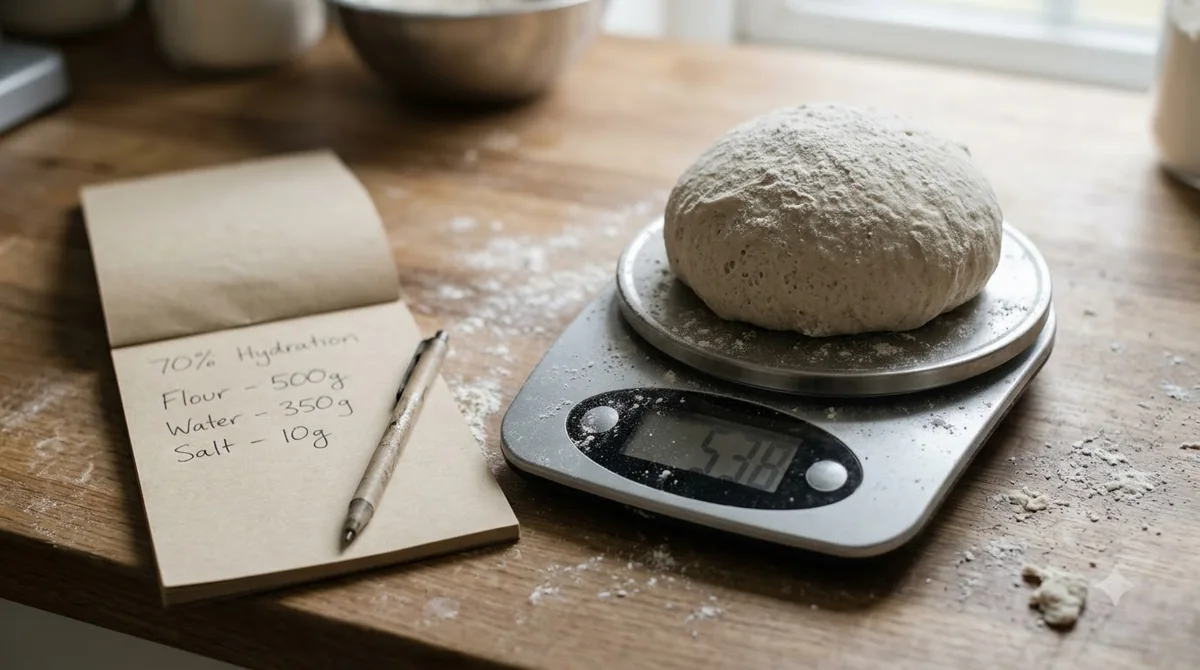

Instant yeast vs active dry yeast for pizza comes down to one step: active dry yeast must be rehydrated in warm water first, while instant yeast can be mixed straight into the flour. Both are dried baker’s yeast and both can raise a pizza dough. The choice matters most for mixing order and rise time, not for the basic flavor of a home pizza.
What Is the Difference Between Instant Yeast and Active Dry Yeast?
Instant yeast vs active dry yeast for pizza starts with the granules. Active dry yeast has coarser granules and must be rehydrated first, while instant yeast has smaller granules and a higher share of live cells for its volume. According to Wikipedia’s article on baker’s yeast, active dry yeast is made of live cells inside a jacket of dead cells and some growth medium.
Because of that structure, active dry yeast under most conditions has to be proofed or dissolved in warm water before it goes into the dough. Instant yeast does not need this step. It can be mixed directly into the dry ingredients, which makes it the simpler choice for a quick weeknight pizza.
Instant yeast also usually contains a small amount of ascorbic acid as a preservative. You do not need to do anything with this ingredient. It is simply one reason the two products can differ on the label, even when the granules look similar.
Instant Yeast vs Active Dry Yeast for Pizza: Side by Side
Instant yeast skips the rehydration step and usually rises faster, while active dry yeast needs warm water first and adds one more step to the process. When you compare instant yeast vs active dry yeast for pizza, the table below covers the points a home cook is most likely to notice.
| Point | Active dry yeast | Instant yeast |
|---|---|---|
| Granule size | Coarse, oblong granules | Smaller granules |
| Rehydration before use | Usually required, in warm water | Not needed |
| Where it goes | Dissolved, then added to the flour | Mixed directly into the dry ingredients |
| Rise speed | Slower start | Faster rise, so the initial rise can sometimes be skipped |
| Common additive | Not described in the source | Small amount of ascorbic acid |
| Dose for 500 g to 1000 g dough | About 7 g (1/4 oz) | Same dose quantity as active dry |
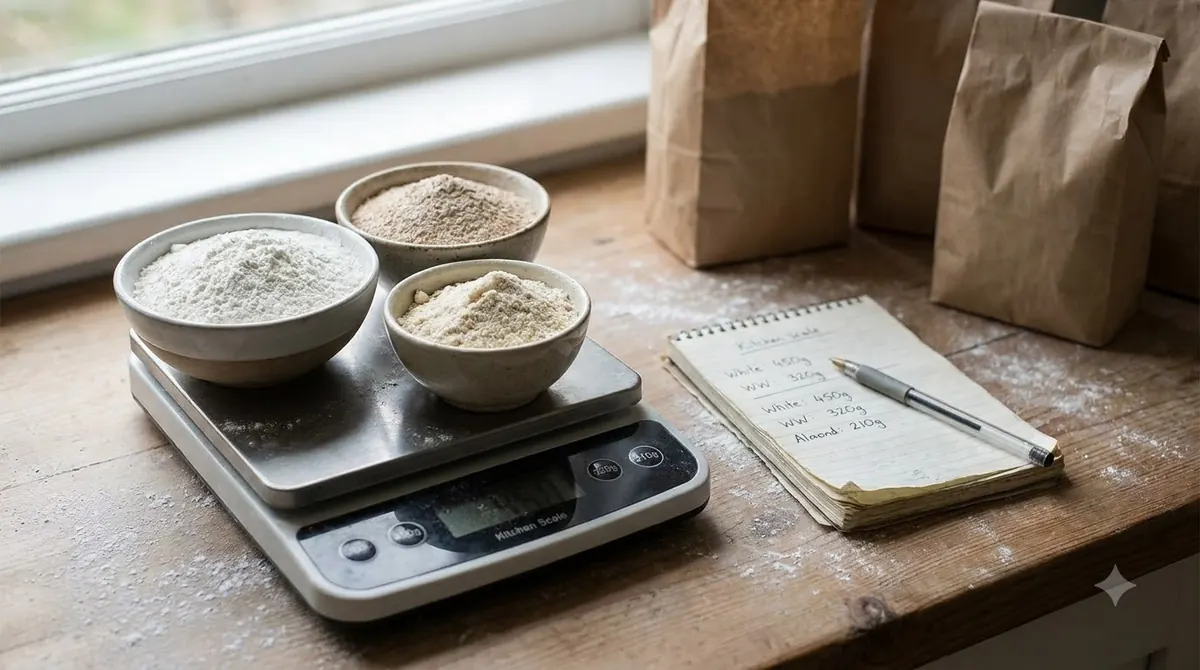
In instant yeast vs active dry yeast for pizza, the practical difference for a standard dough is the mixing method. Active dry yeast suits a cook who is happy to add a short wet step. Instant yeast suits a cook who wants to weigh the flour, add the yeast, and go. The flour matters too, and bread flour vs all purpose flour explains how it changes the way the dough handles water.

How to Use Each Yeast in Pizza Dough
For instant yeast vs active dry yeast for pizza, the rule is simple: active dry yeast goes into warm water first, and instant yeast goes into the flour. Follow these steps for a single pizza dough, and check the package for the exact water temperature and waiting time, because the source did not confirm a number for these.
- Active dry yeast: dissolve the measured yeast in warm water and wait until the mixture looks active before you add it to the flour.
- Instant yeast: add the measured yeast to the dry flour and salt, and mix it in before you add the water.
- Either type: knead the dough until it is smooth, then let it rise. Instant yeast may rise faster, so check the dough, not only the clock.
King Arthur Baking’s professional yeast reference adds one practical warning for instant yeast vs active dry yeast for pizza: instant yeast is sensitive to ice-cold conditions. If your dough water is cold, mix the dough for a minute or two before adding the yeast.
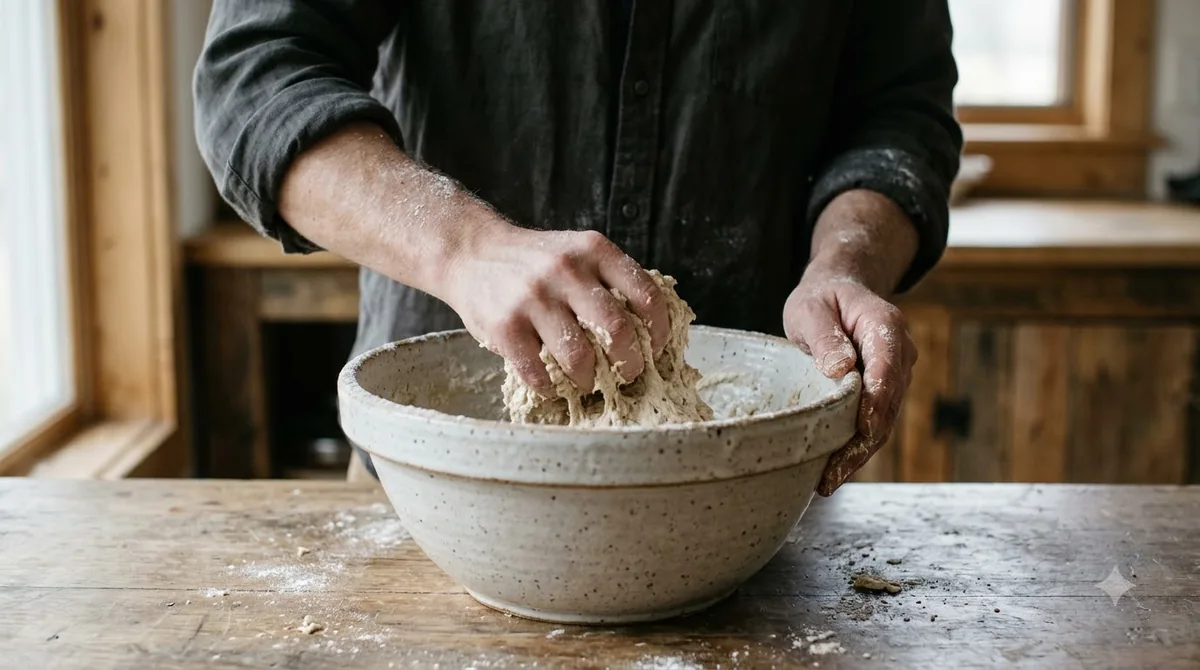
The main mistake here is the order. A cook who adds active dry yeast straight to the flour without rehydrating it has skipped the step the source describes as necessary under most conditions. Instant yeast does not need that step, so there is no reason to dissolve it first.
Does the Amount Change When You Swap Yeast Types?
The same source lists the same dose quantities for active dry and instant yeast, with an example of about 7 g (1/4 oz), or about 2.5 teaspoons (roughly 12 mL), for a dough of 500 g to 1000 g. A weight-for-weight swap is therefore the starting point for instant yeast vs active dry yeast for pizza, not a guaranteed match for every brand.
Yeast flavor is generally not noticeable when the added yeast is under 2.5% of the flour weight, as measured in bakers’ percent. Keep the amount below that level if you want the dough to taste mainly of flour, salt and water. The exact ratio for your own brand is on the package. For a longer rise, see the timing in 24-hour pizza dough.
Sources do not fully agree on the amount. Wikipedia lists the same dose for both types, while King Arthur Baking converts from fresh yeast by multiplying by 0.4 for active dry yeast and 0.33 for instant yeast. By that conversion, instant yeast vs active dry yeast for pizza suggests a slightly smaller dose of instant yeast by weight. Treat a one-to-one swap as a starting point and let the package decide.
Rapid-Rise Yeast and Other Labels
In the instant yeast vs active dry yeast for pizza comparison, rapid-rise yeast is a form with even smaller granules than instant yeast, so it dissolves faster and produces carbon dioxide more quickly. Wikipedia notes that there is debate about whether this faster form affects flavor.
Labels for instant yeast vs active dry yeast for pizza are not always consistent between brands. Read the package to see whether the product is instant, rapid-rise or active dry, and follow the instructions printed there for the rehydration and rise steps. If you would rather skip yeast altogether, there is a method for pizza dough without yeast.
How Long Yeast Keeps and How to Store It
Active dry yeast keeps at room temperature for about a year, and it can be frozen for more than a decade, according to the same source. The storage time for instant yeast is not confirmed here, so check the package date and storage advice for your brand.
Old yeast is a common reason a dough does not rise, and it can undo a good choice in instant yeast vs active dry yeast for pizza. If a batch of yeast is past its date, the dough may take much longer to rise, or it may not rise at all, whichever type you use.
Common Mistakes With Pizza Yeast
The most common mistakes with instant yeast vs active dry yeast for pizza are skipping rehydration for active dry yeast and assuming that instant yeast needs no rise time at all. Both can leave you with a dense, slow dough, and baking too early often ends in underproofed pizza dough.
- Adding active dry yeast straight to dry flour without rehydrating it first.
- Treating instant yeast as if it needs no rise, and baking before the dough has grown.
- Swapping one type for the other without checking the package for the brand’s own amount.
- Using yeast that is past its date.
What to Check on Your Yeast Package
Before you choose instant yeast vs active dry yeast for pizza, read the label on the package. Look at the type, the date, and the instructions. The source used for this guide does not confirm the exact water temperature or waiting time for active dry yeast, so the printed instructions are the reliable guide for your brand. If you still need to buy some, compare yeast options for pizza dough before you shop.
- Type: instant, rapid-rise or active dry.
- Date: whether the yeast is still within its date.
- Instructions: rehydration and rise times for that brand.
Frequently Asked Questions
Can I use instant yeast instead of active dry yeast for pizza?
Yes, for instant yeast vs active dry yeast for pizza, Wikipedia lists the same dose quantities for both types, so a weight-for-weight swap is the starting point, although King Arthur Baking’s conversion factors suggest instant yeast may need slightly less. Check the package for your brand’s exact amount and timing before you bake.
Do I need to dissolve instant yeast in water?
No. When you pick instant yeast vs active dry yeast for pizza, instant yeast does not need rehydration and can be mixed directly into the dry ingredients. It still needs time to rise, so do not skip the rise step.
Does instant yeast make pizza dough rise faster?
Yes, for instant yeast vs active dry yeast for pizza, the source says instant yeast rises faster, and the initial rise can sometimes be skipped. Watch the dough itself, since the clock alone does not show how far it has risen.
What is rapid-rise yeast?
Rapid-rise yeast has even smaller granules than instant yeast and dissolves faster. Wikipedia notes that some debate exists about whether it changes flavor.
How long does active dry yeast last?
Active dry yeast keeps at room temperature for about a year and can be frozen for more than a decade, according to the same source. Always check the date printed on your own package.
Choose between instant yeast vs active dry yeast for pizza based on how you like to mix. If you want the fewest steps, pick instant yeast and mix it into the flour. If you already keep active dry yeast in the pantry, dissolve it in warm water first, and check the package for the exact time and temperature.
 9 min readLearnPizza Dough Without Yeast: A Baking Powder Recipe for One 12-Inch CrustUpdated Nov 10, 2026
 10 min readLearnHow Much Yeast for Pizza Dough: A Simple GuideUpdated Nov 10, 2026
 9 min readLearnSpinach and Ricotta Pizza Recipe: How to Build a Creamy, Dry-Bottomed PieUpdated Nov 10, 2026
 9 min readLearnPizza Dough Too Dry? How to Fix It and Prevent ItUpdated Nov 11, 2026
 8 min readLearnHow to Dry Fresh Pasta at Home: Timing, Storage and TipsUpdated Nov 10, 2026
 8 min readLearnCan You Use Parchment Paper in a Pizza Oven?Updated Nov 10, 2026