
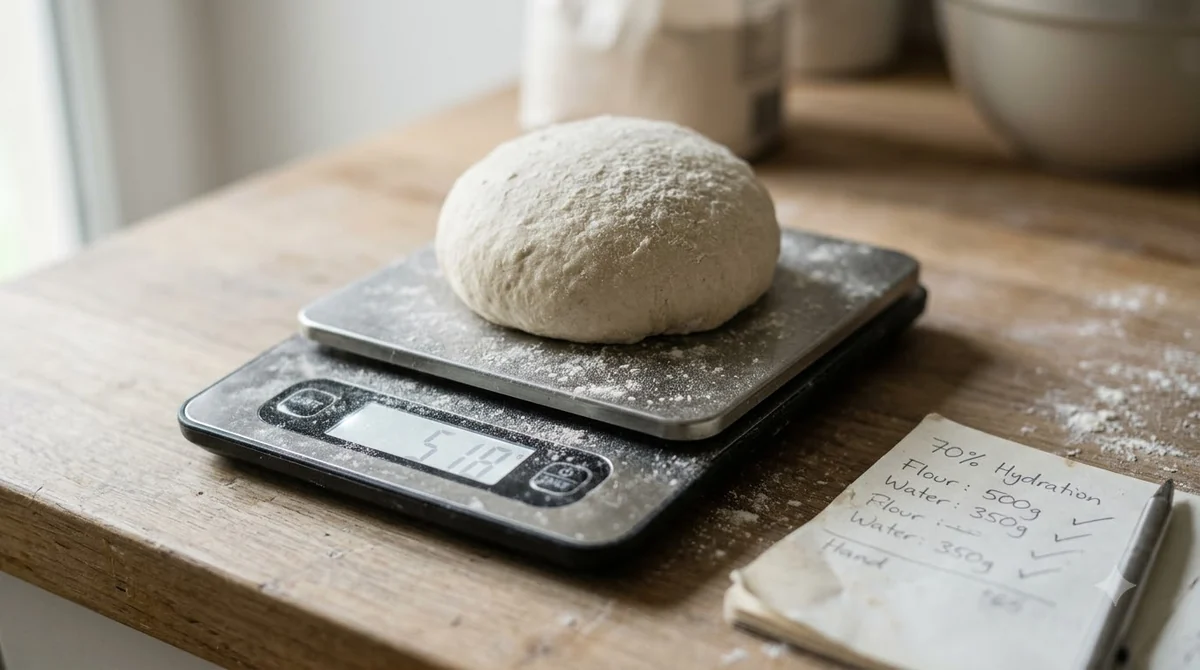

When pizza dough smells like alcohol, yeast has usually been fermenting it for a long time or in a warm spot. That smell is a normal by-product of fermentation, but a strong one means the dough has gone too far.
Most of the ethanol leaves the dough during baking, so when pizza dough smells like alcohol, the real question is how the dough looks, feels and smells before it goes in the oven.
Why pizza dough smells like alcohol
Yeast converts sugar into ethanol and carbon dioxide, and the ethanol is the source of the boozy smell when pizza dough smells like alcohol.
Wikipedia’s ethanol fermentation page gives the basic reaction: one molecule of glucose becomes two molecules of ethanol and two molecules of carbon dioxide. The carbon dioxide is the gas that makes the dough rise. The ethanol is the part you smell.
Both products come from the same reaction. A dough that rises well will also make some alcohol, so a faint boozy note is part of normal fermentation rather than a sign of a mistake.
When pizza dough smells like alcohol, start with the timeline. Count the hours from mixing to shaping, and note the room temperature; how long pizza dough can sit out explains the limits. Those two numbers tell you more than the smell alone, because they show how much fermentation the yeast has had.
What causes a strong boozy smell
A faint boozy smell is common in fermented dough, while a strong one, when pizza dough smells like alcohol, usually follows a long fermentation or a warm room.
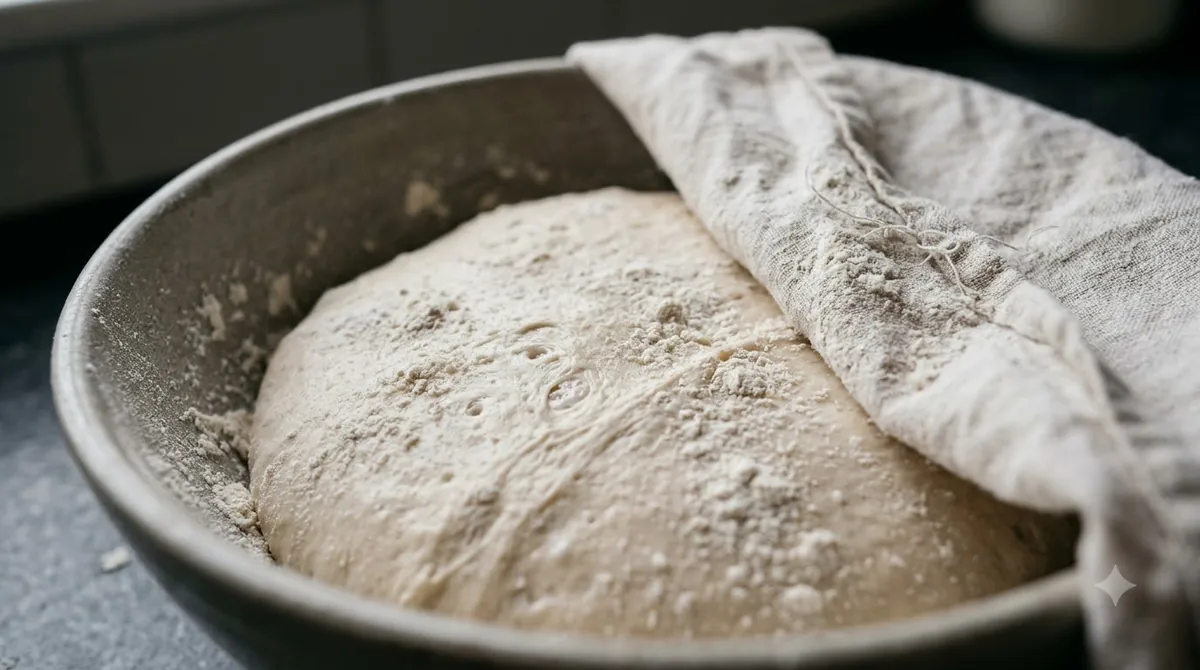
Time matters most. When pizza dough smells like alcohol after a long rest, the yeast has simply had more time to work. Modernist Cuisine’s yeast guide says the longer the fermentation, the more pronounced the yeast flavors become. A dough left out for hours will smell far more yeasty and boozy than one that rose for a shorter time.
Three conditions push the smell up:
- Time: the dough sits at room temperature for a long stretch.
- Warmth: a warm kitchen or a proofing spot speeds fermentation up.
- Yeast: more yeast means more activity, so the same time gives a stronger result.
Overproofing is the term for dough that has risen too much. A boozy smell often comes with a dough that has gone past its best, so the smell is a useful early warning.
A dough that smells like alcohol after one warm afternoon is a different case from one left out overnight. Write down how long it rested and what the room felt like. That record shows which condition caused the smell, so you can change that one thing next time.
Is the dough still safe to bake?
When pizza dough smells like alcohol, the ethanol is mostly gone after baking, since less than 2% of it remains in baked bread. The bigger question is whether the dough shows other signs of spoilage.
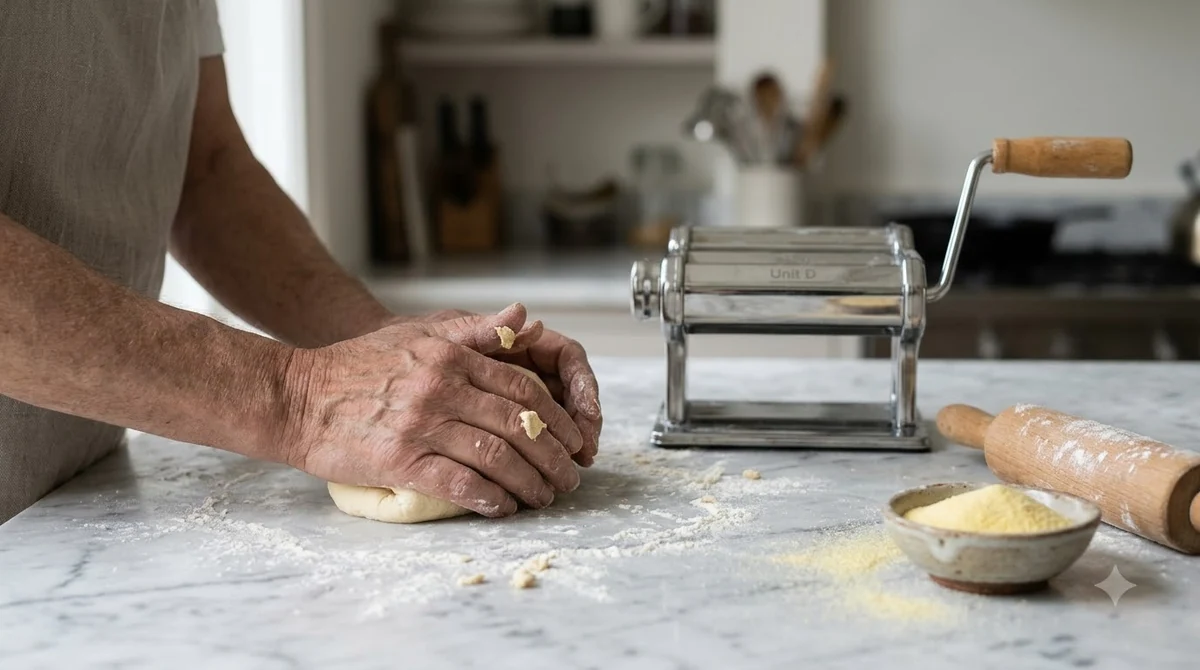
Modernist Cuisine says the alcohol evaporates during baking. A boozy smell in raw dough therefore does not mean the crust will taste of alcohol. What matters is the dough’s condition.
Ask three questions when your pizza dough smells like alcohol. Is the smell faint or sharp? Is the dough still springy? Is there any sour, rotten or fuzzy sign? Your answers decide the next step more reliably than the smell by itself.
| Smell or sign | What it usually means | What to do |
|---|---|---|
| Faint boozy smell, dough springy and elastic | Normal fermentation | Bake as planned |
| Strong boozy smell, dough slack and collapses when pressed | Overproofed dough | Bake one test pizza before using the batch |
| Sour, rotten or moldy smell | Spoilage | Discard the dough |
For spoilage, check current USDA guidance on food safety rather than relying on smell alone.
How to tell overproofed pizza dough
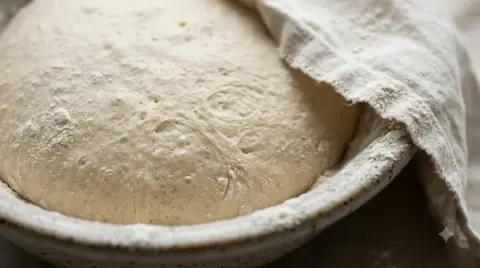
When pizza dough smells like alcohol, overproofing is a likely cause. Overproofed dough has risen past its structure, and you can see it on the surface and feel it when you handle the dough. Modernist Cuisine defines overproofing as dough rising too much, and our overproofed pizza dough guide shows the signs in more detail.
By the puffy stage, carbon dioxide makes up more than half of the dough’s volume. Degassing, the step where you knock the air out, shrinks the dough by 20% to 40%. A dough pushed far past that point has less structure left to hold its shape.
Use three simple checks:
- Look at the bubbles. Large, uneven gas pockets suggest the dough has risen more than it should.
- Press the dough lightly. If the dent stays and the dough does not spring back, it has likely gone too far.
- Smell it. A boozy smell alongside the first two signs points to fermentation that has run too long.
Overproofing is easy to miss because the dough can look fine on the surface. When pizza dough smells like alcohol and the dough also feels slack, the overproofed explanation is more likely than a simple yeast smell.
What to do when pizza dough smells like alcohol
If pizza dough smells like alcohol only faintly and still holds its shape, you can bake it as it is. If it is strongly boozy and collapsing, reshape it gently and test one pizza before you use the whole batch.
- Smell and touch the dough. Note whether the smell is faint or sharp and whether the dough is springy.
- Shape it gently so you keep as much gas as you can, and avoid stretching it hard.
- Bake one test pizza before you bake the rest.
- If the test crust tastes sour or off, discard the rest of the dough.
Check the amounts of yeast, salt and water in your own recipe. The right quantities depend on the flour and the method, so a general rule cannot tell you exactly how much to reduce. Modernist Cuisine’s yeast guide also mentions a rescue technique it calls dough CPR, but read the full guide before you try it.
A dough that is still usable can keep a faint boozy aroma, and that can be disappointing when you expected a clean crust. The goal is a crust that tastes clean, so judge the baked test pizza, not only the raw dough. If the test pizza tastes clean and the crust bakes through, the batch is usually worth finishing.
How to prevent a boozy smell next time
Slowing fermentation down makes it less likely that pizza dough smells like alcohol. Refrigeration slows fermentation, and a warm, humid proofer speeds it up, according to Modernist Cuisine.
- Shorten the time the dough spends at room temperature before you shape it.
- Keep the dough away from warm spots such as a sunny counter or an oven with the light on.
- Cold-ferment the dough in the refrigerator for a slower rise.
- Weigh the yeast and follow your recipe rather than adding extra.
- Write down the time and temperature so you can repeat what worked.
Cold fermentation still develops flavor over time, but slow fermentation keeps the dough from tipping into an overproofed state. For more on timing, see pizza dough fermentation and how long to proof pizza dough.
Keep a simple log for a few batches. When pizza dough smells like alcohol, compare the log with the result and change one variable at a time, such as the rest time or the amount of yeast. Changing several things at once makes it hard to know which one made the difference.
Sourdough and yeast dough smell differently
A sharp, sour sourdough is a different case from a yeast dough that smells boozy, because lactic and acetic acid give sourdough its notes. Wikipedia’s sourdough entry says lactic acid gives sourdough its sour taste.
The same entry notes that a drier, cooler starter produces more acetic acid and a sourer loaf, while longer fermentation adds flavor. A sour smell and a boozy smell are different signals, and telling them apart helps you read the dough.
Sourdough can also smell boozy when the starter is very active. If sourdough smells like alcohol but still tastes clean after baking, the smell is usually not a cause for alarm. Judge the dough the same way as a yeast dough: springiness, bubbles and any spoilage signs.
Frequently Asked Questions
Does baking remove the alcohol smell?
Mostly, yes. Modernist Cuisine says the ethanol evaporates during baking, and Wikipedia reports that less than 2% of the ethanol remains in baked bread. If your pizza dough smells like alcohol before it goes in, the oven will drive most of that ethanol off, but the dough’s condition still matters.
Is pizza dough that smells like alcohol safe to eat?
A faint boozy smell usually means normal fermentation. Discard the dough if it has mold or a sour, rotten smell, and check current USDA guidance on food spoilage before you decide. A pizza dough that smells like alcohol but still looks and feels normal is usually a case for a test bake, not an immediate discard.
Why does sourdough smell like alcohol?
Sourdough can smell boozy when the yeast has been working for a long time, because yeast produces ethanol as it ferments sugar. Its sharp notes come from lactic and acetic acid.
Can I fix the dough by baking it longer?
Baking evaporates the ethanol, but it does not repair dough that has over-risen or spoiled. Check the texture and smell of the dough before you bake, not after.
How do I stop the smell next time?
Shorten the room-temperature rise, use the amount of yeast your recipe calls for, and cold-ferment the dough in the refrigerator to slow it down.
Is the smell the same as overproofed dough?
They are related but not identical. Overproofed dough has risen too much, and a strong boozy smell often comes with it, so check the bubbles and the springiness as well as the smell.
If your pizza dough smells like alcohol but stays springy and faint, bake it and watch the first pizza. If the dough is sour, moldy or collapses into a slack mess, start a new batch and shorten the next rise.
 7 min readLearnWhy Pizza Dough Balls Stick Together and How to Stop ItUpdated Nov 11, 2026
 9 min readLearnWhy Is My Pizza Dough Tough? Causes and Easy FixesUpdated Nov 12, 2026
 7 min readLearnPizza Dough Shrinking Back? Why It Happens and How to Fix ItUpdated Nov 10, 2026
 6 min readLearnRadiatori Substitute: Pasta Shapes That Hold Sauce Like It DoesUpdated Nov 13, 2026
 6 min readLearnHow to Make Pizza with Leftover Pasta in About 10 MinutesUpdated Nov 13, 2026
 6 min readLearnWhy Is My Pasta Dough Crumbly? Causes and Easy FixesUpdated Nov 13, 2026