
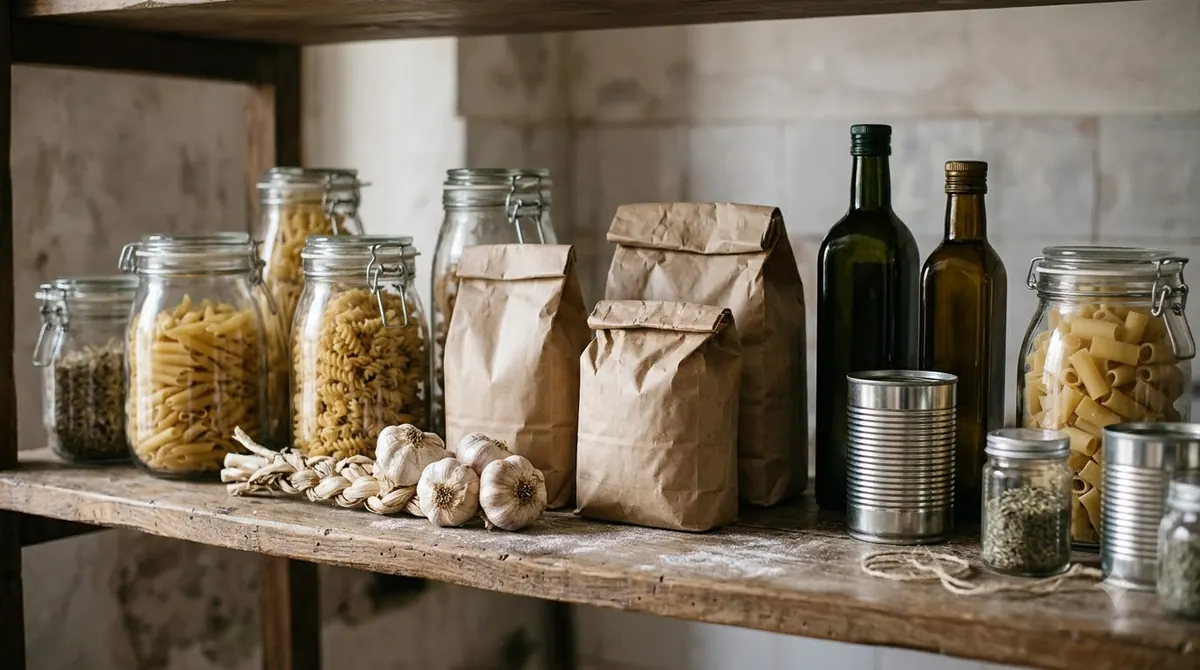

Farfalloni pasta is the larger version of farfalle, the bow-tie shaped pasta from northern Italy. The name means “big butterflies,” and the shape is made from the same dough as standard farfalle. It takes a little longer to cook, and it suits chunky sauces, pasta salads and baked dishes.
If you want a bow tie that holds more sauce per bite than regular farfalle, farfalloni is the usual choice. For light sauces and quick weeknight cooking, standard farfalle is simpler to find and to time.
What Is Farfalloni Pasta?
Farfalloni pasta is a large bow-tie pasta. It is simply a bigger version of the shape most English speakers know as farfalle, or bow-tie pasta. The Italian suffix explains the difference: “-one” makes a word bigger, so farfalloni means larger butterflies.
Farfalle is thought to date back to the 16th century in the Lombardy and Emilia-Romagna regions of northern Italy. In Emilia-Romagna the same shape is called strichetti, a local word for bow ties. Sources discuss this origin for farfalle in general, not for the larger size on its own.
The shape is formed from a rectangle or oval of pasta, with two of the sides trimmed to a ruffled edge, according to the Wikipedia entry on farfalle. The ruffles and the pinched center are what give the shape its texture. That same structure is why a bowl of farfalloni pasta looks different from a bowl of penne or fusilli, even though all three are dried shapes made from the same basic dough.
When you read a label or a menu, the word farfalloni usually signals the larger bow tie. Restaurants sometimes use it for a dish built around that size, so it helps to know that the name describes the shape and not a specific sauce or recipe.
Farfalloni vs Farfalle and Farfalline
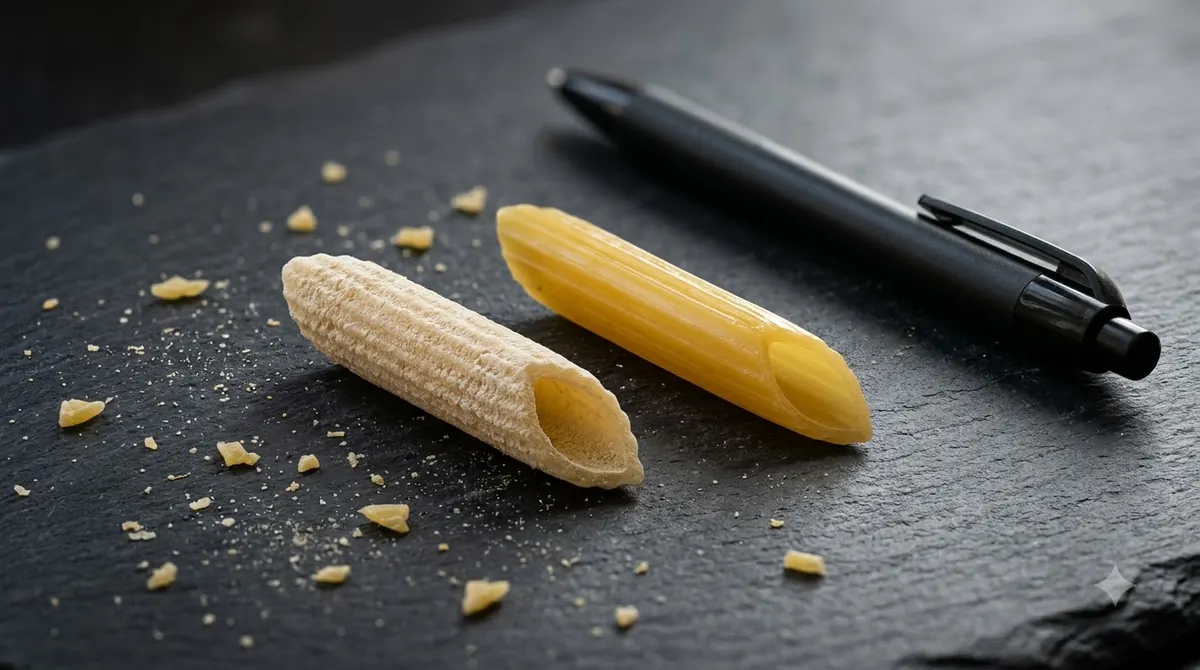
Farfalloni sits at the large end of the bow-tie range. Standard farfalle is about 1 1/2 inches (4 cm) long when dried, according to CooksInfo’s farfalle guide, and the smaller version, farfalline, sits below it.
| Shape | Size relative to farfalle | Best for |
|---|---|---|
| Farfalline | Smaller | Smaller portions and lighter dishes |
| Farfalle | Standard, about 4 cm dried | Everyday sauces and salads |
| Farfalloni | Larger | Chunky sauces and pasta salads |
Farfalle also comes in a ridged version, farfalle rigate, and in colored versions made with beetroot (red), spinach (green) or cuttlefish ink (black), as noted on the Wikipedia page for farfalle. Check the label to confirm the shape and size you are buying.
How Long to Cook Farfalloni
Farfalloni pasta takes longer to cook than standard farfalle, and that is the most useful timing fact to remember. Standard farfalle usually needs 10 to 12 minutes in boiling salted water, according to DeLallo’s guide to farfalle, and that article notes that the larger bow-tie shapes need more time. No exact figure for farfalloni was found on a page we could read, so use the cooking time printed on your package.
- Bring a large pot of water to a rolling boil and salt it generously.
- Add the farfalloni and stir so the bow ties do not stick together.
- Start testing at the time printed on the package, then keep tasting every minute or so.
- Lift out a piece, let it cool a moment, and bite it. The pasta should be tender with a slightly chewy center.
- Drain it and toss it with sauce straight away. Reserve a cup of the cooking water to loosen thick sauces.
Overcooking is the main mistake with farfalloni pasta. CooksInfo warns that farfalle “becomes slimy when overcooked”, so start tasting early.
Best Sauces for Farfalloni
The bigger bow ties suit the chunky and creamy sauces that are classic with farfalle. Farfalloni pairs with the same sauces as the standard shape, so the list below applies to both.
- Chunky tomato sauce with a drizzle of olive oil. CooksInfo notes that farfalle is a classic match for a plain tomato sauce served with olive oil at the table.
- Heavy meat sauces. Emilia-Romagna pairs farfalle with Bolognese and with a liver ragu, according to CooksInfo.
- Cream sauces, which are usually served with farfalle. Carbonara and Alfredo are cited as good matches in the DeLallo guide.
- Seafood, including the arugula and small calamari combination from Lombardy listed by The Pasta Project.
Summer sauces are another good match. DeLallo’s guide describes Italians serving colorful chunky tomato sauces with farfalle in the summer, when vegetables are at their peak, a dish known as farfalle alla primavera. The larger shape carries chopped vegetables well, so it is a sensible choice for that style of sauce.
For a sweet and savory regional dish, look for farfalle cremasca from Lombardy, which mixes crushed amaretti biscuits with butter and sage. It is a traditional pairing, not an everyday sauce, but it shows how the shape handles bold flavors.
Using Farfalloni in Salads and Baked Dishes
Farfalloni pasta works cold in pasta salad. CooksInfo suggests tossing farfalle with pesto, serving it chilled, and finishing with olive oil and toasted pine nuts. Rinse the cooked pasta under cold water so the bows do not clump before you add the dressing.
Some cooks also use farfalloni pasta in baked pasta dishes. Pasta keeps softening in the oven, so follow the package time and check the texture before it goes in. No farfalloni-specific baking time was confirmed on the pages we read.
Common Mistakes With Farfalloni Pasta
Most problems with farfalloni pasta come from timing and sauce choice rather than the shape itself. The mistakes below come up most often when a cook switches from standard farfalle to the larger size.
- Using the standard farfalle time. A larger shape takes longer, so the time printed on the package is the better guide.
- Waiting too long to taste. CooksInfo warns that farfalle becomes slimy when overcooked, and a few extra minutes can change the texture.
- Serving thin sauce with a large bow. A light, watery sauce runs off the shape, so pick a sauce with body or add a spoonful of cooking water to bind it.
- Assuming all farfalloni tastes the same. Colored versions made with spinach, beetroot or cuttlefish ink carry a different flavor from plain semolina pasta.
If you are not sure which size you have in the pantry, measure a piece against the 4 cm length given for standard farfalle. A clearly longer, wider bow is farfalloni, and a clearly smaller one is farfalline.
How to Choose and Store Farfalloni
When you shop for farfalloni pasta, look for a dried pack made from durum wheat semolina and water. Those are the basic ingredients of farfalle, and the same mix is typical for the larger shape. Read the label for added colors or flavors, since spinach, beetroot and cuttlefish ink versions taste slightly different from plain pasta.
- Choose plain durum semolina for classic sauces and colored versions for presentation.
- Match the size to the sauce: smaller shapes for light sauces, larger ones for chunky sauces.
- Store dried pasta in a sealed container in a cool, dry place, and use it before the date on the pack.
Frequently Asked Questions
Is farfalloni the same as bow-tie pasta?
Farfalloni is a larger bow-tie shape. Bow-tie is the common English name for farfalle (see bow-tie pasta vs farfalle), and farfalloni is the bigger size in the same family.
Does farfalloni need a different cooking time?
Yes, farfalloni pasta usually takes longer than standard farfalle, which cooks in about 10 to 12 minutes. Use the time on the package and test a piece before draining.
Can I use farfalloni pasta in place of farfalle?
Yes, in most recipes. Farfalloni pasta holds more sauce, so it is a good swap for chunky sauces and salads. For delicate or light sauces, standard farfalle is the better fit.
What is farfalline?
Farfalline is the smaller version of farfalle. The Italian suffix “-ino” makes a word smaller, so farfalline means little butterflies.
Are colored farfalloni made with vegetables?
Colored farfalle is made with beetroot for red, spinach for green and cuttlefish ink for black, according to Wikipedia. Check the ingredient list on your pack, since the exact recipe varies by brand.
Choose farfalloni pasta when you want a bigger bow tie for chunky sauces, salads or baked dishes, and keep standard farfalle for everyday cooking. Always follow the cooking time on your package and taste as you go.
 8 min readLearnWhat Is Mortadella? Simple Facts and 5 Ways to Serve ItUpdated Nov 11, 2026
 7 min readLearnWhat Is Bottarga? 5 Simple Facts About Taste and UseUpdated Nov 11, 2026
 8 min readLearnWhat Is Ciliegine Mozzarella? 5 Easy Facts to KnowUpdated Nov 11, 2026
 7 min readLearnTagliatelle Pasta: Easy Recipe, Sauces and Facts for 2026Updated Nov 6, 2026
 8 min readLearnReginette Pasta: Shape, Origin and 5 Best SaucesUpdated Nov 11, 2026
 6 min readLearnIs Pasta Healthy? Nutrition Facts and 4 Smart ChoicesUpdated Nov 13, 2026