
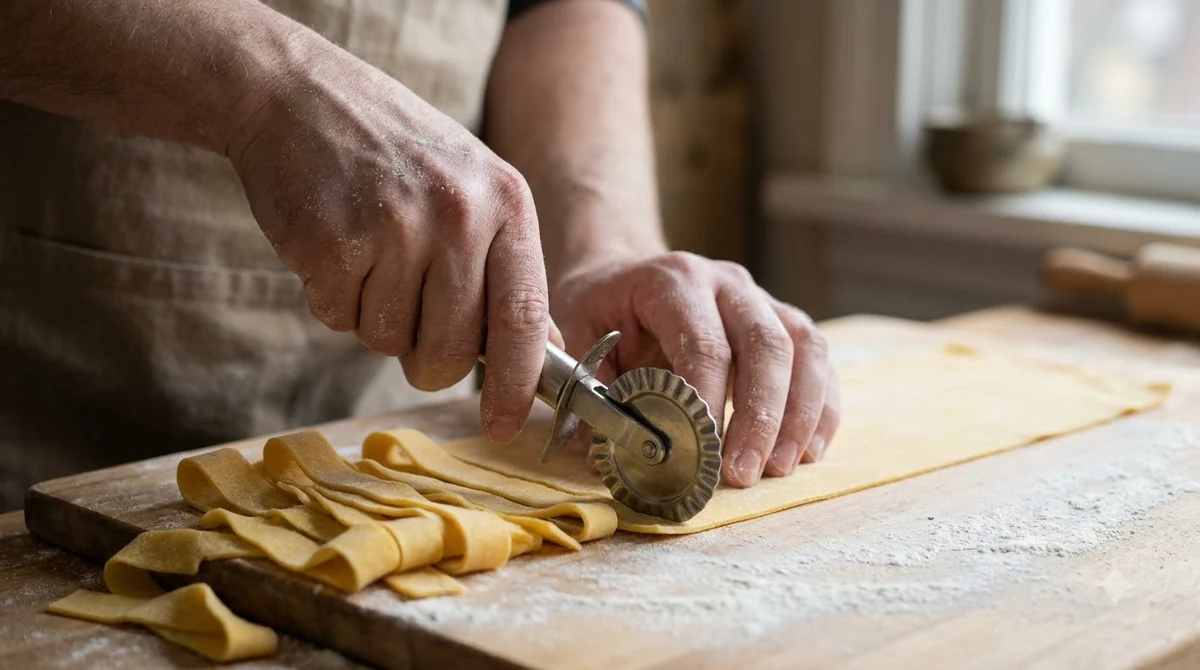

Testaroli pasta is an ancient batter pasta from Lunigiana, the area on the border of Tuscany and Liguria in northern Italy. It is made from flour, water and salt, and it is cooked in a flat pan like a pancake instead of being rolled from dough. Cooked testaroli is usually cut into diamonds and served with basil pesto. This guide covers where it comes from, what goes into a basic batter, how to cook it at home, and how it compares with falsi testaroli.
What Is Testaroli Pasta?
Testaroli pasta is a thin, spongy Italian pasta or bread made from water, flour and salt. It is cooked in a round sheet and then sliced into diamond or rectangular pieces. Wikipedia compares it to a crepe or pancake. The name comes from the testo, the flat terracotta or cast-iron pan, sometimes with a domed lid, on which the batter traditionally cooked.
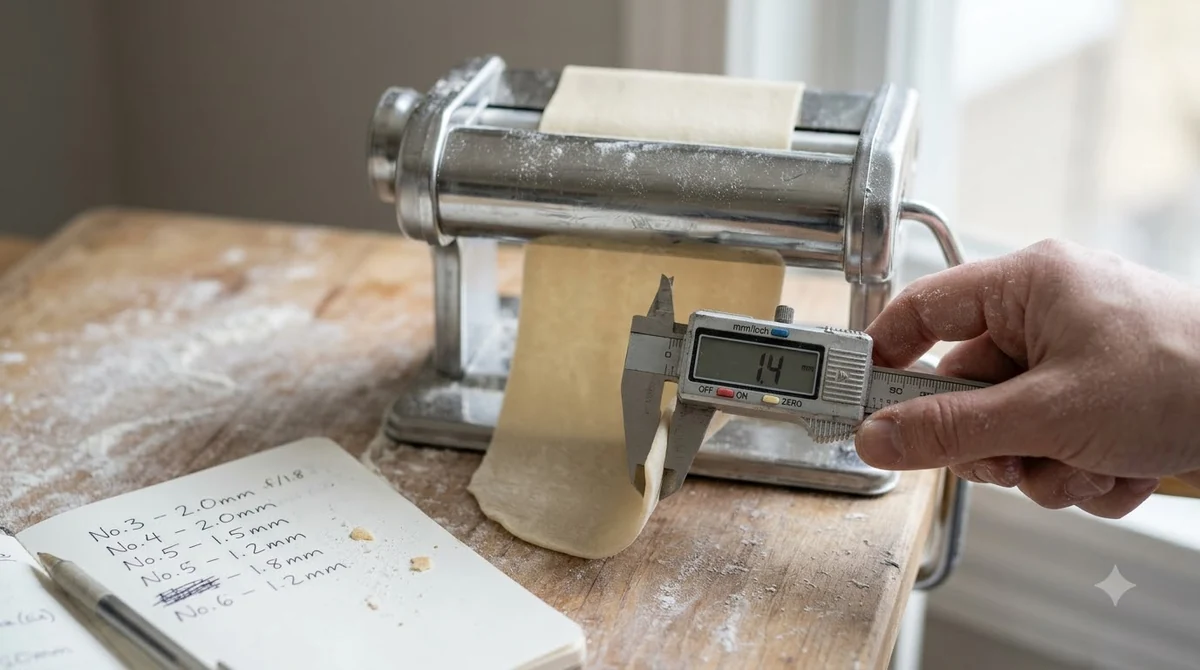
Recipes for testaroli describe a sheet that is thin. One cookbook cited by Wikipedia says it should be no more than a quarter inch thick. Because the batter is poured rather than rolled, you control the thickness by how much batter you ladle into the pan and how quickly you spread it.
Testaroli does not need a pasta machine, rolling pin or drying rack. That makes it a simple fresh pasta to try, much like making pasta without a machine, even though it looks unusual on the plate.
Where Testaroli Pasta Comes From
Testaroli pasta comes from Lunigiana, a historical territory that today falls within the provinces of Massa Carrara in Tuscany and La Spezia in Liguria. The region takes its name from the Roman town of Luni. Wikipedia’s entry on Lunigiana describes its geography and provinces.
The age of testaroli is disputed. Some sources link it to the Etruscans, and one recipe source describes it as “said to be the oldest known type of pasta.” Other sources put its origin in the Roman era. The Wall Street Journal, quoted in Wikipedia’s testaroli article, called it “the earliest recorded pasta” in a December 2013 article. Treat the “oldest pasta” claim as a story that writers repeat, not as a settled date.
Testaroli is described as a traditional dish in southern Liguria and the northern part of Tuscany. One recipe source calls it an ancient type of maltagliati, the irregular cut pasta, which is why some cooks treat the two as related.
Basic Testaroli Batter Ingredients
A testaroli batter needs only three ingredients, plus a little oil for the pan. The table gives the quantities from one recipe. The metric figures are simple conversions, so check them against your own scale.
| Ingredient | Amount in one recipe | Notes |
|---|---|---|
| Soft wheat flour | 10.5 oz (about 298 g) | Chestnut flour is sometimes used in traditional versions |
| Tepid water | 1 pint (about 473 ml, US pint) | Tepid, not hot |
| Salt | 1 pinch | Added to the batter |
| Extra virgin olive oil | 1 teaspoon, for the pan | Wiped on the hot pan |
The recipe does not give a resting time for the batter. Check the package or your own recipe notes if you plan to rest it, because the source we read does not say how long.
How to Cook Testaroli on a Pan
Testaroli pasta is cooked one sheet at a time in a single pan. Heat a cast-iron or nonstick frying pan over medium heat. Traditional cooks use a testo, but a skillet is the practical choice at home. The batter sets quickly, so work with the pan ready before you pour.
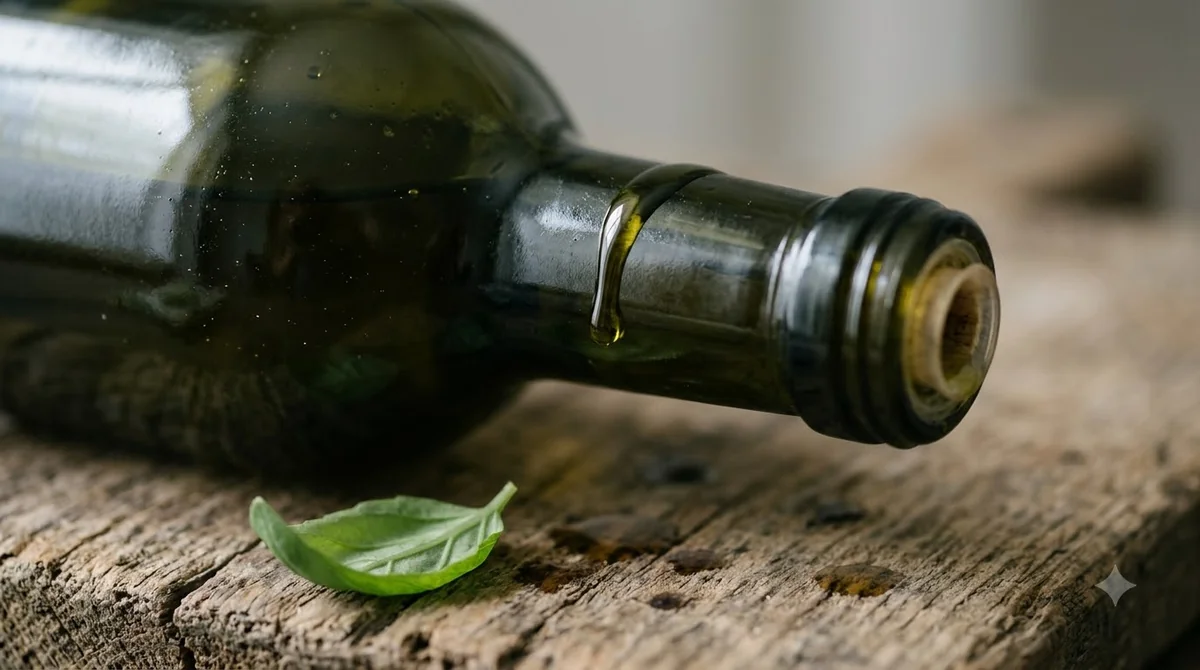
- Wipe the hot pan with a cloth or paper towel that carries a thin film of extra virgin olive oil.
- Pour a ladle of batter into the centre of the pan.
- Tilt the pan and spread the batter quickly, since it sets fast.
- Cook for a few minutes on the first side, until the surface is browned. The recipe gives no exact time.
- Flip and cook the second side until browned, then move the sheet to a board.
Traditionally the testo could be heated over hot coals, and a skillet can also be used, according to Wikipedia. That is why the cooking step looks more like making a thin pancake than making fresh pasta on a board. The batter is the whole dough, so there is no kneading or resting step to plan around.
Cutting Testaroli Into Diamonds
Traditional testaroli is cut into diamonds. One recipe describes diamonds about 5 cm (2 in) on each side. Wikipedia also mentions rectangular pieces, so either shape is a reasonable choice.
Boiling Testaroli Before Serving
Some traditional recipes serve testaroli straight from the pan. The source for our quantities boils the cut pieces for about 2 minutes in salted boiling water before saucing them. Wikipedia notes that the cooked sheets can also be boiled after frying.
Once the sheets are cut, the pieces are easy to handle. Wikipedia notes that the sheet may be set aside to cool and then cooked further in boiling water, so a batch can be cooked ahead and finished when you are ready to eat. Keep the pieces separated on the board so they do not stick together while they cool. For general boiling tips, see how to cook fresh pasta.
Traditional Sauces and Toppings for Testaroli
Basil pesto, such as pesto Genovese, is the classic partner for testaroli pasta. Wikipedia lists pesto, olive oil, pecorino, Parmesan, garlic and basil as traditional toppings. The recipe we read uses about 3.5 oz of basil pesto for the sauce.
- Basil pesto, the classic choice, spooned over the cut pieces.
- Olive oil with grated pecorino or Parmesan for a simpler finish.
- Garlic and basil, the traditional aromatics listed by Wikipedia.
- Falsi testaroli al ragu, a related dish, uses sliced pasta dough and a meat ragu instead of the batter.
Stracchino cheese and charcuterie were also eaten with testaroli in Massa and Carrara, according to Wikipedia. For a first try, pesto is the simplest choice, because it lets you taste the pasta itself.
Testaroli Pasta vs Falsi Testaroli
Testaroli pasta and falsi testaroli share a name, but they are made differently. Wikipedia explains the difference, which the table summarizes.
| Feature | Testaroli | Falsi testaroli |
|---|---|---|
| Starting material | Batter of water, flour and salt | Sliced pasta dough |
| Cooking surface | A testo, or a skillet | Not cooked on a testo |
| Usual sauce | Basil pesto or olive oil with cheese | Meat ragu |
Choose testaroli if you want the pancake-style pasta with a pesto sauce. Choose falsi testaroli if you want a ragu dish made with cut dough.
Common Mistakes When Making Testaroli Pasta
Most problems come from the batter or the pan. The recipe we read stresses two points: spread the batter quickly, and keep the oil to a thin wipe.
If your testaroli pasta comes out thick and doughy, the most likely cause is too much batter in one spot. The batter sets where it is poured, so pour a smaller ladle and spread it wider across the pan. A thinner first sheet also tells you whether the pan is hot enough for the rest of the batch. Keep the cooked sheets in order as you make them, so the first ones are ready to cut when the batch is finished.
- Spreading too slowly, so the batter sets unevenly.
- Too much oil in the pan, instead of a light wipe.
- Using hot water, when the recipe calls for tepid.
Storing Testaroli Pasta
Wikipedia says the cooked sheet may be set aside to cool and then boiled, but none of the sources we could read gives a storage time or a freezing time for testaroli pasta. Cook only what you plan to eat, and check a tested recipe before you freeze or keep a batch.
What We Have Not Verified About Testaroli
Several details in this guide come from a single recipe or from a summary we could not check in full:
- The recipe quantities come from one source. Other cooks use different ratios.
- No source we could read gives a storage or freezing time.
- The age of testaroli is disputed, so do not treat any single date as settled.
- Cooking times are given only as “a few minutes” per side, so judge by colour.
Frequently Asked Questions
What is testaroli pasta made of?
Testaroli is made from water, wheat flour and salt. Chestnut flour is sometimes used in traditional versions.
Is testaroli the oldest pasta?
Some sources call it the earliest recorded pasta, but the age is disputed. Sources give Etruscan and Roman-era dates, so treat any single date with caution.
What sauce goes with testaroli pasta?
Basil pesto is the classic choice. Olive oil, pecorino, Parmesan and garlic are also listed as traditional toppings.
Can you freeze testaroli?
No source we could read gives a freezing or storage time for testaroli. Wikipedia only says the cooked sheet may be set aside to cool and then boiled, so check a tested recipe before you freeze a batch.
How is testaroli different from falsi testaroli?
Testaroli is made from batter cooked on a testo or skillet. Falsi testaroli is made from sliced pasta dough and is served with a meat ragu.
Testaroli pasta suits a cook who wants a simple pasta without a machine. Start with a batter that pours easily, keep the pan ready, and cut the sheets into diamonds for a classic result with pesto.
 8 min readLearnWalnut Sauce for Pasta Recipe: A Creamy Ligurian Sauce Made at HomeUpdated Nov 11, 2026
 8 min readLearnPansoti Pasta: The Ligurian Triangles Served With Walnut SauceUpdated Nov 6, 2026
 8 min readLearnCreamy Tuscan Pasta Recipe: A Simple Skillet MethodUpdated Nov 10, 2026
 6 min readLearnHow to Make Pici: Hand-Rolled Tuscan Pasta GuideUpdated Nov 13, 2026
 9 min readLearnWhat Is Finocchiona? A Tuscan Fennel Salami ExplainedUpdated Nov 11, 2026
 6 min readLearnHow to Make Ribollita: Tuscan Bread and Bean Soup Step by StepUpdated Nov 13, 2026