

Tonnarelli pasta is a long, square-cut egg pasta from central Italy. The name is used mainly in Lazio, while the chitarra-cut style is typical of Abruzzo. Its thick square cut holds rich sauces well, so it is worth knowing if you cook at home.
What Is Tonnarelli Pasta?
Tonnarelli is a long egg pasta with a square cross-section, about 2 to 3 mm thick, cut from a rolled sheet of dough. The square shape is what sets it apart from round strands.
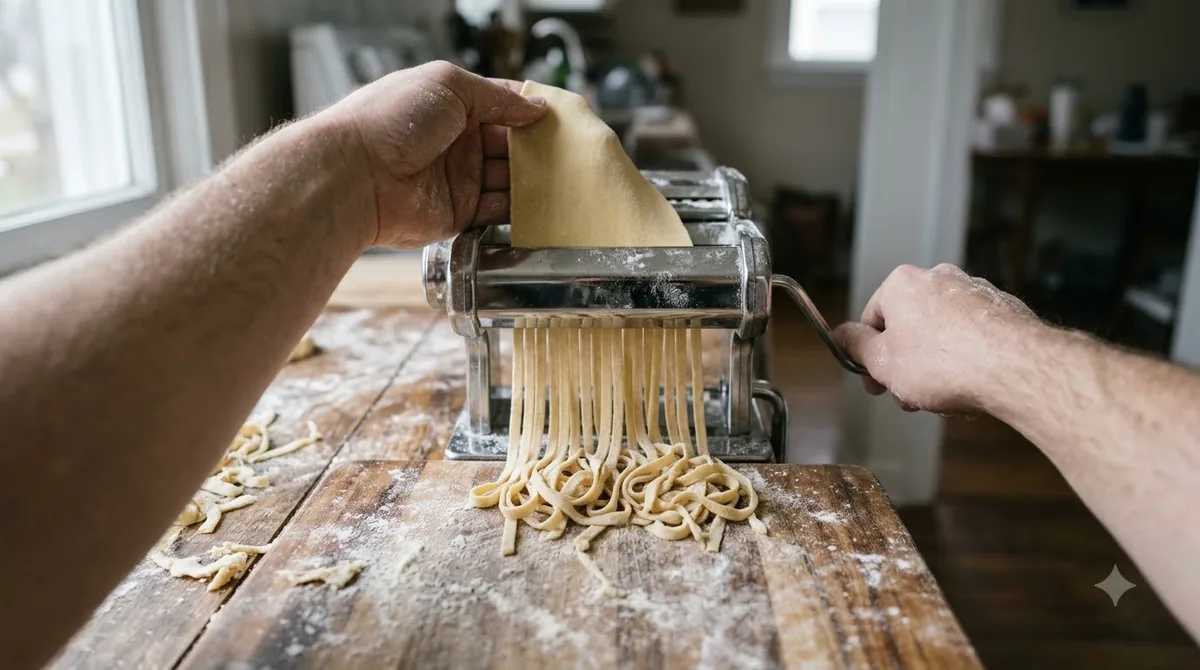
The shape comes from the cutting tool. A chitarra is a wooden frame with a series of parallel wires strung across it. The dough sheet is pressed down onto the wires, so the dough passes through and falls into long strands with four flat sides. Because the pasta is cut from a sheet rather than pushed through a die, the edges stay sharp and the strands look slightly rough.
Tasting Table describes tonnarelli as thicker than spaghetti, with square edges where spaghetti is rounded. Its rough surface gives sauce something to grip, which is one reason the pasta pairs well with thick sauces. The same article says the pasta was likely first made in Lazio, near Rome.
Tonnarelli is made from durum wheat semolina and eggs. Traditional versions have no added salt in the dough, which leaves the flavor of the wheat and egg to come through.
A plain dough suits a plain sauce. Because tonnarelli pasta relies on its texture more than on added flavor, the cut and the dough do most of the work, and the sauce adds the rest.
Fresh or dried tonnarelli
Fresh tonnarelli pasta is the closest to the traditional version, and it is the form most often described in recipes. Dried tonnarelli is easier to store and works the same way in a sauce, but its cooking time and texture depend on the maker, so the package is the best guide for timing. Read the ingredient list and the product description to confirm that the cut is square.
Tonnarelli and Spaghetti alla Chitarra: Are They the Same?
Tonnarelli and spaghetti alla chitarra describe much the same square, chitarra-cut pasta, but each name points to a different region.
Wikipedia’s spaghetti alla chitarra article describes the Abruzzo style as the typical version. The same article notes that chitarra-style pasta is called tonnarelli in Lazio, where the name is used especially for the Roman dish cacio e pepe.
| Term | Where the name is used | How it is cut |
|---|---|---|
| Tonnarelli | Lazio, especially in cacio e pepe | Square strands cut from a sheet on a chitarra |
| Spaghetti alla chitarra | Abruzzo, the typical region | Square strands cut from a sheet on a chitarra |
For a home cook, the practical point is that both names describe one shape family. If you search for tonnarelli pasta, you will see both names, and a menu or package may use either one, so read the description to confirm the cut.
Tasting Table also notes that nearby areas use other names for similar pasta, such as maccheroni crioli in Molise. Wikipedia lists cirioli molisani as a Molise name for the family as well. Regional names overlap, so the same shape can appear under several labels.
Ingredients and Dough for Tonnarelli Pasta
One published tonnarelli recipe uses 3 cups (429 g) of semolina and 4 eggs, with no water in the base dough.
The recipe on Marcellina in Cucina’s tonnarelli page gives these dough details:
- Semolina: 3 cups (429 g). The 00 flour variant uses 3 1/4 cups.
- Eggs: 4 eggs.
- Water: none in the base recipe. Add one teaspoon at a time only if the dough is too dry.
- Rest: wrap the dough in plastic and let it rest for 20 to 30 minutes.
Tasting Table uses a different mix for its tonnarelli pasta dough: semolina, all-purpose or Italian “00” flour, and three large eggs. It says 00 flour gives a smoother, softer pasta. It also advises kneading for about 10 minutes, until the dough is elastic and smooth, then resting it about 30 minutes under plastic wrap.
Wikipedia describes the traditional dough in a similar way: durum wheat semolina and eggs, with no added salt, followed by a covered rest of about 30 minutes. Every source agrees that the dough should rest before it is rolled out, so do not skip that step.
Whether you mix the dough by hand or in a food processor, aim for the same result: a smooth, elastic dough that holds together on the chitarra. A general fresh pasta dough recipe is useful if you want to compare ratios. Make one batch of tonnarelli pasta dough at a time, so each sheet is rolled while the dough is still fresh.

How to Cook Tonnarelli Pasta
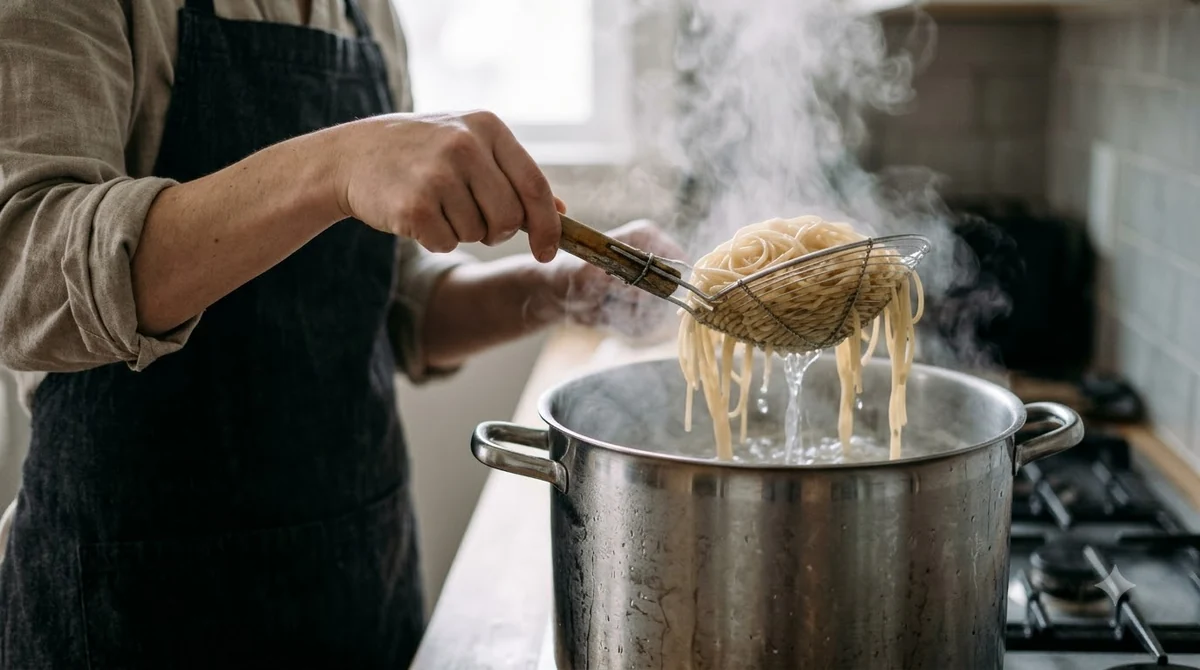
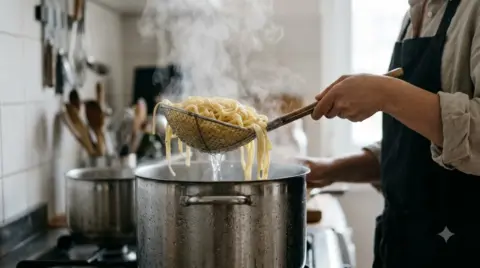
Cook tonnarelli in well-salted boiling water for 4 to 5 minutes, until it is tender but still firm, according to the recipe author.
- Bring a large pot of water to a rolling boil and add two or three tablespoons of salt, as the recipe suggests.
- Add the pasta and stir so the strands do not stick together.
- Cook for 4 to 5 minutes. Taste a strand about a minute before the end to check for a firm bite.
- If you buy dried tonnarelli, check the package time too, because thickness and dryness change the timing.
- Drain and toss at once with the sauce, adding a splash of starchy pasta water to loosen it.
Sources do not agree on one exact time. Tasting Table says about six minutes in salted boiling water, while the recipe gives 4 to 5 minutes. Treat either number as a starting point and taste early.
Serve each portion of tonnarelli pasta right after it is drained. The thick strands cool quickly and clump together if they wait in the colander, so keep the sauce warm in the pan.
The most common mistake is cooking the strands until they are soft. Thick tonnarelli keeps its bite only if you stop at a firm, tender texture. Drain the pasta and move it straight into the sauce so it does not cool and stiffen.
Best Sauces for Tonnarelli Pasta
A classic cacio e pepe recipe is the best-known tonnarelli dish, and tomato, ragù or asparagus sauce also works with the thick square cut.
The square strands give a sauce more surface to cling to than a light, thin pasta would. Tasting Table lists carbonara, gricia, cacio e pepe and simple tomato or pesto sauces as classic pairings. One chef quoted in the article says a tomato sauce works well because the thick texture holds up in the mouth. The recipe author lists these options:
- Cacio e pepe, the best-known tonnarelli dish according to the recipe author.
- Ragù, a slow-cooked meat sauce. The recipe links to a big-batch version.
- Vegetable sauces, such as an asparagus sauce.
In Abruzzo and Molise, lamb, pork or beef ragù is a common match for tonnarelli pasta, according to Tasting Table. A lighter option is a simple tomato or pesto sauce, which lets the square texture show while the sauce stays thin enough to coat each strand. Chitarra alla teramana is another regional dish, served with tomato sauce and small beef meatballs.
Frequently Asked Questions
Is tonnarelli pasta the same as spaghetti?
Not exactly. Tonnarelli is square and about 2 to 3 mm thick, while spaghetti is usually round, so the bite and the sauce match can differ.
Can you make tonnarelli without a chitarra?
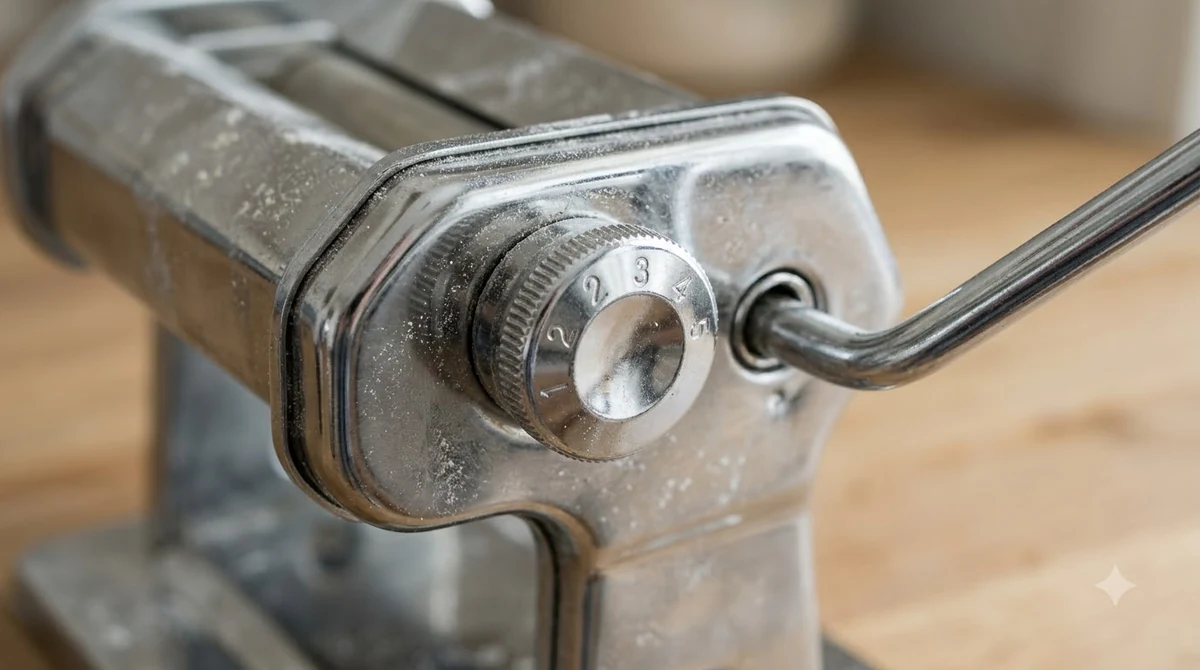
Yes. The recipe author uses a pasta machine’s cutter attachment set so the strands are as wide as they are thick, which gives a similar square look.
Is tonnarelli egg pasta?
Yes. Tonnarelli pasta dough uses durum wheat semolina and eggs, and the traditional version has no added salt in the dough.
What does tonnarelli pasta taste like?
It tastes mainly of durum wheat and egg, with a firm chew from the thick square strands. Traditional dough has no added salt, so the seasoning comes from the cooking water and the sauce.
How long should you cook tonnarelli?
One recipe gives 4 to 5 minutes, and Tasting Table says about six minutes. Packaged dried tonnarelli may list its own time, so follow the package.
Where does the name tonnarelli come from?
The name is used in Lazio for chitarra-style pasta. Abruzzo is the typical region for the related name, spaghetti alla chitarra.
What details could not be confirmed?
The sources used here do not give a standard package size or a single official cooking time for every brand. Check the producer’s page or the package for exact weights and timing before you cook for a set number of people. A brand may label the pasta differently, so compare the cut and the ingredients rather than the name alone.
If you cook for a rich sauce, tonnarelli pasta is a practical choice, and it also works with a simple tomato or pesto sauce. For a light sauce, a thinner pasta may suit you better. Either way, cook it to a firm bite and taste a strand before you drain it.
 8 min readLearnStelline Pasta: What It Is and How to Cook ItUpdated Nov 10, 2026
 8 min readLearnFregola Pasta: A Simple Guide to This Sardinian ShapeUpdated Nov 10, 2026
 9 min readLearnShould You Salt Pasta Water? Yes, Here Is How MuchUpdated Nov 10, 2026
 9 min readLearnHow Much Pasta Per Person Do You Really Need?Updated Nov 10, 2026
 7 min readLearnBombolotti Pasta: What It Is and How to Cook ItUpdated Nov 10, 2026
 8 min readLearnHow to Cook Pasta Al Dente at HomeUpdated Nov 10, 2026