
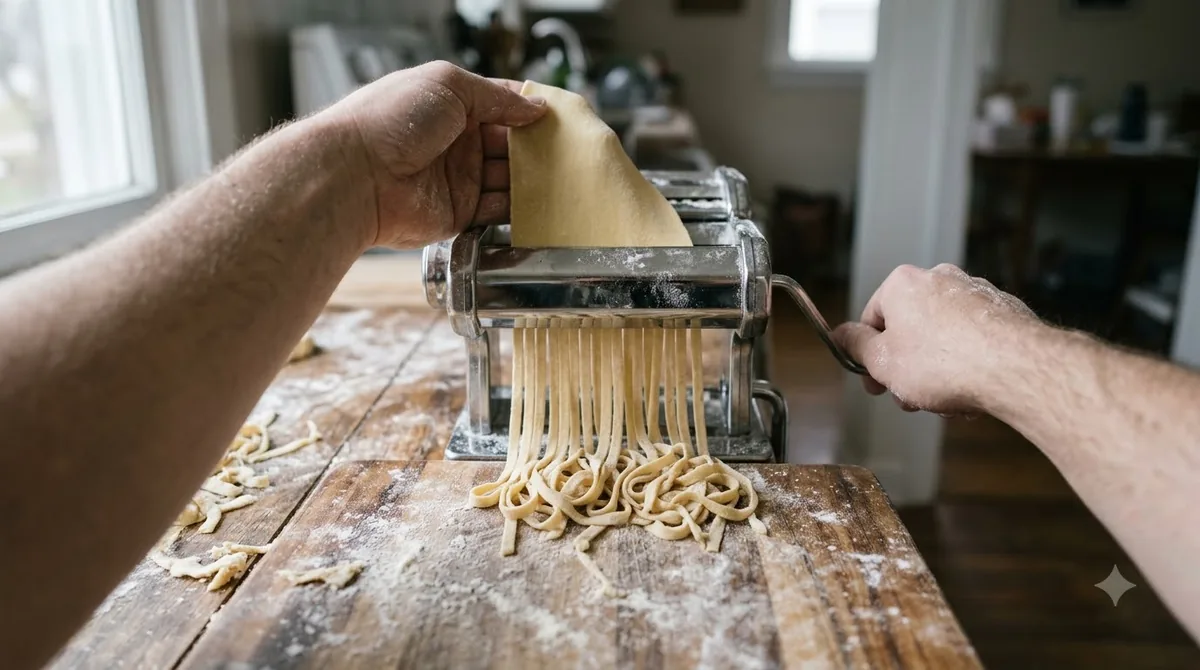

Tripoline pasta is a dried Italian durum wheat ribbon with one ruffled, ridged edge. The ridge gives the pasta a surface that holds sauce well, so it works with thick meat sauces and creamy tomato sauces. Cooking time depends on the brand, so follow the time printed on your package.
What tripoline pasta is
Tripoline pasta is a thick ribbon with one side ridged and the other side flat, which gives it a wavy look on the plate. According to the Wikipedia entry on mafaldine, tripoline is described as a thick ribbon ridged on one side and is similar to mafaldine, the ruffled-edge ribbon from the same family of shapes.
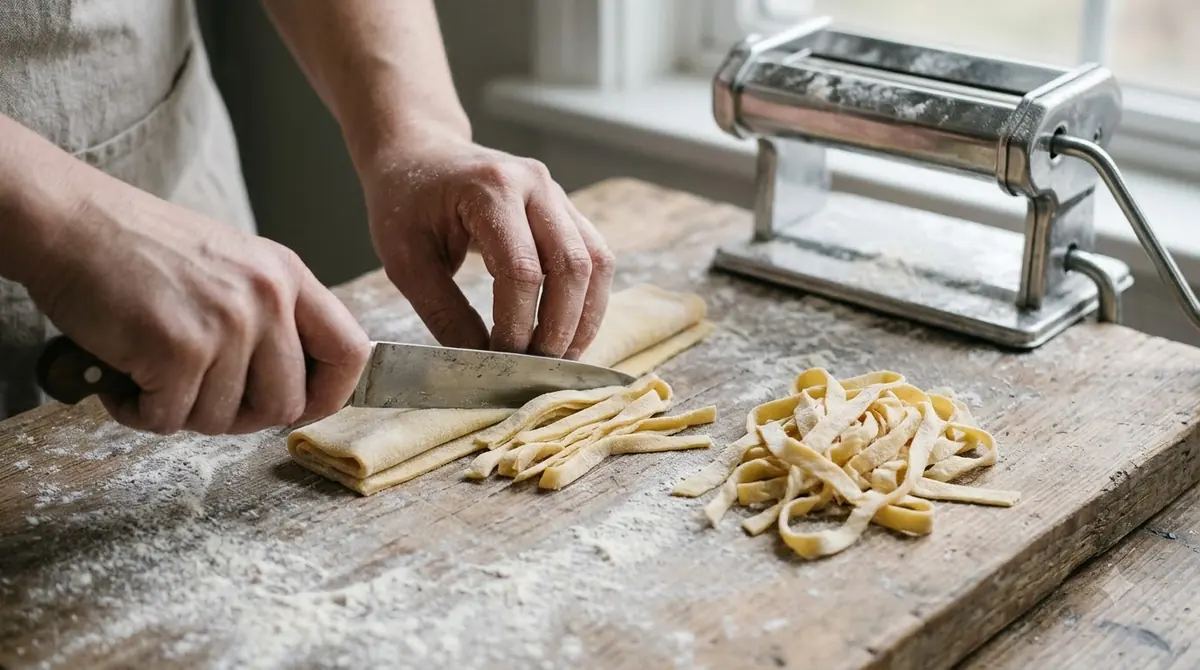
The ribbon is sold dried in boxes and bags, and the ridge is easiest to see when you hold a few pieces up to the light. Most tripoline pasta on store shelves is made from durum wheat semolina, the same base as spaghetti and penne. Check the ingredient list on the package if you want to confirm the mix of flours.
At the store, look for the words tripoline or tripoline n 3 on the front of the box and compare the shape in the photo with a ribbon. The shape is the main thing to confirm, because brands use slightly different widths and ridge depths.
The shape is believed to have started in Campania, the region around Naples, where many ribbon and ruffled pastas were developed. Wikipedia notes that the National Pasta Association is one source for this origin, but the page does not give a firm date for its first production. Treat the origin as a well-supported tradition rather than a fully documented history.
Tripoline pasta is often found in baked dishes, where the ridged edge helps the sauce and cheese stay on the pasta during baking. It is also used in simple stovetop dishes, but the baked style is the one most often mentioned by the source.
Some older sources link the name and shape to a period of Italian naming tied to colonies. Wikipedia repeats a claim about 1930s shape names, but tags it as needing a citation, so this article does not rely on it. The naming history is not needed to cook or buy the pasta.
Best sauces for tripoline
Tripoline pasta pairs best with sauces that are thick enough to cling to the ridge, such as slow-cooked meat sauces and creamy or tomato sauces with some body. Thin oil-based sauces run off the flat side and collect at the bottom of the bowl.
A well-known pairing is tripoline with sweet Italian sausage, crushed tomatoes, white wine and garlic. In a tripoline recipe from Cooking with Nonna, the sausage is browned, the garlic cooked until golden, then wine reduced before the tomatoes go in. The sausage returns to the pan for 7 to 10 minutes, which lets the sauce thicken around the pasta.
The same recipe finishes the dish with whipped ricotta and grated Pecorino Romano. The cheese is stirred in off the heat so it melts into the pasta, and the ricotta is spooned on top just before serving. This combination shows how a creamy topping can balance a meaty sauce.
- Meat ragu with sausage or ground beef, which the ridge can catch.
- Tomato cream sauce with a little butter or cheese for body.
- Baked pasta with ricotta, mozzarella and a tomato base.
- Light sauces such as pesto are better on smaller shapes.
Storage follows the usual rule for dried pasta. Keep the box sealed in a cool, dry cupboard, and once opened, move the pasta into an airtight container so it stays dry and does not pick up odors. Check the package for any stated best-by date.
A good tripoline pasta sauce is one you can see on the ridge after tossing. Avoid very thin sauces for this shape. A sauce that is too watery will not stay on the ridge, and the pasta can taste plain after the first few bites.
How to cook tripoline pasta
Cook tripoline pasta in a large pot of salted water until it is al dente, then move it into the sauce to finish. The recipe from Cooking with Nonna uses 1 pound of tripoline pasta for 4 servings, which is a useful starting amount for a family meal.
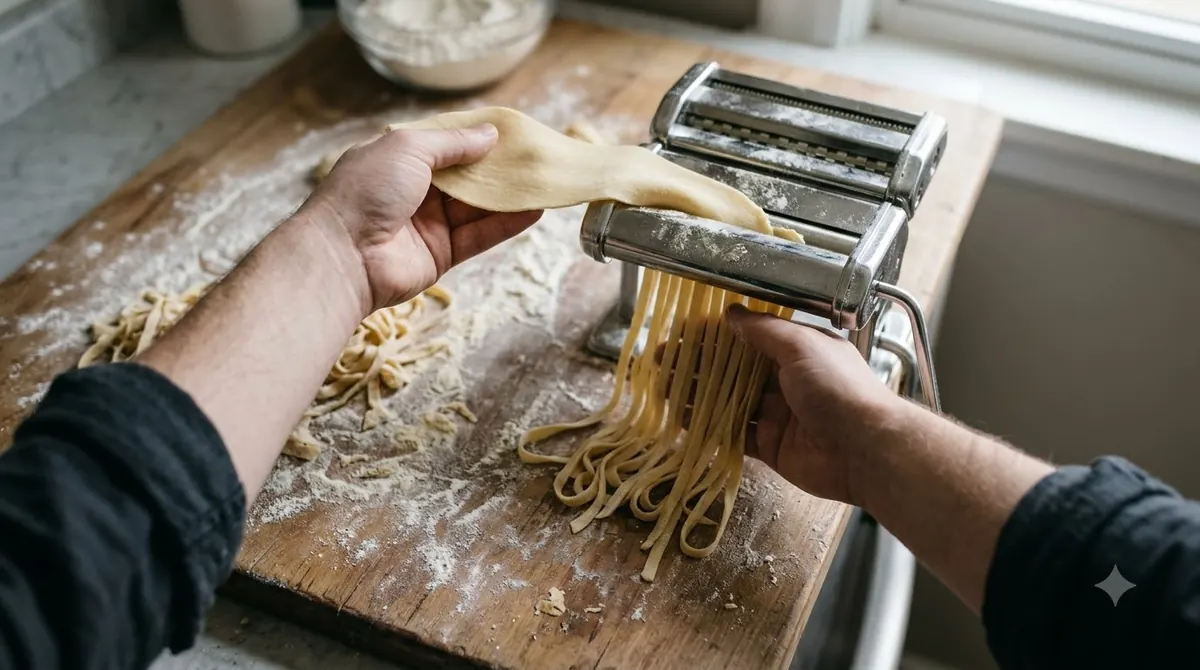
Use these steps for a simple stovetop dish:
- Bring a large pot of water to a rolling boil and add salt. Use enough water so the ribbons can move freely.
- Add the tripoline and stir once in the first minute so the ribbons do not stick together.
- Check the package time, then test a piece about two minutes before the time ends. It should be tender but still firm at the center.
- Reserve a cup of pasta water, drain the pasta, and add it to the hot sauce with a splash of the water.
- Toss for about a minute over low heat so the sauce coats the ridged edge.
The package time is the best guide for total cooking time. Source pages for this shape do not give a fixed minute count, so check the package for the exact time for your brand.
For baked dishes, cook the tripoline pasta until just under al dente, because it will continue to soften in the oven. Mix it with sauce and cheese before baking so the ridges are coated before the heat sets the top.
Tripoline pasta leftovers keep well for a short time. Serve the pasta as soon as it is coated, since tripoline pasta holds its ridged shape best when it goes straight from the pan to the plate.
Common mistakes include overcooking, which makes the ribbons soft and fragile, and rinsing the pasta after draining, which washes away the starch that helps sauce stick. Add the pasta to the sauce while both are hot.
Substitutes when you cannot find it
Mafaldine is the closest substitute for tripoline pasta because Wikipedia describes tripoline as similar to it. Fettuccine and pappardelle are common backups that also carry thick sauce well, although they lack the ruffled ridge.
| Shape | Shape detail | Best sauce |
|---|---|---|
| Tripoline | Thick ribbon, one ridged edge | Meat ragu, creamy tomato |
| Mafaldine | Ribbon with ruffled edges | Meat ragu, cream sauce |
| Fettuccine | Flat ribbon, smooth edges | Alfredo, butter and cheese |
| Pappardelle | Wide flat ribbon | Rich ragu, game meat sauce |
Some product listings use the similar name tripolini for a different shape. If a label says tripolini, check the photo or the shape description before you buy, because it may not behave like a ribbon in a ragu.
Frequently Asked Questions
Is tripoline the same as tripolini?
No. Tripoline is a ribbon with one ridged edge, while some listings use the name tripolini for a different shape. Check the product photo and shape description before you buy, and use the ribbon-style sauces in this article only for tripoline.
What is tripoline pasta made of?
Tripoline pasta is generally a dried pasta made from durum wheat, the same base used for most Italian dry pasta. Check the ingredient list on the package to confirm the mix for your brand.
What sauce goes best with tripoline?
Thick meat sauces and creamy tomato sauces work best because they cling to the ridged edge. Thin, oil-based sauces tend to slide off the flat side of the ribbon.
Can you bake tripoline?
Yes. Wikipedia notes that tripoline pasta is often found in baked pasta dishes. Cook it slightly under al dente before baking, because it keeps softening in the oven.
How long should you cook tripoline?
Follow the cooking time on your package and start tasting about two minutes before it ends. The source pages used for this article do not give a fixed minute count, so the package is the reliable guide.
What can I use instead of tripoline?
Mafaldine is the closest match, followed by fettuccine or pappardelle for thick sauces. Choose a shape with a similar width so the sauce-to-pasta ratio in your recipe still works.
If you buy tripoline for a meat or creamy dish, pick the thick sauce first and then cook the pasta to the package time. Keep a cup of pasta water to loosen the sauce at the end. More shape guides are in our Learn section.
 7 min readLearnCapunti Pasta: Shape, Origin, Recipe and Best SaucesUpdated Nov 11, 2026
 8 min readLearnSagne Ncannulate Pasta: Shape, Dough and SaucesUpdated Nov 10, 2026
 8 min readLearnReginette Pasta: Shape, Origin and 5 Best SaucesUpdated Nov 11, 2026
 6 min readLearnRadiatori Substitute: Pasta Shapes That Hold Sauce Like It DoesUpdated Nov 13, 2026
 8 min readLearnCasarecce Pasta: Simple Guide to Shape, Sauce and CookingUpdated Nov 10, 2026
 7 min readLearnCampanelle Pasta: Shape, Best Sauces and SwapsUpdated Nov 10, 2026