
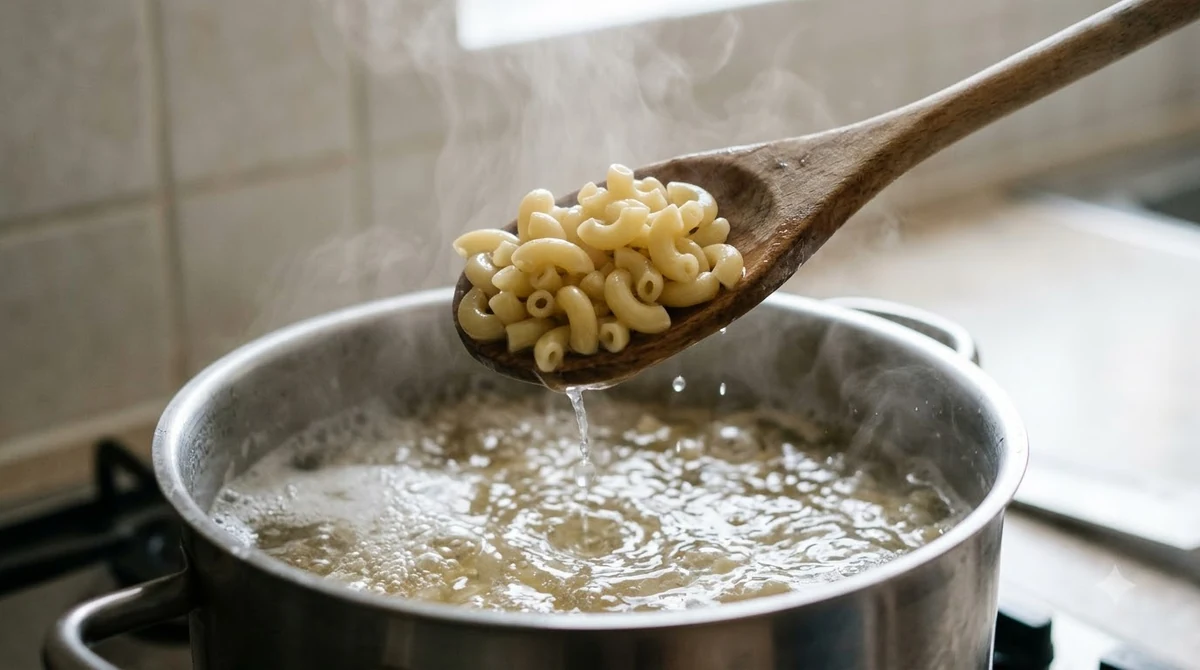

Learning how to use a spaghetti spoon takes about a minute: lift the cooked pasta out of boiling water, let the water drain through the holes, and slide the strands onto a plate. Most mistakes come from lifting too much at once or moving the spoon too fast.
The steps below cover draining, serving, portioning, common mistakes and care, so you can handle long pasta with less mess.
What a spaghetti spoon is and how its head works
A spaghetti spoon is a utensil designed to serve and handle spaghetti and other long pasta, with a long handle and a deep, scoop-shaped head. Knowing how to use a spaghetti spoon starts with understanding that design. The spoon is also called a pasta fork, pasta ladle, pasta spoon or spaghetti server, according to the Wikipedia entry on spaghetti spoons.
The head is either perforated or prong-like. The openings matter most when you drain pasta, because they let excess water run away while the strands stay on the spoon.
- Long handle: keeps your hand farther from steam and hot water.
- Deep scoop: gathers a bundle of strands in a single lift.
- Perforated or prong-like head: lets excess water drain back into the pot.
Match the head to your pasta. A wider scoop handles a larger bundle, while a narrower head slides more easily under a tangled mass of strands. A clear head shape also helps with how to use a spaghetti spoon on shorter pasta.
Step-by-step: how to use a spaghetti spoon to drain pasta
Lift cooked spaghetti straight up from the pot, hold it over the water until the dripping slows, then move it to the plate.
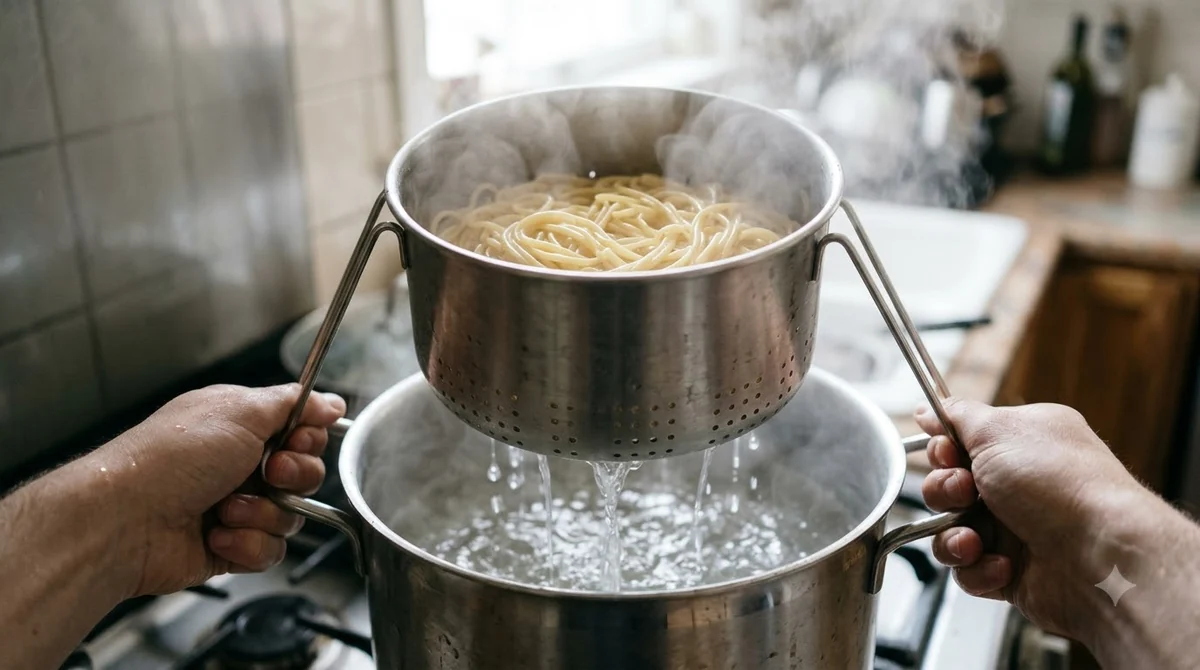
Follow these steps every time so the pasta lands on the plate without a pool of water around it.
- Cook the spaghetti until al dente, following the time on the package. Wikipedia’s pasta entry describes al dente as pasta that is still firm to the bite.
- Slide the spoon under the strands at the side of the pot, not through the center, so the water stays calm.
- Lift the bundle with a steady motion and keep the spoon level.
- Hold the spoon over the pot until the dripping slows, which usually takes only a few seconds.
- Move the pasta to a plate or bowl slowly, so hot water does not splash onto your hand.
The holes do the draining work and keep your hands drier than a ladle would. The Wikipedia entry says the holes drain excess water and help keep the hands dry, so the design is built for this step, and it is the part of how to use a spaghetti spoon that most people notice first.
If the strands cling together, lift a smaller bundle. Two small lifts take a little longer than one heavy scoop, but each one is easier to control.
Learning how to use a spaghetti spoon well also starts with the pot. Tasting Table reports that Eataly suggests 4 quarts of boiling water per pound of pasta and Lidia Bastianich suggests 6, and that a roomy pot lets the noodles expand without clumping. Less clumping means less to untangle when you lift. America’s Test Kitchen adds the salt in once the water boils, at 1 tablespoon of table salt for 4 quarts of water per roughly 1 pound of pasta.
How to serve and twirl spaghetti onto the plate
Twirl the spaghetti into a loose nest on the spoon, then turn it onto the plate so the strands stay together.
The encyclopedia entry says the spoon helps with twirling pasta in boiling water, which separates the strands while they cook. The long end of the spoon also keeps the pasta from slipping off while you serve.
- Stir the spaghetti in the pot with the spoon during the first minute of cooking, so the strands separate.
- When the pasta is cooked, lift a loose nest rather than a packed mound.
- Turn the spoon slowly over the plate and let the nest slide off.
Spoon the sauce over the nest instead of pouring it over a pile, so each strand gets coated. If the nest collapses, add a little more sauce and twirl again rather than forcing the spoon through the bottom of the plate.
Practice on a small batch first, since serving with a new spoon feels different until you know how it balances. The same habits apply when you learn how to use a spaghetti spoon with linguine or bucatini.
Portioning and tasting with the spoon
Measure dry spaghetti by the serving size on the package, and treat any center hole on your spoon as a portion guide only if the maker says so.
The Wikipedia entry says the holes allow efficient portioning, but it tags that claim as needing a citation, so it is not confirmed here. Check the serving size on the package and the manual for your spoon before you rely on a hole.
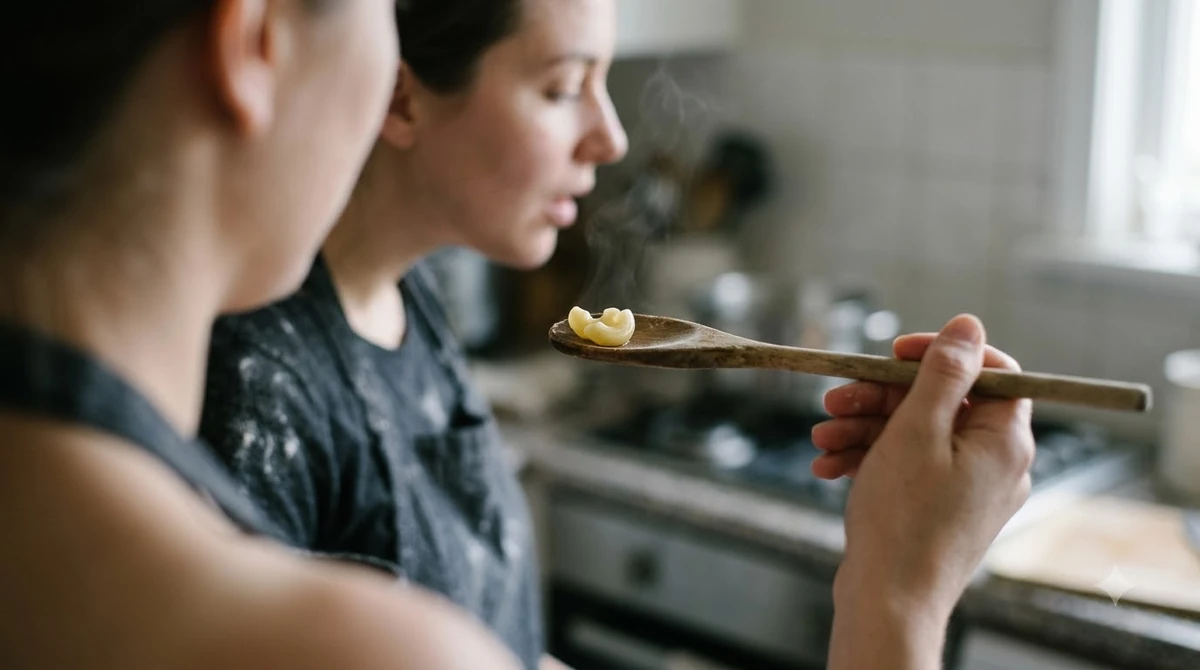
Tasting is another common use, and it is a small but useful part of how to use a spaghetti spoon. Lift a small sample of sauce or pasta on the bowl of the spoon, let it cool for a moment, and taste it. A heavy spoonful of sauce can burn your mouth, so keep the sample small.
Portioning is less exact than a kitchen scale, so use the package serving size as your starting point, which is the simplest way to portion when you learn how to use a spaghetti spoon. If you cook for a crowd, weigh the dry pasta first and divide it into equal piles on the counter. Treat the spoon as a convenience, not a measuring tool.
Quick checklist before you start
Run through this checklist before you practice how to use a spaghetti spoon for the first time.
- Pick a spoon whose head is deep enough to hold a full bundle of spaghetti.
- Set a plate or bowl beside the pot, so you do not have to walk while holding the pasta.
- Fill the pot with enough water for the pasta, so the strands move freely and are easy to lift.
- Keep a towel nearby for drips on the counter.
Setting up first keeps the lift smooth and leaves you free to watch the water.
Common mistakes when you learn how to use a spaghetti spoon
The most common mistake is lifting too much pasta at once, which spills over the sides and leaves the strands clumped on the plate.
- Overfilling the head, so the bundle slides off as you lift.
- Lifting too fast, which splashes hot water toward your hand.
- Cooking in a crowded pot, which leaves the strands clumped and harder to lift.
Another mistake is using the spoon for heavy stirring when you learn how to use a spaghetti spoon. The head is described as a scoop for lifting and serving pasta, so use a sturdier spoon for thick sauces.
Cleaning, care and spaghetti spoon vs. tongs
Check the manufacturer’s care label before you put your spoon in a dishwasher or leave it resting in a hot pot, and hand wash it if the label does not say otherwise.
Heat limits and dishwasher safety are not confirmed by the sources used for this guide, and they depend on how your spoon is made. The label on your spoon is the reliable source, so use the maximum temperature the maker lists rather than assuming one.
Knowing how to use a spaghetti spoon well is only half the job, and care keeps it working. Dry the spoon fully before you store it.
Tongs are the main alternative. Some cooks prefer tongs for finer control over a few strands, while the spoon is better for lifting and draining a larger bundle through its holes.
Frequently Asked Questions
Can you use a spaghetti spoon for short pasta?
A spaghetti spoon works best with long pasta, such as spaghetti, linguine and bucatini. Short shapes are not what the design is described for, so a colander or pasta strainer is usually easier for them.
Does a spaghetti spoon drain pasta completely?
The holes let excess water drain away, but some water can still cling to the strands. Hold the bundle over the pot until the dripping slows, then move it to the plate.
Can you twirl spaghetti in the pot with it?
Yes. The encyclopedia entry describes the spoon for twirling pasta in boiling water, which helps the strands separate as they cook.
Why does pasta stick to the spoon?
Pasta can clump when the pot is crowded or when the spoon holds too much at once. Cook in a roomy pot, stir after adding the pasta, and lift a smaller nest. Practice how to use a spaghetti spoon on a small batch first.
Is a spaghetti spoon dishwasher safe?
It depends on how the spoon is made, and the sources used for this guide do not confirm it. Check the manufacturer label first.
What is the difference between a spaghetti spoon and tongs?
A spoon lifts and drains a bundle through its holes, while tongs give finer control over a few strands. Many home cooks keep both for different jobs, and both tools are easy to learn once you know how to use a spaghetti spoon for draining.
Choose a spoon from our best spaghetti spoons guide with a head that drains well and a handle you can hold steadily. Lift slowly, keep each bundle small, and check the care label before the first wash, and you will find how to use a spaghetti spoon takes very little practice.
 8 min readGear & PantrySpaghetti Spoon: What It Is and How to Choose OneUpdated Nov 15, 2026
 9 min readGear & PantryHow to Use a Pasta Pot with Strainer, Step by StepUpdated Nov 11, 2026
 9 min readGear & PantryHow to Use a Pasta Rolling Pin, Step by StepUpdated Nov 11, 2026
 9 min readGear & PantryHow to Use a Pasta Extruder: Step-by-Step GuideUpdated Nov 11, 2026
 9 min readGear & PantryHow to Use a Ravioli Maker: Step-by-Step for Dough and FillingUpdated Nov 10, 2026
 8 min readGear & PantryHow to Use a Wooden Pizza Peel: Step-by-Step GuideUpdated Nov 10, 2026