
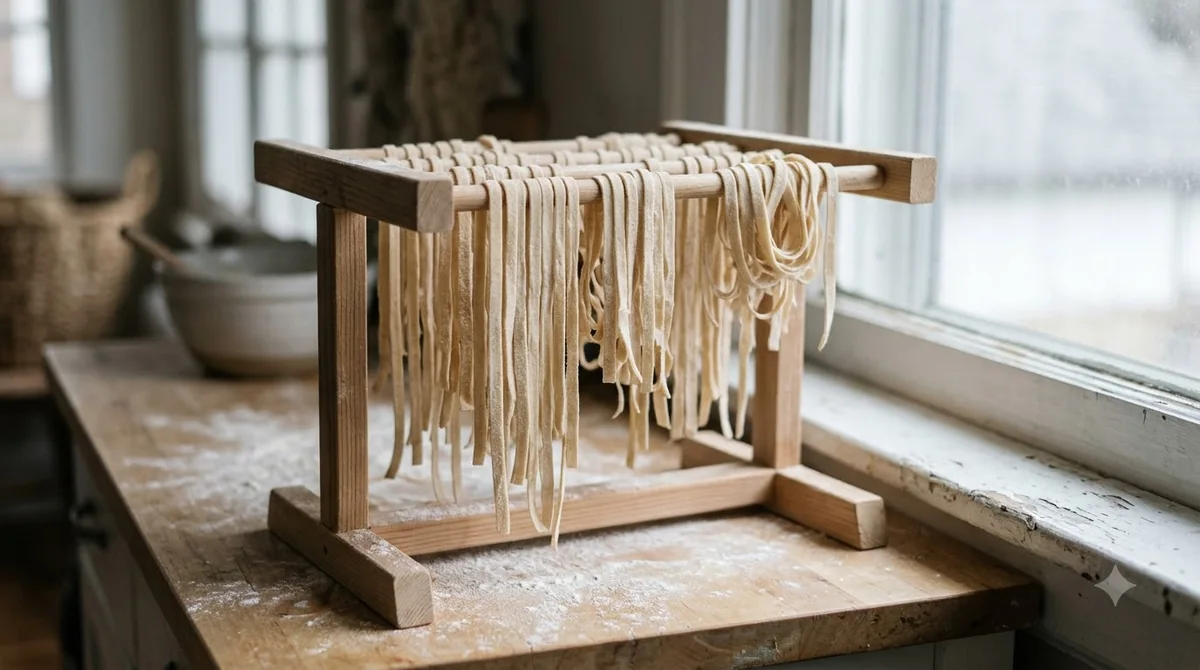

A pasta drying tray is a flat rack that lets shaped pasta air-dry evenly. It suits short shapes such as orecchiette and cavatelli that cannot hang from a rod.
Long noodles do better on a collapsible rack. Choose a pasta drying tray when your shapes are short and you make pasta often enough to keep one out.
| Pick | Best for | Key fact |
|---|---|---|
| Raised mesh drying tray | Orecchiette, cavatelli and other short shapes | Mesh screen lifts pasta for airflow, and trays stack for large batches |
| Collapsible drying rack | Long noodles and sheet pasta | Keeps strands evenly spaced and folds flat for storage |
| Coat hanger or chair back | Occasional batches of long strands | Improvised option; sanitize everything before use |

Eppicotispai Set of 2 Stackable Food Dryers
Pros & ConsViewHide
Reasons to buy
- Stackable trays that build into a 2-tier rack, so they save counter space
- Good fit for shapes that cannot hang, such as orecchiette
- Solid review base (145 ratings, 4.5 stars)
Reasons to avoid
- Only two tiers, so a big batch needs a second set
- Trays come in parts and need assembling

Eppicotispai Set of 4 Stackable Food Dryers
Pros & ConsViewHide
Reasons to buy
- Four stackable trays build into a 4-tier rack for large batches
- Good fit for shapes that cannot hang, such as orecchiette
- High rating (4.7) across 115 ratings
Reasons to avoid
- Costs the most of the stackable options
- Takes counter or shelf space once assembled

L'Oro Del Sud Perforated Drying Tray for Fresh
Pros & ConsViewHide
Reasons to buy
- Perforated trays made for fresh pasta, so air reaches the underside
- Sold as a 5 pack, enough for several nests or shapes at once
Reasons to avoid
- High price for a five-piece set
- Only 3 ratings so far, so little real-world feedback

Pros & ConsViewHide
Reasons to buy
- Three stackable mesh racks in one set
- Mesh surface lets air reach the pasta from below
- Low price for a multi-piece set
Reasons to avoid
- Sold as a herb dryer rack as well, not made only for pasta
- Only 6 ratings so far, so little real-world feedback
What a Pasta Drying Tray Does Differently
A pasta drying tray lifts shaped pasta on a raised mesh surface, so air reaches the underside as well as the top.
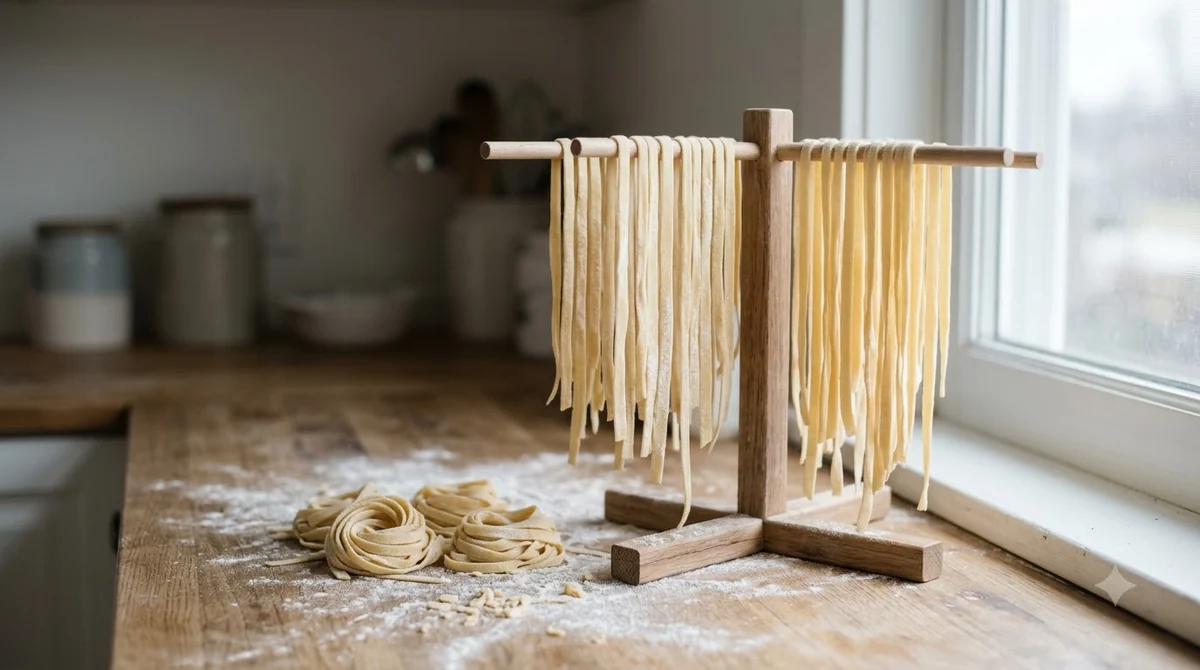
King Arthur describes a drying tray as the right tool for shapes that cannot hang, such as orecchiette or cavatelli. Its tray has a raised, thick mesh screen for airflow, and trays can be stacked when a large batch needs more room.
Drying takes time, so plan around it. King Arthur suggests drying pasta overnight, or for up to 24 hours, before you store it. A pasta drying tray that stays out for a day or two needs a clear, dry spot in the kitchen.
Think of the tray as a drying surface, not a storage container. Once the pasta is hard all the way through, it moves into a sealed pasta storage container, and the tray goes back to its place. That split keeps the tray free for the next batch and keeps the dried pasta away from dust and moisture.
How These Options Were Chosen
The options are grouped by drying method, based on published drying guidance rather than hands-on testing.
Shape and dough matter as much as the tool. King Arthur recommends eggless dough made with semolina or durum flour and water for drying, and it advises against drying filled pasta. King Arthur’s collapsible rack product page notes that the rack is made in Italy.
- Shape fit: short and shaped pasta goes on a pasta drying tray.
- Strand fit: spaghetti and fettuccine hang best on a rack.
- Batch size: stackable trays suit larger batches.
- Dough type: semolina or durum with water is the baseline for drying.
Tray, Rack or Improvised Setup Compared
A tray suits short shapes, a rack suits long strands, and an improvised hanger works for small batches if you clean it first.
| Option | Shape fit | Airflow | Storage | Batch size |
|---|---|---|---|---|
| Raised mesh tray | Short and shaped pasta that cannot hang | Mesh lifts pasta off the surface | Trays can be stacked | Larger, by stacking trays |
| Collapsible rack | Long noodles and sheet pasta | Strands kept evenly spaced | Folds flat | Set by rack size |
| Coat hanger or chair back | Long strands only | Open air, spacing depends on the setup | Nothing extra to store | Small batches |
Pasta Evangelists notes that a chair back covered with a lightly floured tea towel can hold hanging strands. Its commenters also report that rack-dried noodles keep a long curve but can snap, so handle them gently.
When a pasta drying tray makes the most sense
A pasta drying tray earns its place when your shapes are small or hard to hang, such as orecchiette, cavatelli and similar pieces. King Arthur names these shapes as the reason a tray exists, since they cannot hang from a rack the way spaghetti can.
A tray also suits people who want to keep several shapes separate. Each shape can sit on its own tray or its own section, so the pieces do not stick together while they dry.
When a collapsible rack is the better pick
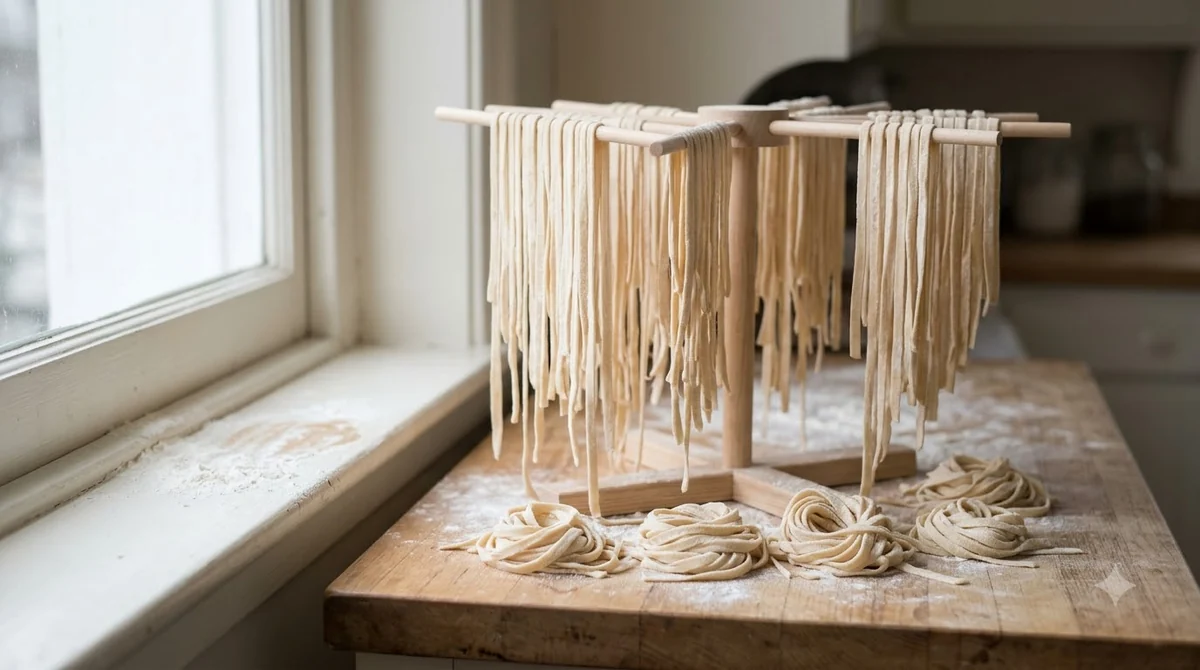
A collapsible rack suits long noodles and sheet pasta. It keeps the strands evenly spaced, which stops them from sticking together, and it folds flat when the batch is done. If your recipes are mostly spaghetti, fettuccine or tagliatelle, a rack will do more of the work than a tray. See our guide to the best pasta drying racks for that option.

Features to Check Before You Buy a Pasta Drying Tray
Check the mesh, the stacking and the cleaning surface first, since these decide airflow, batch size and hygiene.
- Raised mesh or screen: lifts pasta so air reaches the underside.
- Stackable design: adds room for a large batch without a second surface.
- Smooth, cleanable surface: wipe and sanitize before each batch, since dough sits out for a long time.
- Clear kitchen space: the tray needs a spot where it can stay for up to a day.
What the sources do not confirm
The guides consulted do not state the dimensions, weight capacity or material of most drying trays. Check the product listing or the manufacturer’s care page before you buy, and measure your counter or fridge space against the tray’s folded and open sizes.
Prices and availability change often, so check the seller’s current listing rather than relying on an older guide. Confirm that a pasta drying tray stacks with the trays you already own before you commit to a second one.
How to Dry Pasta on a Tray, Step by Step
Dry shaped pasta on a tray overnight, or for up to 24 hours, until it is fully hard inside, according to King Arthur’s drying guide.
- Make the dough without filling, using semolina or durum flour and water.
- Spread the shapes in a single layer so air reaches each piece.
- Dry in a warm kitchen, but skip humid days, because King Arthur says humid pasta may not dry fully.
- Turn the pieces at regular intervals, as Pasta Evangelists advises for flour-and-water pasta.
- Leave the pasta out overnight, up to 24 hours, until the texture fully hardens.
- Break a small piece to test it. The centre should be brittle and dry all the way through, before it leaves the pasta drying tray.
- Store it in an airtight container at room temperature, where it keeps one to two months.
Pasta Evangelists suggests placing an electric fan beside the pasta on a relatively low setting for more even drying. For a full walkthrough, see our guide on how to dry fresh pasta. Cook dried pasta a few minutes longer than the recipe states, and start checking about every minute after the recommended time.
Mistakes That Ruin Dried Pasta
The three most common errors with a pasta drying tray are drying filled pasta, drying in humid air and storing pasta before it is fully dry.
Heat matters too. The Pasta Evangelists drying guide warns that very hot days add humidity, which can make pasta dry too fast and crack.
- Drying filled pasta: King Arthur advises against it, so freeze or cook ravioli and tortellini instead.
- Storing too soon: pasta left on a pasta drying tray that is not fully dry can develop mold.
- Skipping the test: break a piece before you bag the batch.
- Cooking to the old time: dried pasta needs a few minutes longer than the recipe states.
Who Can Skip a Drying Tray
You can skip a pasta drying tray if you cook fresh pasta the same day, since drying only matters for storage.
King Arthur also suggests freezing fresh pasta as an alternative to drying, so you can keep shapes for later without a tray. Filled pasta is the exception either way, and some commenters report it keeps up to a month in the freezer. If you use a pasta drying tray often, our guide to the best pasta making tools lists what else is worth owning.
Frequently Asked Questions
Can I dry filled pasta on a pasta drying tray?
No, King Arthur advises against drying filled pasta. Freeze ravioli or tortellini instead, since some commenters report filled pasta keeps up to a month frozen, and cook fresh filled pasta soon if you do not freeze it.
How long does pasta take to dry on a tray?
Most pasta dries overnight, and King Arthur gives up to 24 hours as the upper range. Flour-and-water pasta takes 12 to 24 hours with regular turning. Humid weather can stop it from drying fully, so cook it fresh on those days.
How do I know when dried pasta is ready?
Break a small piece and check the centre. Ready pasta is brittle and dry all the way through, and its texture is fully hardened. If the centre bends or feels soft, leave it out longer before you store it.
How long does dried pasta keep?
Dried pasta keeps one to two months in an airtight container at room temperature, according to King Arthur. Dry it completely first, because residual moisture can cause mold. Cook it a few minutes longer than the recipe says.
What can I use if I do not have a tray?
A coat hanger or the back of a chair works for long strands, as King Arthur suggests. Cover the chair back with a lightly floured tea towel and sanitize everything before use. Short shapes do not hang well, so a tray is the better choice for those.
Do I need a fan to dry pasta?
No, a fan is optional. Pasta Evangelists suggests an electric fan beside the pasta on a relatively low setting for more even drying. Keep it on low so the outside does not dry faster than the inside, which can crack the pasta.
Choose a pasta drying tray for short shapes and a collapsible rack for long noodles, then match the drying time to your kitchen’s humidity. If you cook fresh most days, the tray may rarely leave the cupboard. Start with a small batch until you know how your kitchen behaves.
 9 min readGear & PantryPasta Drying Rack: How to Choose and Use One at HomeUpdated Nov 16, 2026
 8 min readGear & PantryHow to Use a Pasta Drying Rack for Homemade PastaUpdated Nov 10, 2026
 8 min readGear & PantryPasta Fork: How to Choose and Use One for Long PastaUpdated Nov 15, 2026
 7 min readGear & PantryPasta Board: How to Choose, Use and Care for OneUpdated Nov 15, 2026
 8 min readGear & PantryPasta Cutter Guide: 3 Types, Blades and How to Use OneUpdated Nov 10, 2026
 7 min readGear & PantryCorzetti Stamp: How to Choose the Right One for Home PastaUpdated Nov 10, 2026