
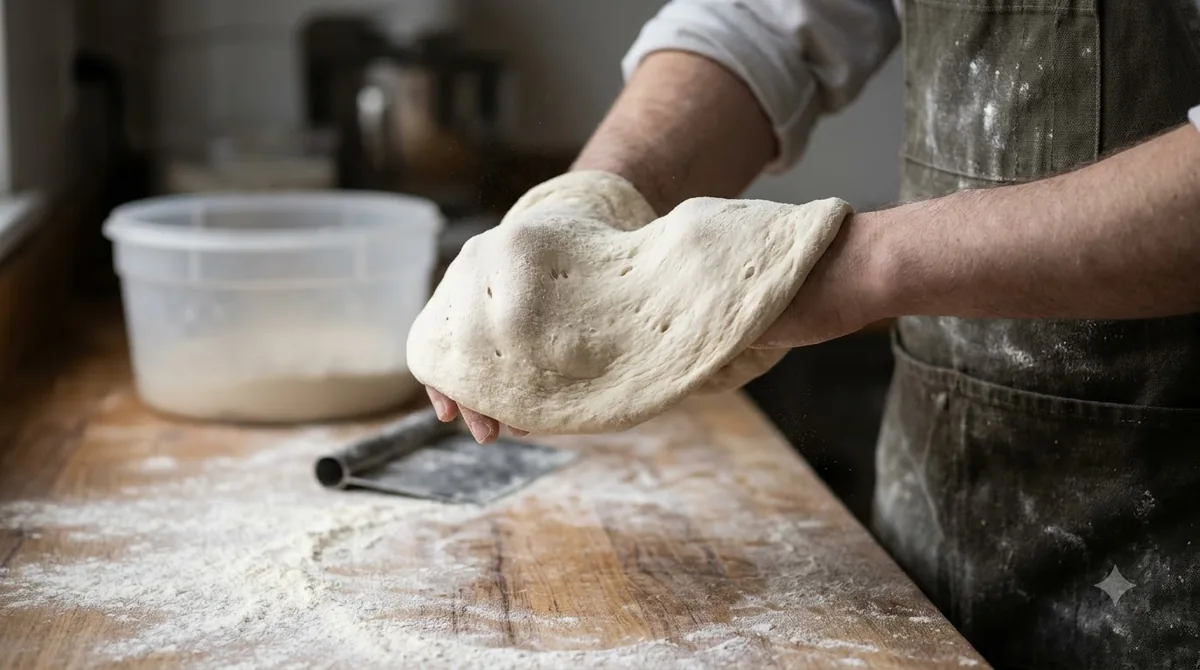

How long can pizza dough sit out depends on the yeast, the room temperature and how far the dough has risen. Recipes measure room-temperature rise in hours, not days, so the dough itself is the best guide.
For plain flour, water, salt and yeast dough, over-proofing is the limit that matters most. If your bake is more than a few hours away, move the dough to the fridge.
This guide covers dough texture and fermentation. For food safety rules on perishable food, check your local health authority.
How Long Can Pizza Dough Sit Out Before Shaping?
A same-day dough rises for about 1 hour with instant yeast or 90 minutes with active dry yeast, according to the King Arthur pizza crust recipe.
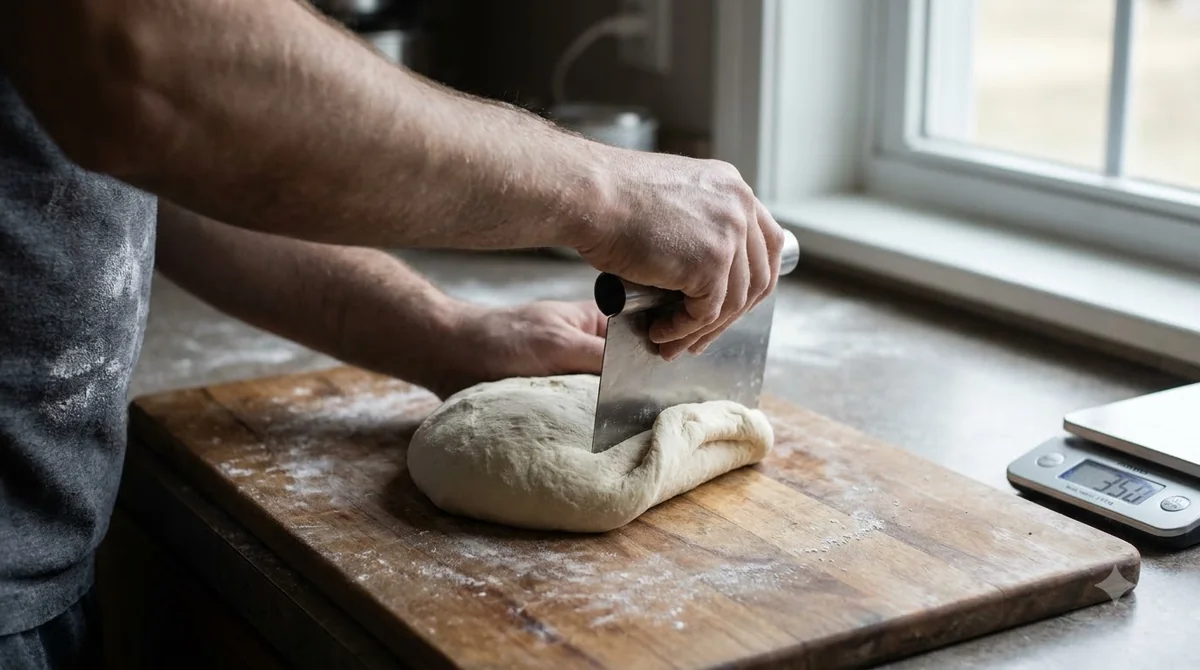
The table below lists the room-temperature and cold steps from the same recipe. The times apply to its own ingredient list, so your dough may move faster or slower in your kitchen.
| Path | Time at room temperature | Next step |
|---|---|---|
| Same-day, instant yeast | About 1 hour, until very puffy | Shape, rest 15 minutes, then do the final rise |
| Same-day, active dry yeast | About 90 minutes, until very puffy | Same steps as instant yeast, after the yeast is proofed |
| Make-ahead, rise first | 45 minutes, covered | Refrigerate for 4 hours, or up to 24 hours |
| Final rise, unchilled | About 90 minutes | Bake when noticeably puffy |
| Final rise, chilled | 2 to 2 1/2 hours | Take the dough out of the fridge 2 to 3 hours before serving |
The honest answer to how long can pizza dough sit out is that it depends on the room, the yeast and the plan. Those three factors matter more than any single clock.
The make-ahead route is a fridge plan, not a counter plan. The counter time is short, and the cold rest does the long waiting. If you want dough ready later in the day, let it rise briefly on the counter and then move it into the refrigerator.
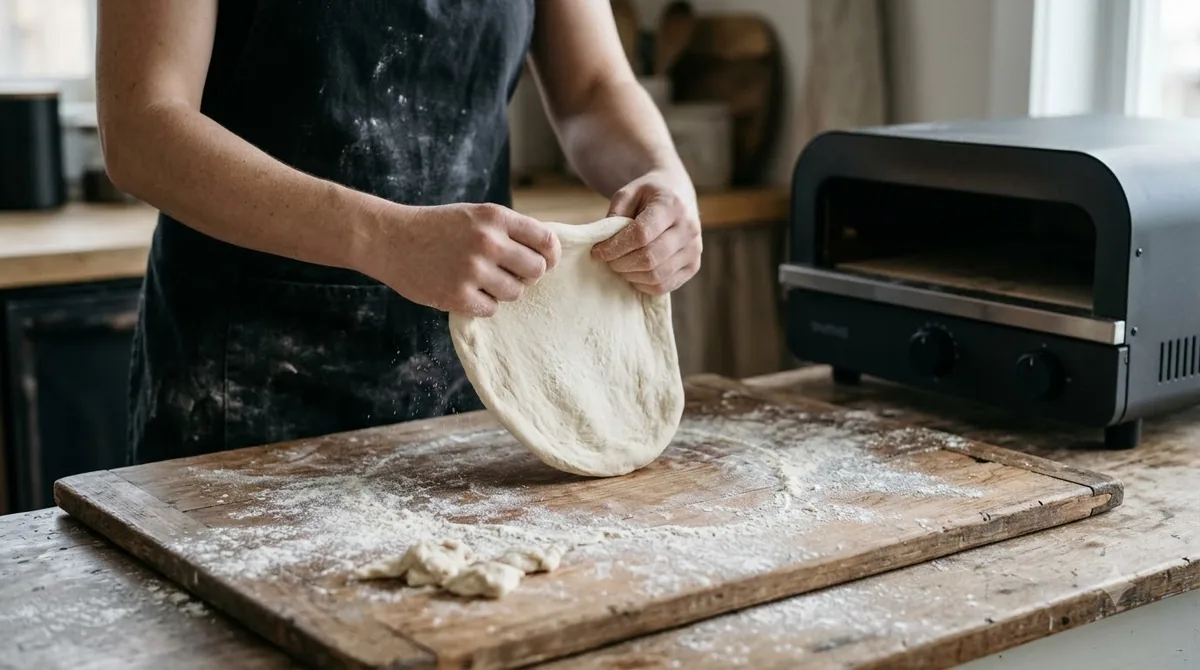
Shaping time also counts. The recipe rests the shaped dough, covered, for 15 minutes before pressing it into the pan, and gives a second rest after that. Those rests are part of the total time the dough spends out of the fridge.
What the Two-Hour Food Safety Rule Covers
University extension guidance says perishable food should not stay at room temperature for more than two hours, or one hour when it is above 90 F. The UC Master Food Preservers two-hour guidance states this rule.
The rule exists because bacteria can multiply when perishable food sits at warm room temperatures. The same guidance notes that pathogenic bacteria can multiply as food begins to defrost at room temperature.
That guidance is written for perishable food such as meat, dairy and cooked dishes. It does not give a time for yeast dough, so do not read the two-hour rule as a pizza dough clock.
If your dough recipe includes dairy, eggs or meat, treat the two-hour rule as your limit and refrigerate before it runs out. For plain dough, the more useful check is how the dough looks and feels, which the next section covers.

Signs Your Dough Has Over-Proofed
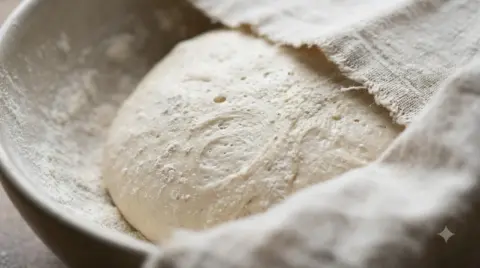
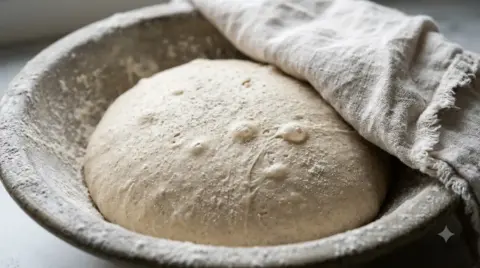
Before you decide how long can pizza dough sit out, look at the dough itself. Our overproofed pizza dough guide covers the same signs. Over-proofed pizza dough shows large surface bubbles, a sour smell, and a soft, sticky feel that does not spring back when pressed.
Prepa Pizza, a premade dough maker, lists these over-proofing signs in its guide. Check for them before you shape.
- Large bubbles or a wrinkled, fragile surface.
- A pale, wet look.
- More than doubled, or even tripled, in size.
- A sour smell, which points to excessive fermentation.
- Soft, sticky dough that loses its structure.
- Dough that deflates or goes slack when you touch it.
- Dough that will not bounce back, or collapses right away.
Over-proofed dough often fails in the oven too. The air pockets collapse because the structure can no longer trap carbon dioxide well, so the dough may not rise properly when it bakes.
A sour smell together with a slack feel is the clearest warning that the dough has gone too far. Compare the dough with the signs above before you commit to baking it.
How Room Temperature Changes the Clock
Pizza dough proofs best at about 75 F (24 C), and a warmer kitchen brings over-proofing sooner. Prepa Pizza gives 75 F as the ideal proofing temperature, and its secondary proof runs 30 minutes to 1 hour at about 70 F (21 C).
A warm kitchen speeds fermentation, so dough that is fine after two hours on a cool counter may be over-proofed in a hot room. Check it earlier in summer, or when the dough sits near a warm oven or a sunny window. For timing after chilling, read can you refrigerate pizza dough after rising.
The same source’s FAQ says its premade dough should not rise beyond 2 to 3 hours before risking over-proofing. That figure is for premade dough, so use it as a caution for your own dough, not as a rule.
How to Hold Dough Covered Until You Bake
Keep the dough covered and refrigerate it when the bake is more than a few hours away, since the King Arthur recipe allows 4 to 24 hours cold. See how long pizza dough lasts in the fridge for longer storage.
Use these steps to hold the dough between the rise and the bake:
- For a make-ahead batch, rise the dough covered in a lightly greased bowl for 45 minutes at room temperature.
- Refrigerate it for 4 hours, or up to 24 hours.
- Take it out of the fridge 2 to 3 hours before you plan to serve (more in how to bring pizza dough to room temperature).
- Shape the dough and rest it, covered, for 15 minutes.
- Let it rise until noticeably puffy, about 90 minutes if unchilled or 2 to 2 1/2 hours if chilled.
The recipe covers the dough at each rise and rest. Covering keeps the surface from drying out while the dough waits, which matters more the longer it sits.
Common Mistakes With Dough That Sits Out
The most common mistake is following a fixed clock, because rise speed depends on the yeast type and how warm the room is. Three mistakes show up most often.
- Mixing up instant and active dry yeast timing. The King Arthur same-day method gives about 1 hour for instant yeast and 90 minutes for active dry.
- Leaving the dough uncovered during the rise and the rest.
- Shaping over-proofed dough and hoping the oven will fix it. Over-proofed dough may not rise properly in the oven.
- Expecting a cold dough to rise at the same speed as a fresh one. The King Arthur recipe gives about 90 minutes for an unchilled final rise and 2 to 2 1/2 hours for a chilled one.
Each mistake comes from treating the dough as a timer instead of a living mix. Check the dough at the end of each rise, and adjust the next step to what you see.
If the dough smells sour and will not hold its shape, it is usually better to start a fresh batch than to rely on it for a good crust.
Frequently Asked Questions
How long can pizza dough sit out overnight?
Plain same-day recipes are not written for an overnight counter rise. King Arthur’s make-ahead method uses 45 minutes at room temperature, then refrigerates the dough for 4 to 24 hours.
Does the two-hour rule apply to pizza dough?
Not directly. The two-hour rule is written for perishable food such as meat, dairy and cooked dishes, and the extension guidance does not give a time for yeast dough. Follow your local rules if the dough contains dairy, eggs or meat. The one-hour limit applies when the air is above 90 F, so on a hot day shorten the time the dough and its toppings spend out of the fridge.
How long can dough stay in the fridge?
King Arthur’s pizza crust recipe refrigerates the dough for 4 hours, or up to 24 hours. Take it out 2 to 3 hours before you plan to serve.
What temperature is best for proofing dough?
Prepa Pizza gives about 75 F (24 C) as the ideal proofing temperature for pizza dough. Check the dough earlier if your kitchen runs warmer than that.
Why did my dough smell sour?
Prepa Pizza says a sour smell indicates excessive fermentation. That usually means the dough has risen longer than it should, so check the rise times and room temperature next time.
How do I tell over-proofed dough from good dough?
According to Prepa Pizza, over-proofed dough will not bounce back or will collapse right away. Check for the signs listed above before you shape the dough.
Knowing how long can pizza dough sit out helps you plan the day. If the bake is more than a few hours away, refrigerate the dough and plan the warm-up. Shape it only when it is puffy and none of the over-proofing signs are present.
 8 min readLearnHow to Bring Pizza Dough to Room Temperature Before ShapingUpdated Nov 11, 2026
 5 min readLearnHow to Store Pizza Dough in the Fridge: Container and TemperatureUpdated Nov 13, 2026
 8 min readLearnPizza Dough Temperature: The Ideal Range and How to Control ItUpdated Nov 10, 2026
 8 min readLearnNeapolitan Pizza Recipe: Dough, Temperature and Baking at HomeUpdated Nov 10, 2026
 8 min readLearnBulk Fermentation Pizza Dough: How Long, How to Cover It and When It Is DoneUpdated Nov 11, 2026
 8 min readLearnHow Long to Knead Pizza Dough (By Hand and in a Mixer)Updated Nov 10, 2026