
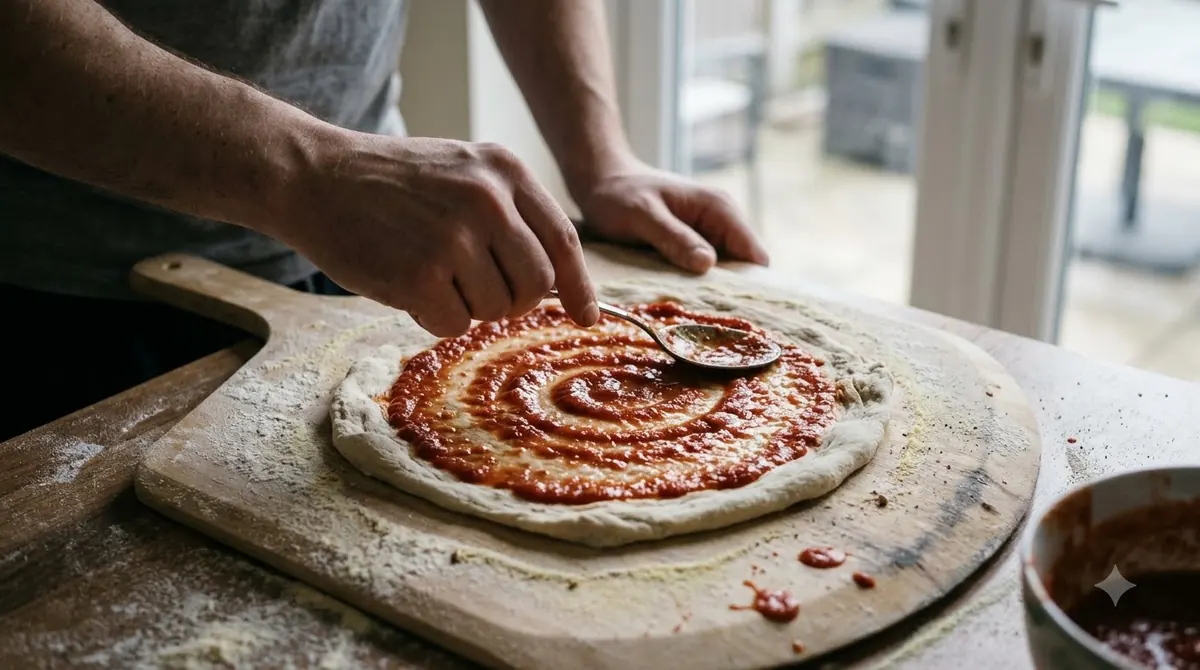

The main difference in pizza sauce vs pasta sauce is cooking: pizza sauce is usually uncooked, while pasta sauce is almost always cooked first. Both are built from tomatoes, but the salt, sugar and thickness often differ, and those gaps change how each one behaves on a pie or over noodles. Knowing the pizza sauce vs pasta sauce gaps helps you pick the right jar or make a better homemade batch.
Pizza Sauce vs Pasta Sauce: What Sets Them Apart
Pizza sauce vs pasta sauce comes down to four things: how the sauce is cooked, how thick it is, how much sugar and salt it carries, and what it is used for. The two share a base, which is why the names can feel interchangeable on a grocery shelf.
Marinara is the sauce most people picture for pasta, and our pomodoro vs marinara comparison covers it in more depth. Wikipedia’s marinara entry describes it as a tomato sauce usually made with tomatoes, garlic, herbs and onions, and says it is used for spaghetti and vermicelli. That is the cooked, seasoned style that pasta sauce usually follows.
Pizza sauce is usually made by crushing or pureeing tomatoes, and it is most often left uncooked. Tasting Table notes that both sauces can use the same ingredients, but each is prepared with its dish in mind. The method is where most of the pizza sauce vs pasta sauce difference starts.
Cooked or Raw: How Each Sauce Is Made
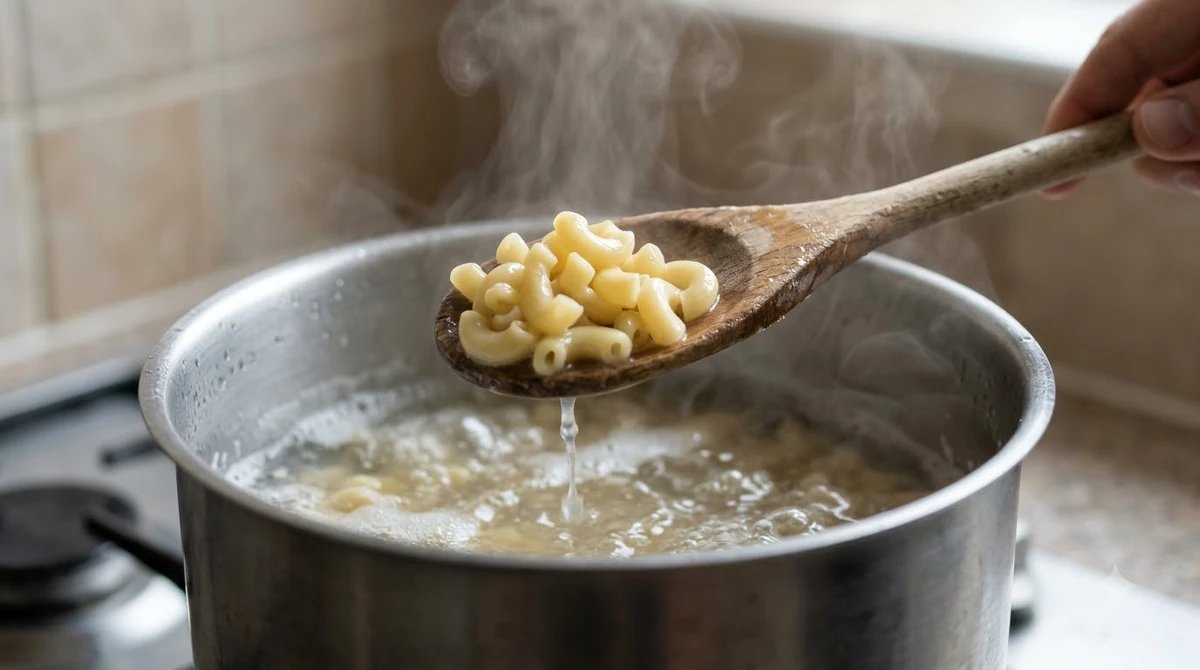
Pasta sauce is almost always cooked, while pizza sauce is usually raw or only briefly prepared before it goes on the dough. The cooking step in a pasta sauce reduces water and concentrates flavor, so the sauce clings to the noodles instead of pooling on the plate.
Pizza sauce skips that step for a practical reason. It finishes cooking in the oven alongside the crust, and Tasting Table notes that pre-cooking it can over-caramelize the sauce because of its high sugar content. Raw tomatoes also keep a brighter, fresher flavor after baking.
The same split shows up in home kitchens, and it defines pizza sauce vs pasta sauce more than any other factor. MEL Magazine’s writer put it simply in a comparison of jarred sauces: pasta sauce uses cooked tomatoes, while pizza sauce uses raw tomatoes. That single rule explains most of the texture and flavor gap between the two.
- Pasta sauce: simmer until the tomatoes lose their raw edge and the flavor concentrates.
- Pizza sauce: crush or puree the tomatoes, season, and spread it thin before baking.
- If you cook a pizza sauce first, expect a darker, sweeter result and a sauce that bakes differently.
Why Pizza Sauce Is Often Built to Be Thicker
Pizza sauce is often thicker than pasta sauce, and cooks sometimes add tomato paste to get that body, according to Tasting Table. For pizza sauce vs pasta sauce, thickness is a practical choice: the sauce has to hold its place on a round of dough rather than run toward the edge.
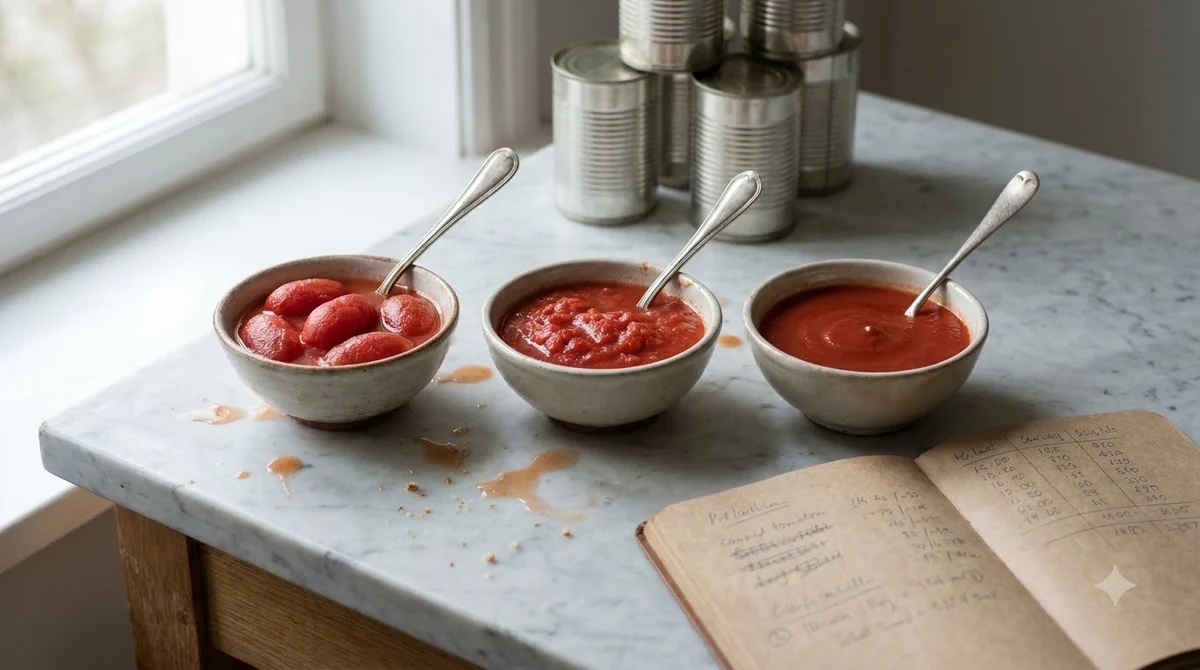
A thin, watery layer adds extra moisture to the dough, which can leave the center soft or soggy after baking. A thicker layer keeps moisture closer to the surface. This is general kitchen logic rather than a measured result, and the dough style, the oven and the amount of sauce all change how much the sauce matters.
Pasta sauce is meant to coat noodles, so a looser texture helps it spread over pasta. MEL Magazine’s writer advises against using an extra-chunky pasta sauce on pizza, which is a good rule for the same reason: big pieces of tomato do not spread evenly across the dough.
If a jar of pasta sauce looks loose, cook it down briefly before spreading it on a pizza. Let it cool before it touches the dough so the crust does not turn gummy. Check the consistency by spooning a little onto a plate: if it runs in a wide ring, it is probably too thin for pizza.
Sugar, Salt and Spices: What the Labels Show
In one brand comparison, MEL Magazine found that the pizza sauce had 230 milligrams more sodium than the pasta sauce from the same line, and twice as much sugar per half cup. The article reports label data, not lab testing, so treat it as one example rather than a rule for every jar.
Store-brand comparisons of pizza sauce vs pasta sauce do not always follow that pattern. The same article found that Target’s organic pizza and pasta sauces were nearly identical, with marginal differences in sodium and equal sugar. Sugar is not a fixed feature of either type, so the label is the only reliable guide.
- Sodium: compare the milligrams per serving on both jars, not the name on the front.
- Sugar: a higher number usually means a sweeter, more caramelized result in the oven.
- Herbs and spices: MEL’s writer said major brands mostly differ in the ratio of salts and spices.
The sources I checked for pizza sauce vs pasta sauce did not give absolute gram amounts of sugar or sodium for these brands, so this article does not state them. Check the nutrition panel on the jar you buy, and compare per serving rather than per container. If you are shopping, see our best jarred pasta sauce and best pizza sauce roundups.
Pizza Sauce vs Pasta Sauce Side by Side
The table below sums up the pizza sauce vs pasta sauce differences that the sources agree on. Where a source gives only a general claim, the table says so instead of inventing a number.
| Feature | Pizza sauce | Pasta sauce |
|---|---|---|
| Cooking | Usually uncooked | Almost always cooked |
| Base | Crushed or pureed tomatoes | Cooked tomatoes, often with more ingredients |
| Thickness | Often thicker, sometimes thickened with tomato paste | Looser, meant to coat noodles |
| Sodium (one jarred brand) | 230 mg more than the pasta sauce | Lower than the pizza sauce |
| Sugar (one jarred brand) | Twice as much per half cup | Half as much per half cup |
| Chunky style | Extra-chunky is not advised | Chunky styles suit pasta |
Read the table as a starting point for any pizza sauce vs pasta sauce choice. The sodium and sugar rows come from one jarred brand’s pair, and the Target pair in the same article was nearly identical. Use the table to know what to check, then confirm on the label.
Can You Use Pasta Sauce on Pizza?
You can use pasta sauce on pizza in a pinch, but a jar made for noodles may be cooked, chunkier or saltier than you expect. The safest swap is a smooth, plain jar with a short ingredient list.
Using a pizza sauce for pasta is the reverse problem in pizza sauce vs pasta sauce choices. A raw, thick sauce can taste sharp when it is spooned over hot noodles without cooking, since the tomatoes never get the simmer that a pasta sauce gets. If you plan to toss it with pasta, warm it in a pan first.
- Choose a smooth jar over an extra-chunky one for pizza.
- Spread a thin layer so the crust can bake through (see how much sauce on pizza).
- Taste before you salt, because jarred sauces vary in sodium.

How to Make a Simple No-Cook Pizza Sauce
A no-cook pizza sauce made from a 28-ounce can of whole peeled tomatoes, olive oil, red wine vinegar, garlic and dried oregano yields about 2 cups, according to America’s Test Kitchen’s no-cook pizza sauce recipe.
The recipe has no cooking step, so it fits the uncooked pizza method, and our own no-cook pizza sauce recipe follows the same idea. It also lists no sugar, and it seasons the sauce with salt and pepper to taste rather than a set amount, which means you adjust the salt by tasting.
- Process the drained tomatoes with 1 tablespoon extra-virgin olive oil, 1 teaspoon red wine vinegar, 2 minced garlic cloves and 1 teaspoon dried oregano until smooth, about 30 seconds.
- Transfer the mixture to a 2-cup measure and add the reserved tomato juice until it reaches 2 cups.
- Season with salt and pepper to taste.
The same recipe says the sauce keeps in the refrigerator for up to 1 week, or in the freezer for up to 1 month. Store it in a sealed container and divide it into portions if you plan to freeze it, so you only thaw what you need for a pizza night.
Frequently Asked Questions
Is pizza sauce the same as marinara?
Not exactly, so pizza sauce vs pasta sauce is a useful comparison. Marinara is a general tomato sauce usually made with tomatoes, garlic, herbs and onions, and it is commonly used for pasta. Pizza sauce is usually uncooked and is often seasoned more heavily, though the two share ingredients.
Should pizza sauce be cooked before baking?
Usually not, and that is one of the clearest pizza sauce vs pasta sauce differences. Tasting Table notes that cooking pizza sauce first can over-caramelize it because of its high sugar content, and the oven finishes the sauce during baking.
Does pizza sauce need sugar?
No, not as a rule. In pizza sauce vs pasta sauce comparisons, the no-cook recipe from America’s Test Kitchen lists no sugar. In the jarred comparison from MEL Magazine, one pizza sauce had twice as much sugar per half cup as its pasta sauce, while a store-brand pair was equal. Check the label on your jar.
How long does homemade no-cook pizza sauce last?
America’s Test Kitchen says it keeps for up to 1 week in the refrigerator and up to 1 month in the freezer. Use a clean spoon each time you take some out, and store it in a sealed container to keep it fresh.
What if pasta sauce is the only sauce I have?
You can use it for a quick pizza, though pizza sauce vs pasta sauce differences still apply. Pick a smooth jar, spread a thin layer, and avoid extra-chunky styles, which MEL Magazine’s writer advises against on pizza. Taste the sauce first, since its salt level may be higher than you expect for a topping.
Pizza sauce vs pasta sauce comes down to use. Choose a pizza sauce when you want a thick, seasoned layer that goes on raw. Choose a pasta sauce when you want something cooked and ready for noodles. If you must swap one for the other, read the sodium and sugar on the label first, and keep the pizza layer thin so the crust bakes through.
 9 min readLearnFresh Pasta vs Dried Pasta: How They Differ in Cooking, Storage and SauceUpdated Nov 12, 2026
 8 min readLearnNew York Style vs Detroit Style Pizza: How They DifferUpdated Nov 14, 2026
 8 min readLearnNeapolitan vs New York Style Pizza: How They DifferUpdated Nov 14, 2026
 7 min readLearnTagliarini Pasta: What It Is, How It Differs and How to Cook ItUpdated Nov 10, 2026
 8 min readLearnMostaccioli Pasta: What It Is and How It Differs From PenneUpdated Nov 10, 2026
 8 min readLearnBucatini Pasta: What It Is, How It Differs and How to Cook ItUpdated Nov 10, 2026