
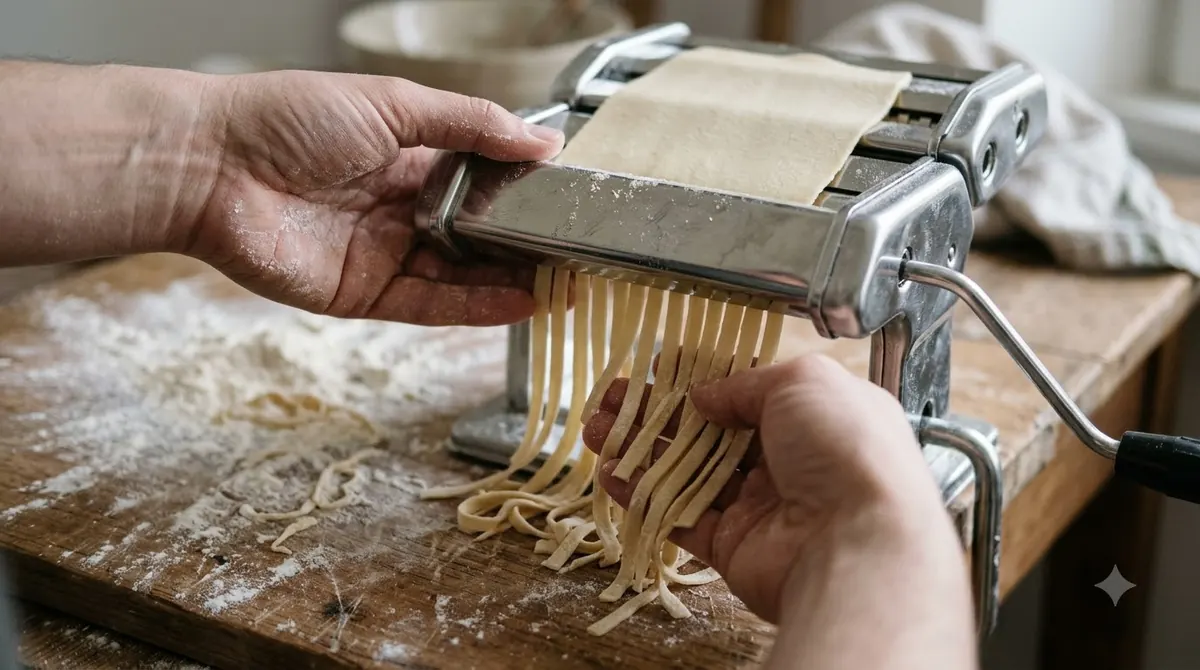

Tagliarini pasta is a very thin Italian egg ribbon, about 2 to 3 mm wide. It is usually made from egg dough, and in parts of Italy it goes by taglierini or tajarin. The narrow strands suit light, silky sauces that cling without weighing the pasta down.
What Is Tagliarini Pasta?
Tagliarini pasta is a narrow ribbon pasta from northern Italy, and Wikipedia names Piedmont and Molise as its regions of origin. The same egg pasta is called tajarin in Piedmont, where cooks often make it with a high proportion of egg yolks. Wikipedia’s tagliolini entry lists tagliarini among its alternative names.
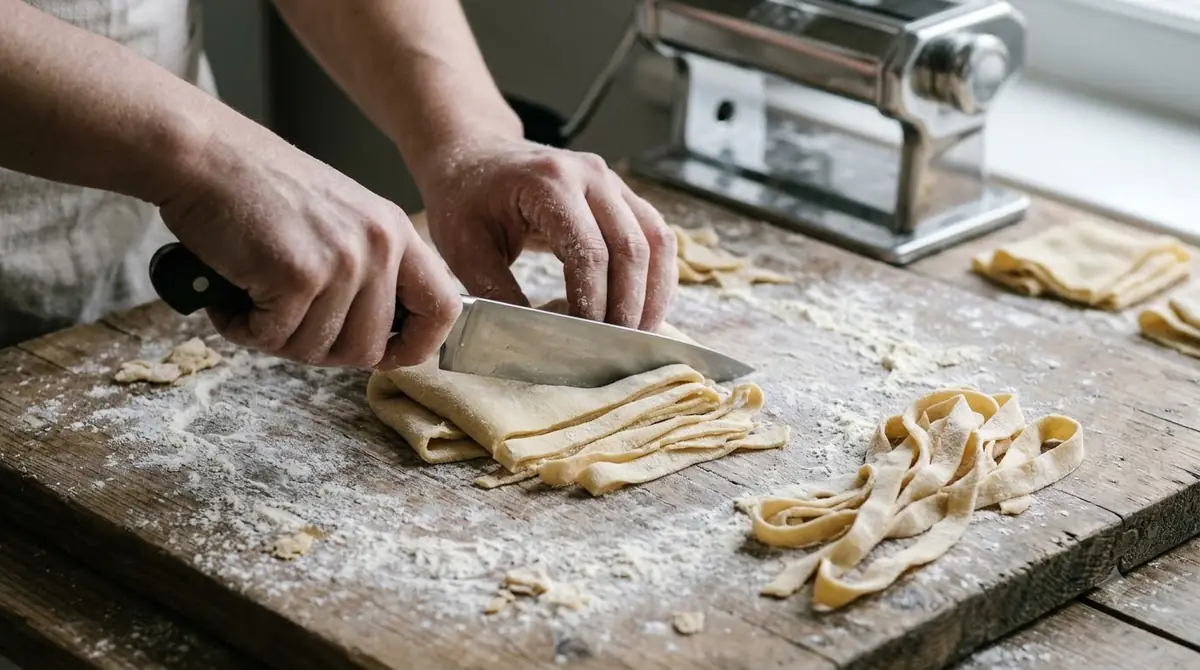
Width is the feature readers notice first. Sources put the ribbon at roughly 2 to 3 mm wide, and The Pasta Project describes it as thin, close to capellini (angel hair pasta). Piedmont’s tajarin can be very thin, around 1 mm, so the exact cut depends on the cook and the region. For a tagliarini pasta bought in a shop, the width printed on the package is the most useful check, because it tells you more than the name does.
Tagliarini vs Tagliolini and Tagliatelle
Tagliarini and tagliolini are usually the same narrow ribbon, and tagliatelle is roughly three times wider; see also tagliolini vs tagliatelle. The table below sets the three shapes side by side.
| Shape | Width | What to know |
|---|---|---|
| Tagliarini | About 2 to 3 mm | Thin egg ribbon, also called taglierini or tajarin |
| Tagliolini | About 2 to 3 mm | Same narrow cut, sometimes slightly cylindrical |
| Tagliatelle | About 6 to 8 mm | Flat, wider ribbon from Emilia-Romagna, suited to thicker sauces |
The sources do not agree on the naming. The Pasta Project describes taglierini as flat and slightly thinner than tagliatelle, while also noting that many Italians use the two names for almost the same pasta. Read the width on the package before you buy, because the label is the only reliable guide.
The width gap also changes the serving. A narrow strand has far less surface for sauce than a flat 6 to 8 mm ribbon, so a sauce that suits tagliatelle can overwhelm tagliarini.
Ingredients and Egg Dough
Tagliarini pasta is made from egg dough, which combines semolina or flour, eggs and salt. The eggs give the dough its color and softness, and they are what separates this style from plain dried pasta.
- Semolina or flour, the base of the dough
- Eggs, which give the dough its yellow color and softness
- Salt, a small amount to season the dough
Piedmont’s tajarin is often made with many egg yolks, especially orange yolks, which makes the dough richer. The Pasta Project gives a general starting point for tagliatelle of 1 large egg per 100 grams of flour, and it advises kneading the dough until smooth and then letting it rest, without a fixed time. That is a comparison only; a tagliarini dough made with more yolks will need a different ratio.
Making tagliarini pasta at home starts with the same kind of dough, rolled thin and cut into fine strands. Because the sources do not give a standard egg-to-flour ratio for tagliarini, follow the flour and egg amounts in a tested recipe, such as our fresh pasta dough recipe, rather than a number from memory.
Best Sauces for Tagliarini Pasta
Tagliarini works best with light sauces such as butter, seafood, vegetables or cream, because the thin strands hold less sauce than a wide ribbon. The Pasta Project lists light seafood, vegetable and creamy sauces as the natural partners for tagliolini.
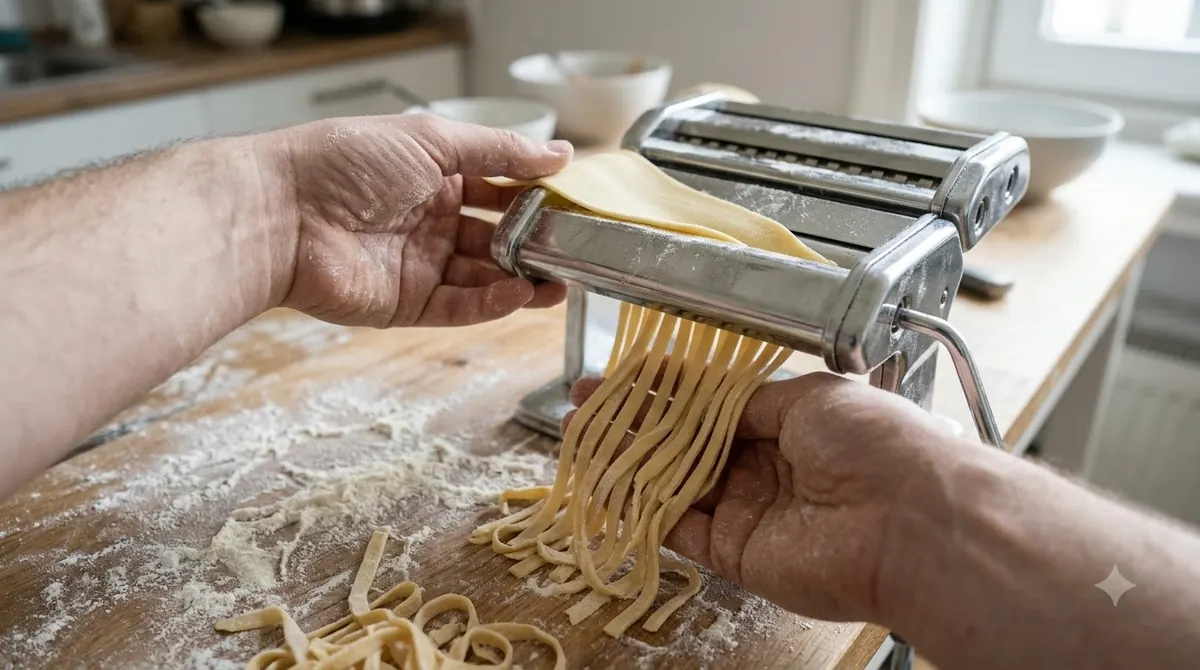
- Prosciutto with fresh cream and poppy seeds, a dish built on San Daniele ham
- A no-cook sauce of marinated vegetables, which can be made vegan
- Ham, eggs, grated Parmesan and cream, baked au gratin
- Black truffle with taleggio cheese
Piedmont also has a meat sauce for this pasta. Tagliolini alla Langarola is a ragù of sausage, chicken liver and porcini, so a richer sauce is not always wrong. The rule is to match the sauce to the strand: a thick sauce works only when it is cooked down to coat thin pasta, not simply poured over it.
Historically the pasta was mostly eaten in broth, so a clear broth is a traditional serving option for a tagliarini pasta dish. Broth also keeps the strands from clumping, since they sit loose in the bowl rather than in a pile of sauce. A wide ribbon can take a generous portion of sauce, while tagliarini usually needs a lighter hand to keep the sauce on the strands.
How to Cook Tagliarini Pasta
Cook tagliarini in plenty of salted boiling water and check it early, because the thin strands soften quickly. Dried and fresh versions need different timing, so follow the package for dried pasta and watch the texture for fresh.
- Bring a large pot of water to a rolling boil and add salt.
- Add the pasta and stir gently so the strands do not clump together.
- For dried tagliarini, cook for the time printed on the package, then taste one strand a minute early.
- For fresh tagliarini, expect a shorter cook time than dried; the sources give no fixed number for this shape, so judge by texture, as in our guide to cooking fresh pasta.
- Save a cup of pasta water before draining, then toss the pasta with the sauce over low heat.
The Pasta Project notes that taglierini take slightly longer to cook than tagliolini, which need less time. For comparison, it gives 3 to 5 minutes for fresh tagliatelle and 7 to 10 minutes for dried tagliatelle to reach al dente. Those figures are for a wider shape, so do not assume the same times for tagliarini.
Because the strands are so thin, a short delay in draining can leave the pasta soft, so keep the pot under watch from the first minute. Once drained, move the tagliarini pasta straight into the warm sauce so the strands absorb it while they are still hot. Portion size is another practical guide: the Pasta Project suggests two 50 gram dried nests per person for tagliatelle, and the package gives the right amount for tagliarini.
Common Mistakes With Tagliarini Pasta
The most common mistake with tagliarini pasta is pairing it with a heavy sauce that slides off the thin strands, or that has not been reduced enough to cling.
- Pouring a loose, chunky sauce over the strands instead of tossing them together
- Overcooking, since the strands go soft within minutes
- Draining without saving pasta water to loosen the sauce
- Crowding the pot, which makes the strands stick together
Frequently Asked Questions
Is tagliarini the same as tagliolini?
Often, yes. Most sources treat tagliarini and tagliolini as the same narrow egg ribbon, although some describe taglierini as a slightly flatter and thinner cut. Check the width on the package to be sure.
How wide is tagliarini compared with tagliatelle?
Tagliarini is about 2 to 3 mm wide, while tagliatelle is about 6 to 8 mm wide. That makes tagliarini roughly a third of the width of tagliatelle.
Can you use tagliarini with tomato sauce?
Yes, if the sauce is smooth and reduced enough to coat the strands. A chunky tomato sauce with large pieces tends to slide off thin strands, so choose a looser sauce for this shape. A tagliarini pasta with tomato works best when the sauce is simmered first and then tossed with the drained strands.
Are tagliarini and tajarin the same pasta?
Tajarin is the Piedmont name for this egg pasta. Wikipedia lists tajarin among tagliarini’s alternative names, and The Pasta Project notes that Piedmont’s version can be very thin, around 1 mm.
Is tagliolini used in baked or fried dishes?
Yes. The Pasta Project lists a Neapolitan pasta pie and filled, breaded arancini made with tagliolini nests, so the thin strands are not limited to bowls of sauced pasta. Cooks who want a crisp, filled tagliarini pasta dish can use those recipes as a starting point.
How much tagliarini should you cook per person?
The Pasta Project suggests about 100 grams of dried tagliatelle per person, made of two 50 gram nests. For tagliarini, use the portion guidance on your package, since the sources do not give a separate figure.
For dried packs, read the width and the package cook time before you buy, since the names overlap. For fresh tagliarini pasta at home, keep the sauce light, cook the strands briefly and save some pasta water to finish the dish. A tagliarini pasta dish is easiest to get right when the sauce is ready before the pasta leaves the pot.
 8 min readLearnMostaccioli Pasta: What It Is and How It Differs From PenneUpdated Nov 10, 2026
 9 min readLearnPizza Sauce vs Pasta Sauce: What Actually DiffersUpdated Nov 12, 2026
 9 min readLearnFresh Pasta vs Dried Pasta: How They Differ in Cooking, Storage and SauceUpdated Nov 12, 2026
 8 min readLearnBucatini Pasta: What It Is, How It Differs and How to Cook ItUpdated Nov 10, 2026
 9 min readLearnCalzone vs Stromboli: Where the Two Italian Favorites DifferUpdated Nov 10, 2026
 6 min readLearnHomemade Tortelloni: How They Differ and How to Shape ThemUpdated Nov 13, 2026