
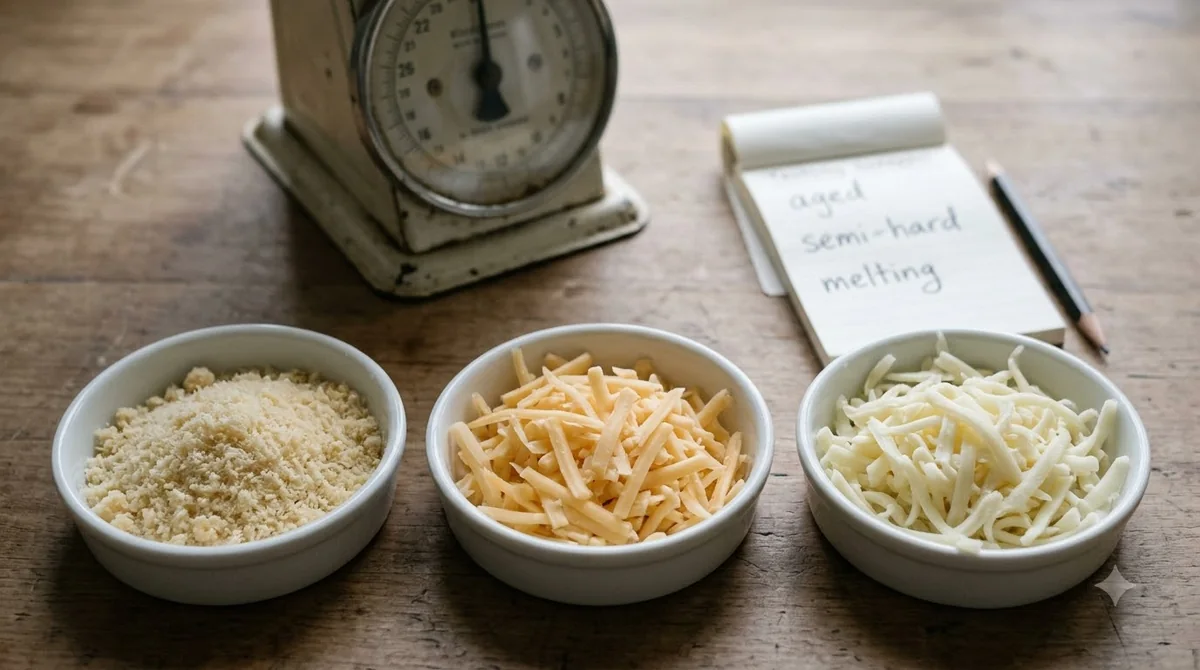

What is Pecorino Toscano? It is a firm Italian cheese made from whole sheep’s milk in Tuscany and nearby areas, and its name is protected under EU rules. It comes in a soft style for the table and an aged style for grating.
It tastes milder than Pecorino Romano, so many cooks choose it when they want a gentler sheep’s milk cheese. Put simply, Pecorino Toscano is a mild, protected cheese sold in two ageing levels.
What Is Pecorino Toscano and Where Does the Name Come From?
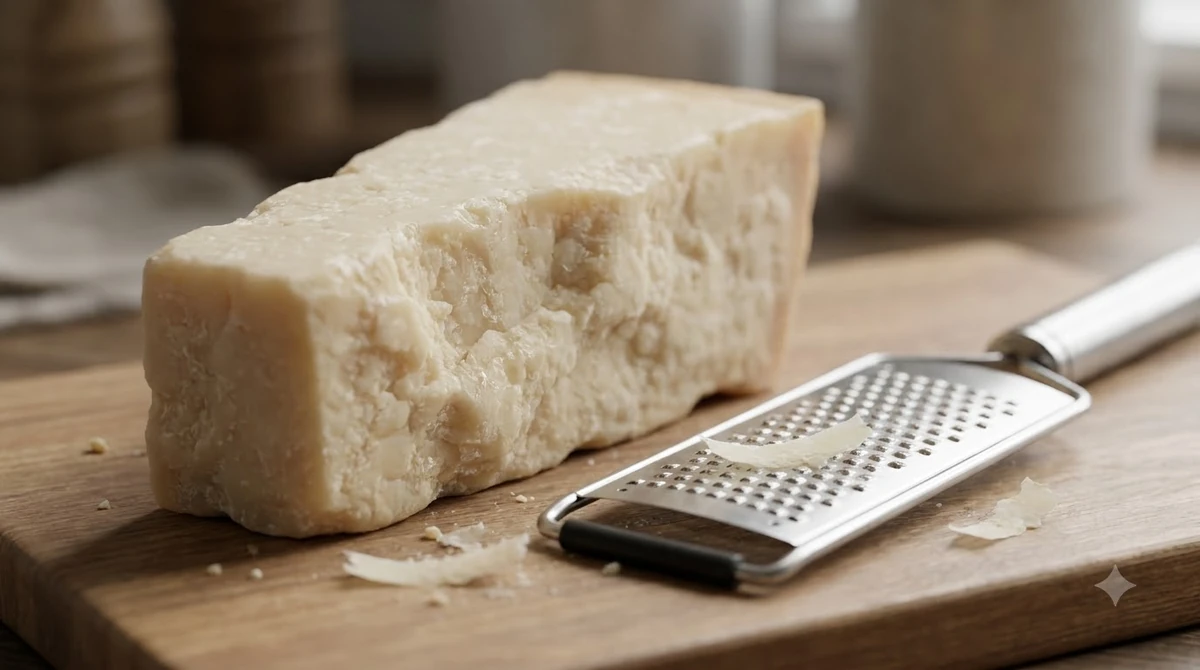
Pecorino Toscano is a sheep’s milk cheese from Tuscany, Italy, and it carries protected designation of origin status. Wikipedia describes it as a firm sheep’s milk cheese and dates its PDO status to 1996.
The sources do not fully agree on the date. CooksInfo gives 1986 for the Italian Denomination of Origin certification, so check the producer’s label or the consortium for the exact year before you quote it.
The cheese has old names too. According to Wikipedia, an early name, marzolino, refers to March, when production traditionally began. Pliny the Elder called the cheese Lunense, apparently after the Lunigiana area.
Wikipedia also cites a 1997 estimate from Assolatte of about 5,060 metric tons a year, which ranked the cheese as the third-highest sheep’s cheese in Italy. That figure is dated, so read it as history rather than a current count.
The name matters on a label. The specification reserves the Pecorino Toscano name for a product that meets its rules on production methods, taste and commercial traits linked to the zone. So when you ask what is Pecorino Toscano, the answer is a cheese that passes that standard, not just any sheep’s milk cheese from Tuscany.
How Pecorino Toscano Is Made
The Italian production specification for Pecorino Toscano requires whole sheep’s milk from the protected zone, curdled with calf rennet at 33 to 38 °C.
The main steps, as set out in the Italian PDO specification for Pecorino Toscano, run in this order:
- Whole sheep’s milk from the protected zone is warmed and coagulated with calf rennet.
- The milk sets in 20 to 25 minutes, and the curd is broken into grains.
- The grains are hazelnut-sized for the soft style and corn-kernel-sized for the semi-hard style.
- The cheese is moulded, pressed, salted or soaked in brine, and then aged.
The specification allows raw milk or milk heat-treated up to pasteurisation. Wikipedia’s infobox lists the cheese as pasteurised, while CooksInfo says the milk is heated but not pasteurized, so the label is the best guide to the method used in your wedge.
CooksInfo adds that production runs from September to June, when the sheep are giving milk, and that the whey is used to make ricotta.
Traceability is built into the process. The specification requires every input and output to be recorded, with farms, dairies and ageing producers registered on lists kept by the control body. Storage tanks are identified so that milk suitable for Pecorino Toscano is kept apart from milk that is not. Knowing what is Pecorino Toscano made from helps you read the label with confidence.

Soft and Semi-Hard: The Two Styles of Pecorino Toscano
The soft style must age at least 20 days, and the semi-hard style at least four months, and both must contain at least 40% fat on dry matter.
| Feature | Soft (pasta tenera) | Semi-hard (pasta semidura) |
|---|---|---|
| Minimum ageing | At least 20 days | At least 4 months |
| Paste colour | White, slightly straw | Slightly straw or straw |
| Paste texture | Soft | Compact and firm, with possible small eyes |
| Curd grain size | Hazelnut | Corn kernel |
| Fat on dry matter | At least 40% | At least 40% |
Knowing how the two styles differ makes the choice easier. Choose the soft style if you plan to eat slices on a board or with fruit. Choose the semi-hard style if you plan to grate it, since the specification describes its paste as compact and firm.
The standard shape is a cylinder with flat faces. The specification gives a face diameter of 15 to 22 cm, a side height of 7 to 11 cm and a weight of 0.75 to 3.50 kg. The rind is yellow, though its shade can vary with the treatment it receives.
Where Pecorino Toscano Is Produced
The protected zone covers all of Tuscany, two Umbrian comuni and a list of comuni in Lazio, according to the 2014 specification.
Geographically, the answer starts in Tuscany. The specification names Allerona and Castiglione del Lago in Umbria, and Acquapendente, Bolsena and Montefiascone among the Lazio comuni. The milk must come from the zone, and the sheep feed mainly on forage from its natural pastures, with some hay and simple concentrated feed allowed.
Before you buy, confirm the zone printed on the label of any wheel you are considering. This article could not read a later consolidated text. One source reports a ministry decree from October 2025 that changed the specification, so check the consortium or the ministry for the current zone and ageing rules.
The zone covers the origin of the milk, the production and the ageing alike. A dairy or ageing room outside the listed area cannot use the name under the 2014 text, which is why the zone is the first thing to check on a label.
Flavour and How to Use Pecorino Toscano
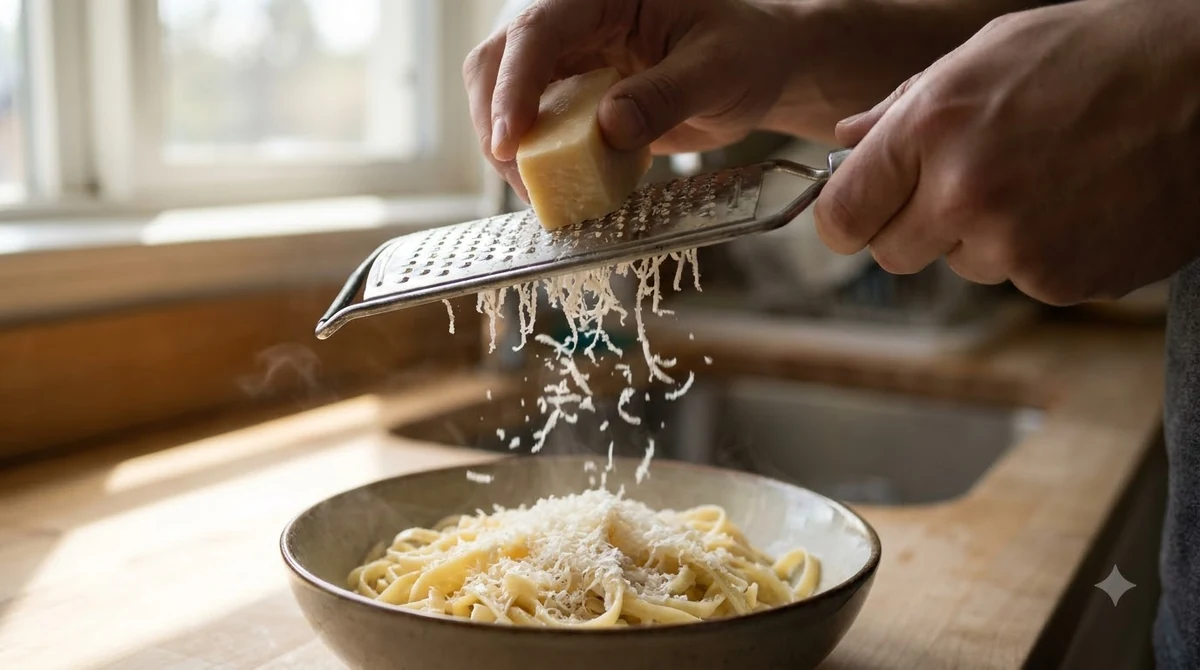
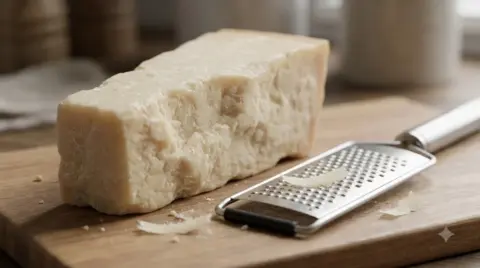
Young Pecorino Toscano works as a table cheese, while the aged version is grated over pasta, soup or risotto.
- Serve soft slices on a board or with fresh fruit.
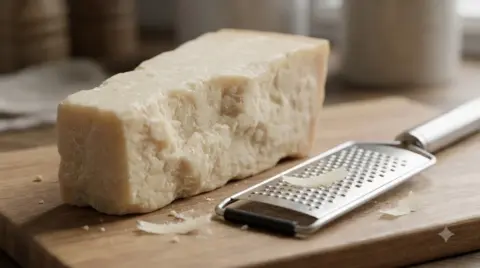
- Grate the semi-hard style over pasta, soup or risotto, using a rotary cheese grater if you have one.
- Grill thick slices on a barbecue, which CooksInfo recommends.
- Use Parmesan, Asiago, Grana Padano or another pecorino when you do not have it on hand.
On flavour, it is the gentler of the two Italian pecorinos. CooksInfo describes the cheese as milder than Pecorino Romano. Its texture also changes between the two styles, so taste the soft version before you decide how to use it. Asking what is Pecorino Toscano used for has a simple answer: table eating and grating, with grilling as a third option.
Pecorino Toscano vs Pecorino Romano
Pecorino Toscano is milder than Pecorino Romano, and it comes from a different protected zone with its own rules. Comparing the two shows the differences that matter at the shop.
| Feature | Pecorino Toscano (2014 specification) | What to check on a Pecorino Romano label |
|---|---|---|
| Milk | Whole sheep’s milk from the zone | Milk type and origin |
| Flavour | Milder, per CooksInfo | Sharpness and saltiness, which you compare with your own taste |
| Ageing | 20 days (soft) or 4 months (semi-hard) | Stated ageing period on the wedge or package |
| Protected zone | All of Tuscany, plus listed comuni in Umbria and Lazio | Named zone and PDO mark |
Pick Pecorino Toscano when you want a gentler sheep’s milk cheese for the table. Pick a sharper grating cheese when you want a stronger finish on pasta, and compare the labels before you buy. If a recipe calls for Pecorino Romano, Pecorino Toscano can work as a milder swap, though the flavour will be gentler.
Frequently Asked Questions
What is Pecorino Toscano made from?
It is made from whole sheep’s milk from the protected zone, set with calf rennet at 33 to 38 °C, according to the 2014 Italian specification. Production and ageing must follow the rules in that document, and the milk must not come from another animal.
What is Pecorino Toscano used for?
The young style is used as a table cheese, and the aged style is used for grating over pasta, soup and risotto. CooksInfo also notes that thick slices can be grilled on a barbecue.
What is the protected zone for Pecorino Toscano?
The zone covers all of Tuscany, the Umbrian comuni of Allerona and Castiglione del Lago, and listed comuni in Lazio. The milk, production and ageing must all take place inside that area.
Is Pecorino Toscano made from cow’s milk?
No. The 2014 Italian specification requires whole sheep’s milk from the protected production zone. Cheese made from cow’s milk cannot carry the Pecorino Toscano name under those rules, so the name itself tells you the milk type.
Is Pecorino Toscano pasteurized?
It depends on the batch. The specification allows raw milk or milk heat-treated up to pasteurisation. CooksInfo says the milk is not pasteurized, while Wikipedia lists it as pasteurised, so check the producer’s label for the method used.
Which style is better for grating?
The semi-hard style is the better choice for grating. It must age at least four months and has a compact, firm texture, while the soft style ages at least 20 days and suits the table better.
What can I use instead of Pecorino Toscano?
CooksInfo lists Parmesan, Asiago, Grana Padano and other pecorino cheeses as substitutes. Each has its own salt level and texture, so start with a smaller amount and adjust the seasoning to taste.
How can I check the size and fat content of a wheel?
The 2014 specification gives a face diameter of 15 to 22 cm, a side height of 7 to 11 cm, a weight of 0.75 to 3.50 kg and at least 40% fat on dry matter. Check the label or the producer for the current figures before you buy.
If you want a mild sheep’s milk cheese for the table, choose the soft style and eat it fresh. If you plan to grate it, choose the semi-hard style and read the label for the ageing period. In both cases, the label tells you more than the name alone, and it is the surest way to confirm that a package really is Pecorino Toscano.
 8 min readLearnWhat Is Pecorino Romano? A Sheep’s Milk Cheese GuideUpdated Nov 10, 2026
 7 min readLearnWhat Is Mozzarella di Bufala? Italy’s Buffalo Milk CheeseUpdated Nov 11, 2026
 7 min readLearnWhat Is Fior di Latte? A Simple Guide to Italy’s Cow’s Milk MozzarellaUpdated Nov 10, 2026
 9 min readLearnWhat Is Gorgonzola? A Guide to Italy’s Blue CheeseUpdated Nov 11, 2026
 7 min readLearnWhat Is Fontina? A Simple Guide to Italy’s Alpine Melting CheeseUpdated Nov 11, 2026
 7 min readLearnWhat Is Ricotta? An Easy Guide to Italy’s Whey CheeseUpdated Nov 10, 2026