
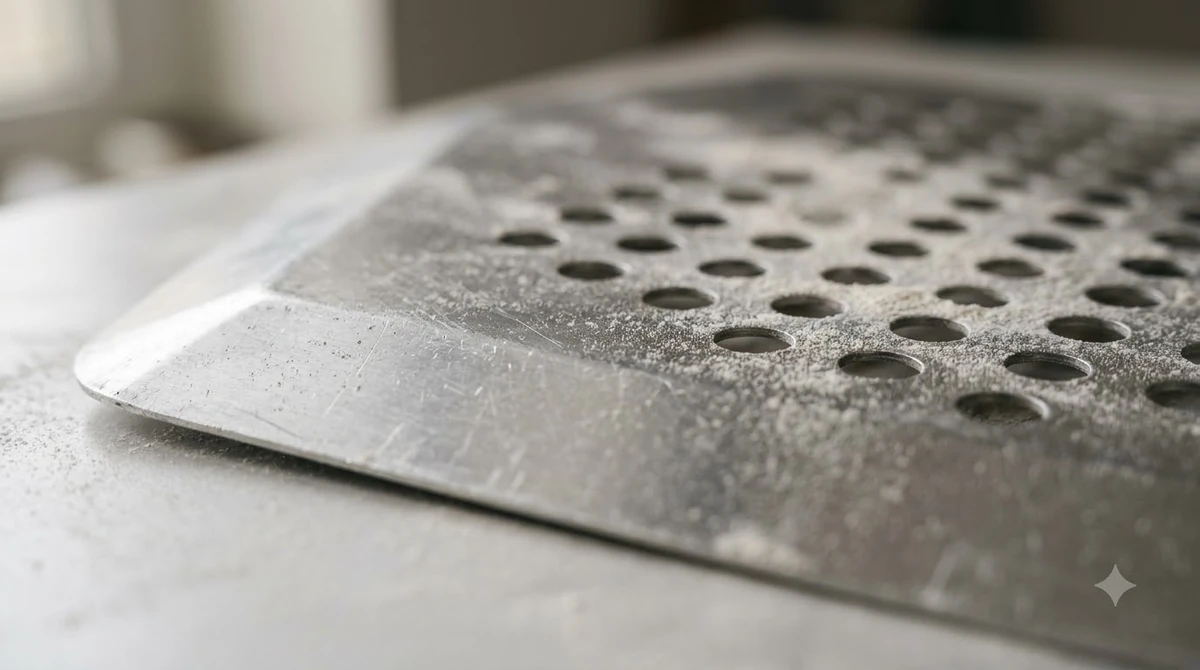

A pizza screen is a round, metal-mesh pan that holds dough while it bakes, so hot air can reach the base and help it crisp. It suits home cooks who have no room for a heavy pizza stone or steel. Most listings we checked are aluminum.
The sources we could read agree on the basic design, but they give few hard numbers. This guide separates what they confirm from what you should check on the product itself.

Winco 14" Aluminum Seamless Pizza Screen
Pros & ConsViewHide
Reasons to buy
- Seamless aluminum mesh that lets the crust crisp, per the listing
- 14-inch size suits a standard home oven
- 4.6 average Amazon rating
Reasons to avoid
- Plain aluminum with no nonstick coating, so oil the mesh first
- Dough can stick if the screen is not oiled or floured
What a Pizza Screen Is and How It Works
A pizza screen is a pizza pan with a metal-mesh base that lets air move under the dough as it bakes.
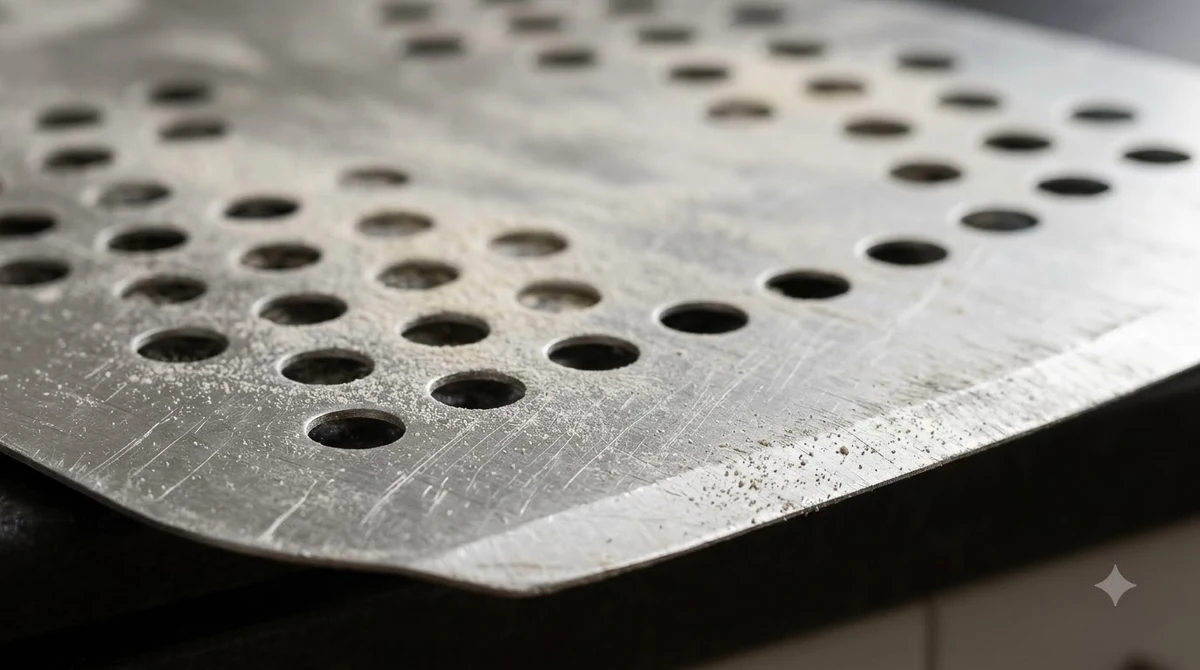
According to Tasting Table’s pizza screen explainer, the mesh boosts air circulation around the base as the pizza bakes, and its fine openings let hot air reach the dough.
The same article says the mesh conducts heat to the center quickly. That fast heat helps the dough rise quickly and form chewy air pockets, and it crisps the bottom.
Because steam can escape through the mesh, the base is less likely to turn soggy, a problem covered in how to fix soggy pizza.
Why Cooks Use One in a Home Oven
Cooks without room for a heavy pizza stone use a pizza screen as a lighter alternative that still lets hot air reach the base.
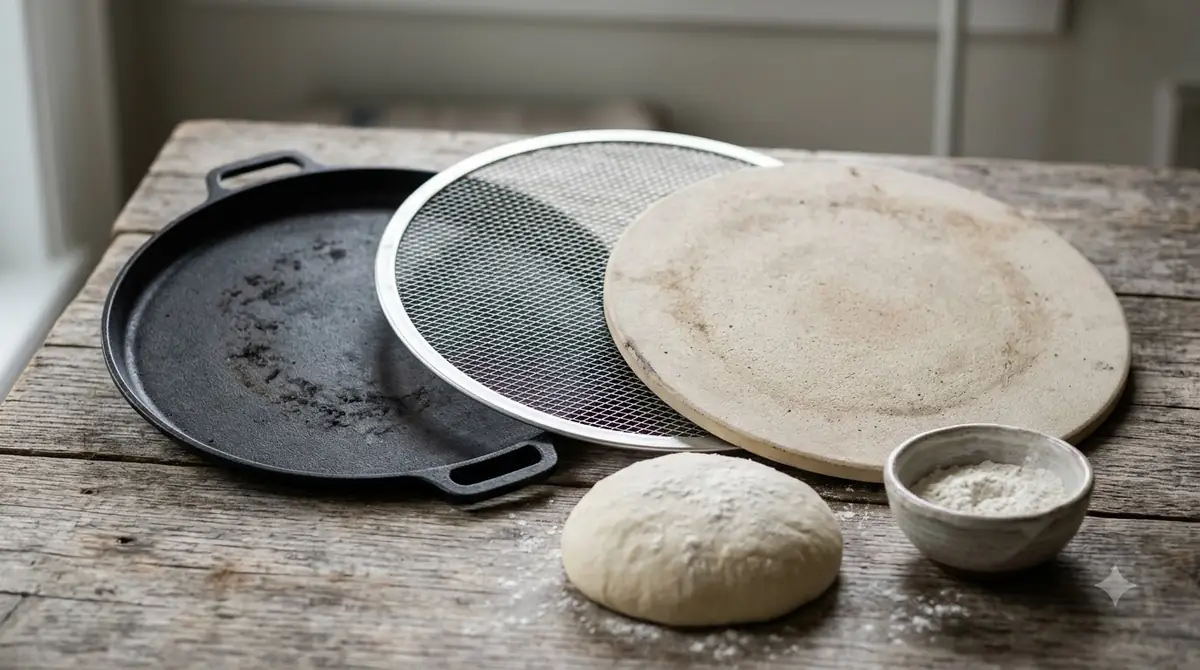
Wasserstrom, a commercial restaurant supplier, says a screen goes between the dough and a metal oven floor when you are not baking on a brick floor. It warns that baking without one in a metal oven burns the crust while heating the rest of the pizza unevenly.
A pizzeria poster on The Fresh Loaf forum says a screen lets the dough rise before baking, and the pizza moves onto a stone once the base sets. These are forum user reports, not measured results.
Use a pizza screen when your oven cannot hold a pizza stone or steel, or when you want to load the pizza without a peel. Otherwise, the sources suggest a stone or steel puts the dough in more direct contact with a hot surface.
Materials, Sizes, and Oven Fit
The commercial listings we checked use aluminum or stainless steel, and their round diameters run from 6 inches to 28 inches.
| Attribute | What the sources show |
|---|---|
| Material | Aluminum (28 listings) and stainless steel (1 listing) on a supplier category page |
| Round sizes | 6, 7, 8, 9, 10, 11, 12, 13, 14, 15, 16, 17, 18, 20, 24, and 28 inches |
| Rectangular sizes | 11 x 16 inches and 16 x 24 inches |
| Home oven fit | Not confirmed by a source we could read; measure your oven first |
| Gauge, hole size, weight | Not listed in the sources we could read; check the product spec sheet |
One Hungry Onion forum poster used a 16-inch screen on the second rack from the bottom of a home oven that only reaches 525 F. That is one user’s setup, not a fit rule, so measure the interior width and rack space before you buy any size.
How to Use a Pizza Screen Step by Step
Stretch the dough on the screen without pressing it down, because forum bakers report that pressing pushes dough through the holes, where it expands and sticks.
- Season a new pizza screen first, as described in the seasoning section below.
- Stretch the dough on top of the pizza screen and keep the edges from being pushed into the mesh.
- Add toppings in a light layer.
- Bake on the oven rack or on a hot stone. Forum posters place the screen on the second rack from the bottom or in the top third, and they say results vary by oven.
- Look under the edge to check the color. Tasting Table notes that the open mesh lets you see the base without disturbing the pizza.
The sources we read give no bake time or oven temperature for screens. Use your recipe as a starting point and check the crust as it bakes, then slide the finished pizza off onto a cutting board.
Some bakers use a hybrid method. They launch the pizza on a hot steel or stone, then move it to the screen once the base sets, which is how one pizzeria poster describes baking on a screen.
Seasoning, Cleaning, and Care
Tasting Table says a new screen should be seasoned by oiling it lightly, baking it empty, letting it cool, and repeating the process.
The article describes this as building a non-stick patina. Treat that as the author’s claim, because we could not check it against a maker’s instruction sheet.
The sources we read give no cleaning steps and no safety warnings. Follow the maker’s label for washing and drying, and let the screen cool before you handle it or store it.
Screen, Stone, or Steel: What Reports Say
Forum posters generally agree that a stone, steel, or deck gives a better bottom crust, because the dough touches the hot surface directly. For a head-to-head look at those two surfaces, see pizza stone vs pizza steel.
Opinions split on how much a pizza screen slows the bake. One poster quotes an article saying screens slow bake time and shift heat toward radiation. Another says a steel can run too hot and char the bottom of a pie.
These are opinions and quotes from forum threads, not results we tested. If you want a crisper bottom in your own oven, compare a stone or steel against a screen and note the bake time for each. For more crust tips, see how to get crispy pizza crust.

Common Mistakes to Avoid
Skipping seasoning, buying a size you have not measured, and expecting stone-like results are the mistakes the sources point to most.
- Skipping the seasoning steps on a new pizza screen, which Tasting Table recommends before first use.
- Buying a diameter without measuring the oven interior and the rack, since the sources do not confirm a fit limit.
- Expecting a stone-like bottom. Forum posters report that a stone or steel gives more direct contact with the hot surface.
What the Sources Do Not Confirm
The sources we read do not confirm maximum oven temperature, bake time, hole size, gauge, weight, cleaning steps, or price. Check these before you buy.
- Maximum temperature rating: look for it on the product spec sheet.
- Bake time: depends on your oven, so test with your own recipe.
- Hole size and gauge: these affect airflow and warping, so compare the listed values.
- Warranty and dishwasher safety: confirm them on the label or the seller page.
- Price: check the retailer at the time of purchase, because we did not verify prices.
Frequently Asked Questions
Is a pizza screen the same as a pizza pan?
Tasting Table describes a pizza screen as a pizza pan with a metal-mesh base. It is a pan with an open bottom rather than a solid one, which is why air can reach the dough. Solid pizza pans are covered separately.
Do I need a pizza screen if I already have a pizza stone?
Not necessarily. Tasting Table presents a screen as an option for cooks without room for a heavy stone, and forum posters disagree on whether screens beat stones. Use one when your oven setup calls for it.
Does a new pizza screen need seasoning?
Yes, according to the Tasting Table article, which recommends oiling a new screen, baking it empty, letting it cool, and repeating. The sources we read describe no other first-use step.
Why does pizza stick to a pizza screen?
Forum posters say pressing dough into the holes makes it expand and stick when it bakes. Stretch the dough on top of the screen, keep the screen lightly oiled, and keep the topping layer thin. For the oiling and stretching steps, see our guide on how to use a pizza screen.
What size pizza screen should I buy?
The round listings we read range from 6 to 28 inches. Measure your oven’s interior and rack first, because the sources do not confirm a size limit for home ovens.
How do I clean a pizza screen?
The sources we read give no cleaning steps. Let the screen cool, then follow the maker’s label for washing and drying.
A pizza screen is a simple tool that helps some home cooks get a crisper base, but it does not replace a hot stone or steel. Measure your oven, check the material and diameter on the spec sheet, and decide based on how your oven handles bottom heat.
 10 min readGear & PantryHow to Use a Pizza Screen for Crisp, Even Pizza at HomeUpdated Nov 10, 2026
 8 min readGear & PantryPizza Dough Proofing Box: What It Does and How to Use OneUpdated Nov 10, 2026
 8 min readGear & PantryParmesan Cheese Grater: How to Choose, Use and Store OneUpdated Nov 17, 2026
 8 min readGear & PantryGnocchi Board: How to Choose and Use OneUpdated Nov 16, 2026
 8 min readGear & PantryPasta Cutter Guide: 3 Types, Blades and How to Use OneUpdated Nov 10, 2026
 10 min readGear & PantryRavioli Mold: What It Is and How to Use One at HomeUpdated Nov 17, 2026